How to Wash Flannel Sheets
Cold or warm water, gentle cycle, mild detergent, no fabric softener, low-heat dry. Flannel's warmth comes from a brushed nap of raised fiber ends, and heat, agitation and softener are the three things that ruin it.
We earn a commission if you buy through our links. It doesn't affect our picks — and we never take free products. How this site is funded.
The nap is the product, and the nap is what you can ruin
Flannel is not a weave, it is a finish. You take a woven cotton cloth and brush its surface to raise a fuzzy layer of fiber ends called the nap, and that nap traps a thin blanket of still air against your skin. Still air is an excellent insulator, which is the entire reason a flannel sheet is warm.
Everything in this guide follows from that. The nap is a physical structure of raised fiber ends, and three things flatten or strip it: heat, friction, and anything that coats the fibers. A flannel sheet that has gone thin, slick and disappointing has usually been washed hot, dried hot, and softened - in which case the warmth went with the loft.
The routine
- Wash before first use, on its own. The first wash releases a lot of loose fiber, and you do not want that on your dark laundry.
- Cold or warm water. Never hot. Hot water is where the shrinkage and most of the nap damage comes from.
- Gentle cycle, small load. Pilling is friction. Give the sheets room instead of letting them grind against each other.
- Mild detergent, modest amount. Skip bleach and brighteners, which attack the fiber ends that make up the nap.
- No fabric softener, no dryer sheets. Both coat the nap and flatten it - the exact opposite of what you want.
- Low heat, stopped early. Pull the set out slightly damp and finish it on the bed or a line. Wool dryer balls help lift the nap.
- Do not iron it. A hot plate pressed onto a raised nap crushes the structure you are trying to protect.
What each mistake actually costs you
| What you did | What it does to the nap | Instead |
|---|---|---|
| Hot wash | Shrinks the cloth, mats the fiber ends | Cold or warm |
| High-heat dry | Flattens the loft, sets hard creases | Low heat, removed damp |
| Fabric softener | Coats and lies the nap down; traps odor | Nothing, or vinegar in the rinse |
| Packed load | Friction tears fiber ends loose - pills | Wash the set alone |
| Bleach | Degrades the raised fibers first | Oxygen-based stain treatment, spot applied |
| Stored damp | Thick cotton holds moisture - mildew | Fully dry, breathable bag, dry cupboard |
The first-wash fuzz is normal, and it ends
A new cotton flannel set sheds. The same brushing that raised the nap loosened a population of fiber ends, and those shed as lint and small pills across the first several washes before the surface stabilizes. It is not a defect and it is not a sign you bought badly - it is what brushing a cloth does.
Two things make it less annoying. Buy a set labeled anti-pilling, which has a finish that holds more of the nap in place (less, not none). And when pills do appear, take them off with a battery fabric shaver rather than your fingers - picking at a pill pulls more fiber loose and seeds the next one. If pilling is a problem across every sheet you own and not just the flannel, the cause is probably the fiber rather than the finish: why sheets pill covers that.
Pre-shrunk is the spec that protects you
Cotton flannel is thick, and untreated thick cotton shrinks. On a fitted sheet, shrinkage shows up where it hurts most - in the pocket depth, which is how a sheet that fit your mattress in November stops reaching the corners by February. A set labeled pre-shrunk has already been through that process at the factory, which is why it is worth looking for and why it is called out on one of the picks below.
The other defense is buying enough pocket to start with. If the corners are lifting on a sheet you have already washed hot, that is now a sizing problem rather than a laundry one - see deep pocket sheets.
Washing it out of season, and storing it
Flannel is a single-season sheet. When spring arrives, wash the set, dry it completely, and store it somewhere dry in something breathable - a cotton bag or a loosely closed box, not a sealed plastic bin. Heavyweight cotton holds residual moisture well enough that a set packed away slightly damp can come out smelling of mildew six months later. Our bedding storage guide covers the rest, and winter comforters covers the layer above.
The three sets below are the flannel sheets we would buy, with live prices - two publish both their fiber and their GSM, one is treated for pilling. The full roster and the fiber argument behind it are on best flannel sheets.
Quick picks
| # | Product | Best for | Price |
|---|---|---|---|
| 1 | 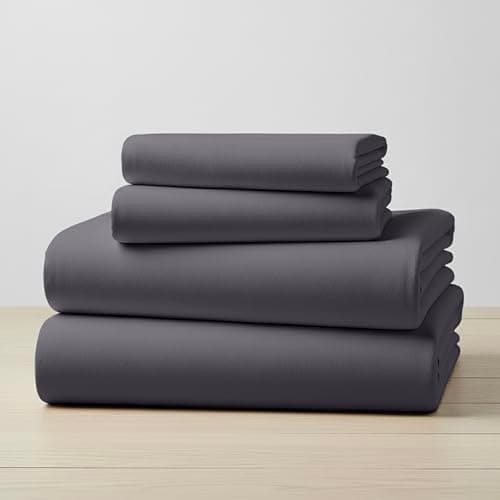 Mellanni 100% Cotton Flannel Sheet Set (180 GSM) A stated 100% cotton at a stated 180 GSM - the two numbers that decide a flannel sheet, both published. The default buy. Best for: Most people | Most people | $58.97 · View on Amazon Price as of October 17, 2026. #ad — we earn a commission. |
| 2 |  Pointehaven 200 GSM 100% Cotton Flannel Sheet Set The heaviest set here at a stated 200 GSM, and pre-shrunk - which is the spec that protects you on laundry day. Best for: Pre-shrunk, so the first hot mistake is survivable | Pre-shrunk, so the first hot mistake is survivable | $63.74 · View on Amazon Price as of October 17, 2026. #ad — we earn a commission. |
| 3 | 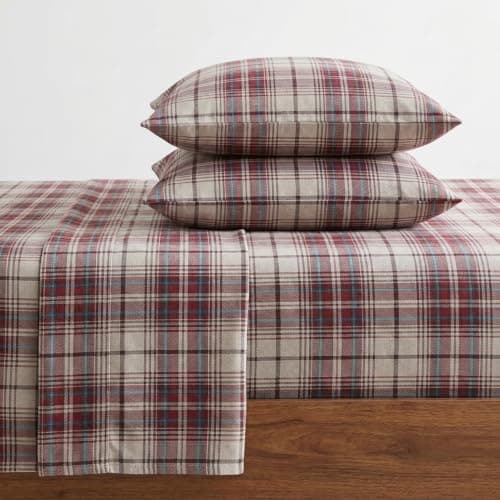 Eddie Bauer Cotton Flannel Sheet Set Cotton flannel sold as anti-pilling and wrinkle resistant. The pick if first-wash fuzz is the thing that would annoy you. Best for: The least shedding | The least shedding | $53.94 · View on Amazon Price as of October 17, 2026. #ad — we earn a commission. |
The picks, in full
1. Best for Most people
Mellanni 100% Cotton Flannel Sheet Set (180 GSM)
A stated 100% cotton at a stated 180 GSM - the two numbers that decide a flannel sheet, both published. The default buy.
Price as of October 17, 2026. #ad — we earn a commission.
Key specs
- 100% cotton flannel (as listed)
- 180 GSM heavyweight (as listed)
- Deep pockets with all-around elastic (as listed)
- 4-piece queen set
What's good
- Both specs that matter are on the listing: 100% cotton, and 180 GSM - most flannel listings hide one or both
- Cotton flannel gets softer with every gentle wash, so a set treated the way this page describes improves for years rather than degrading
- All-around elastic keeps the heavy fitted sheet on the mattress, and a sheet under less tension abrades less
What's not
- Like all cotton flannel it sheds some surface fuzz in the first few washes before the nap settles
- 180 GSM is a genuine winter weight - too warm to leave on the bed through spring
- It wrinkles, as every brushed natural fiber does
Skip this one if
You want to avoid the break-in shedding entirely. No untreated cotton flannel skips it - the Eddie Bauer set's anti-pilling treatment is the closest thing to a fix.
2. Best for Pre-shrunk, so the first hot mistake is survivable
Pointehaven 200 GSM 100% Cotton Flannel Sheet Set
The heaviest set here at a stated 200 GSM, and pre-shrunk - which is the spec that protects you on laundry day.
Price as of October 17, 2026. #ad — we earn a commission.
Key specs
- 100% cotton flannel (as listed)
- 200 GSM (as listed)
- Pre-shrunk, double-brushed (as listed)
- Deep pockets, elastic all around (as listed)
What's good
- Pre-shrunk is the laundry-relevant spec on flannel: it means the fitted sheet you measured for is still that size after a warm wash, where an untreated cotton flannel can lose a meaningful amount of its pocket depth
- Double-brushed on both faces, so the napped surface is against you whichever way the sheet goes on
- At a stated 200 GSM it is the warmest set here, with the fiber and weight both published
What's not
- 200 GSM is a lot of fabric to launder - heavy when wet and slow to dry, which tempts people into the high-heat setting that damages the nap
- Heavier flannel wrinkles more and takes longer on the line
- Far too warm for a mild bedroom
Skip this one if
Your bedroom is only mildly cool. This is the warmest option on the page and it will cook you - the Mellanni at 180 GSM is the everyday weight.
3. Best for The least shedding
Eddie Bauer Cotton Flannel Sheet Set
Cotton flannel sold as anti-pilling and wrinkle resistant. The pick if first-wash fuzz is the thing that would annoy you.
Price as of October 17, 2026. #ad — we earn a commission.
Key specs
- Cotton flannel (as listed)
- Anti-pilling & wrinkle resistant (as listed)
- Matching pillowcases + fitted sheet
- Plaid and solid options
What's good
- Anti-pilling is a finish applied to reduce how much of the nap works loose, which directly addresses flannel's most common early complaint
- Wrinkle resistance is genuinely useful on flannel, which is heavy enough to hold a crease hard after a hot dry
- An established brand with a real returns operation behind it
What's not
- No GSM is stated, so you cannot confirm the warmth the way you can with the other two - it reads as a mid-weight
- "Anti-pilling" means less, not none; treated sets still shed a little at first
- Patterned flannel fades faster than a solid over many washes
Skip this one if
You want a confirmed heavyweight. Without a stated GSM you are buying on feel - the Mellanni and Pointehaven both publish theirs.
Common questions
How do you wash flannel sheets to keep them soft?
Cold or warm water, gentle cycle, a small amount of mild detergent, no fabric softener, and a low-heat tumble you cut short while the sheets are still slightly damp. Flannel's softness and warmth both come from its nap - a layer of fiber ends brushed up from the surface of the cloth, which traps air against you. Hot water and high dryer heat mat that nap down and make the fabric feel thin and slick; softener coats and flattens it. Gentle laundering is not just about longevity here, it is literally what keeps the sheet feeling like flannel.
How do you wash flannel sheets for the first time?
Wash them before you sleep on them, on their own, in cold water on a gentle cycle. Two things happen in that first wash: the set releases a quantity of loose surface fiber - which is why it should go through on its own rather than with dark clothing or towels - and the fabric relaxes to its real size. Washing cold the first time also minimizes shrinkage on any set that is not labeled pre-shrunk. Adding half a cup of distilled white vinegar to that first rinse is a reasonable habit; it removes manufacturing residue without leaving a coating behind.
Why do flannel sheets pill, and can you stop it?
They pill because of what makes them flannel. Brushing the cloth to raise a warm nap necessarily loosens fiber ends, and some of those ends break free, roll up and tangle into small balls - most of them in the first handful of washes, after which the surface settles. You cannot prevent it entirely on untreated cotton flannel, but you can minimize it: wash before first use, cold or warm water on a gentle cycle, small loads so the sheets are not grinding against each other, no fabric softener, and low-heat drying. Sets sold as anti-pilling have a finish that reduces it, though not to zero.
Can you put flannel sheets in the dryer?
Yes, on low heat, and take them out slightly damp. High heat is the single worst thing you can do to flannel: it mats the nap, it is where almost all shrinkage comes from on a set that is not pre-shrunk, and it bakes creases into heavy fabric. A low tumble that you stop early, followed by air-drying the last of the moisture, keeps the surface lofty. Wool dryer balls help by separating the layers and lifting the nap; dryer sheets do the opposite, because they work by coating the fiber.
How do you get the fuzz off flannel sheets?
A battery fabric shaver is the right tool, and it works well - run it over the dry, flat sheet and it cuts the pills off at the surface without pulling at the weave. A sweater comb or a disposable razor used carefully does the same job more slowly. What you should not do is pick the pills off by hand, which pulls more fiber loose and makes the next crop worse. Two things to understand: de-pilling is cosmetic maintenance rather than a repair, and the shedding tails off on its own after the first several washes, so the job gets easier each time.
How often should flannel sheets be washed?
On the same schedule as any other sheet - roughly weekly - with one seasonal addition: wash and fully dry the set before you store it for the summer, and store it somewhere dry rather than in a sealed plastic bin. Flannel is thick enough to hold residual moisture, and a damp heavyweight cotton set in a sealed container is how people discover mildew in October. A breathable cotton bag or a loosely closed box in a dry cupboard is all it needs.
Sources
Where the facts on this page come from. We cite other people's testing because we don't do our own — here's what that means.
Read next
- The Best Flannel Sheets for WinterSix genuinely warm cotton flannel sets, chosen on fiber and GSM rather than marketing — with an honest note on who should skip each and the fleece-flannel trap to dodge.
- Why Do Sheets Pill?Pilling is mechanical, not a defect. Why short fibers and strong polyester are the worst combination, which weaves resist it, what slows it down - and why you cannot reverse it.
- How to Wash Bed Sheets (by Fabric)A wash-and-dry method for every kind of sheet — cotton and percale, sateen, linen, bamboo viscose, flannel and microfiber — plus how often to wash, how to handle new sheets, and why sheets pill and how to slow it down.
- The Best Comforters for WinterSix genuinely warm comforters for a cold bedroom, sorted by how each fill holds heat - premium down, temperature-regulating wool, and dense down alternative - with an honest note on who should skip each.
- How to Store Off-Season BeddingHow to store off-season bedding so it comes out fresh, not musty or crushed: wash and fully dry it first, let it breathe instead of sealing it airtight, keep it cool, dry and dark, and don't crush the loft out of it. Item-by-item notes for down, synthetic and cotton.
- The Best Electric Blankets, Throws and Heated Mattress PadsSix honest electric-blanket, throw and heated-mattress-pad picks - chosen by shape and safety features, not lab scores - with a plain-English safety checklist for heated bedding.
- How Often Should You Wash Your Sheets?About once a week for most people - but sweat, pets, allergies, and skin can push it higher. Here is how to set an honest sheet-washing schedule.