How to Wash Bamboo Sheets
Cold or warm water, gentle cycle, a small load, mild detergent, no fabric softener, and low heat or a line. Bamboo viscose is weakest while it is wet, so every rule below is about reducing heat and friction during the wash.
We earn a commission if you buy through our links. It doesn't affect our picks — and we never take free products. How this site is funded.
One fact explains every rule: viscose is weak when wet
Sheets sold as bamboo are almost always viscose rayon - cellulose dissolved from plant pulp and spun back out as fiber. Regenerated cellulose has a specific weakness: it loses a meaningful share of its strength while it is saturated. The sheet you can barely tear when dry is considerably more fragile in the middle of a wash cycle.
Everything below follows from that. Heat weakens it further, agitation and friction break surface fibers that then tangle into pills, and a crowded drum maximizes both. There is no secret product that fixes a bamboo sheet - there is only a wash that does not damage it in the first place.
The routine
- Wash them alone. No towels, nothing with a zipper or hook. Towels are abrasive and shed lint; hardware snags a slippery fabric.
- Cold or warm water, never hot. Hot water is where shrinkage, weakening and set-in wrinkles all come from.
- Gentle or delicate cycle. Less agitation means fewer broken surface fibers, which means fewer pills.
- Small load. The sheets have to move freely. A packed drum turns a wash into a friction machine.
- Mild liquid detergent, a small amount. Skip powders, which can be abrasive and dissolve poorly in cold, and skip anything with bleach or brighteners.
- No fabric softener. Ever. See the next section - this is the rule people break.
- Low heat, or a line. Pull them out slightly damp and let them finish in the air; it kills most wrinkles and all of the heat damage.
Why softener is the enemy of the thing you paid for
Fabric softener works by depositing a thin, waxy coating on the fiber surface. On a towel that feels pleasant. On a bamboo sheet it destroys the product: the whole reason to buy viscose is the bare fiber's slip and its ability to move moisture, and a film over the surface reduces both. The sheet becomes less absorbent, less cool to the touch, more likely to hold odor - and the coating accumulates wash after wash. Dryer sheets do exactly the same thing in the dryer.
If your sheets already feel stiff or waxy, the fix is a strip wash, not more softener: run them with about half a cup of distilled white vinegar and no detergent. Vinegar is mildly acidic, so it cuts alkaline detergent residue rather than adding another layer on top of it.
The first wash, and the vinegar question
Wash a new set before you sleep on it. New sheets carry sizing and finishing residue from manufacturing, which is what makes them feel slightly stiff or smell faintly chemical out of the packaging, and the first wash is also when the fabric relaxes into its real dimensions.
The widely passed-around version of this is to do that first wash with half a cup of distilled white vinegar and no detergent. It is a reasonable thing to do and it genuinely helps with first-wash stiffness by removing residue - but it is not a transformation, and a plain gentle wash gets you most of the way. What it will not do is make a thin, badly made sheet into a good one.
What the rules do and do not prevent
| Problem | Actual cause | What to change |
|---|---|---|
| Pilling | Friction breaking surface fibers while wet | Smaller load, gentle cycle, wash alone |
| Shrinkage | Hot water, high dryer heat | Cold or warm wash, low tumble |
| Lost slip / feels scratchy | Softener or dryer-sheet coating | Stop using both; vinegar rinse to strip |
| Deep wrinkles | Dried fully on high heat, then left in the drum | Remove damp; smooth onto the bed |
| Thin or torn at the corners | Fitted sheet stretched tight over too deep a mattress | Buy the right pocket depth, not laundry changes |
Note the last row: not every failure is a laundry failure. A fitted sheet permanently stretched to its limit abrades at the corners no matter how you wash it, which is a sizing problem - see deep pocket sheets if that is what is happening. And if pilling is the thing you keep hitting across every sheet you own, why sheets pill covers the fiber side of it.
If this routine sounds like too much
That is a legitimate conclusion, and the honest answer is to buy a different fiber rather than to wash bamboo badly. A long-staple cotton percaletolerates hot washing, heavy loads and high heat in a way that viscose simply does not - it is the right choice for a child's bed, an allergy household, or anyone who is not going to sort laundry by fiber. If you like the cellulosic feel but want more durability, bamboo vs TENCEL explains why lyocell survives the wash better.
The three sets below are the bamboo sheets we would actually buy, with live prices - all three correctly labeled as viscose or rayon, which is the first thing to check on any listing in this category. The full roster is on best bamboo sheets.
Quick picks
| # | Product | Best for | Price |
|---|---|---|---|
| 1 | 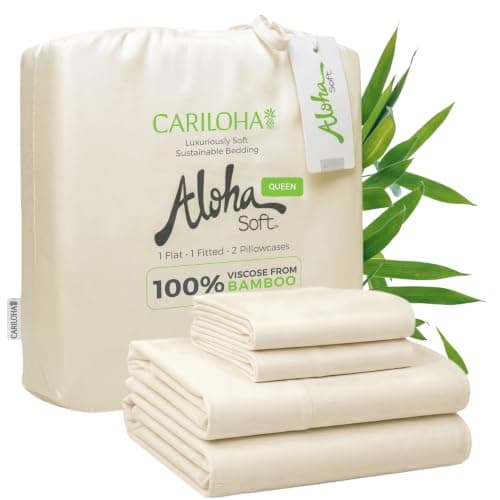 Cariloha Aloha Soft 100% Organic Bamboo Viscose Labeled as viscose rather than just bamboo, and carries OEKO-TEX Standard 100. The set worth the gentle-wash discipline. Best for: The best-certified set to look after | The best-certified set to look after | $119.00 · View on Amazon Price as of October 18, 2026. #ad — we earn a commission. |
| 2 | 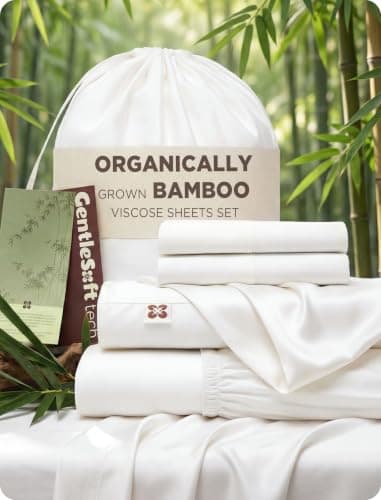 Bedsure Bamboo Viscose Sheet Set An 18-inch pocket with corner straps in certified bamboo viscose. The straps reduce the tension that wears a slippery sheet out. Best for: Corner straps, so the sheet is not fighting the mattress | Corner straps, so the sheet is not fighting the mattress | |
| 3 | 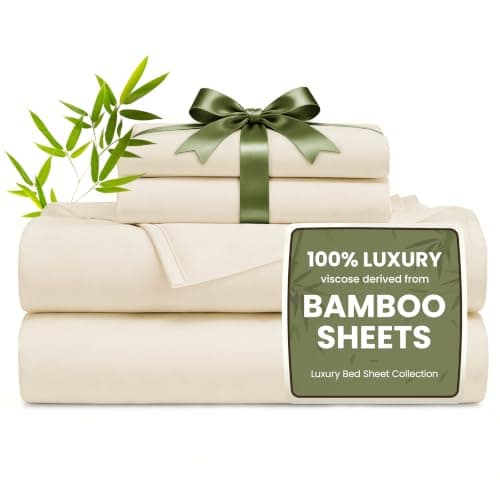 Love's cabin 100% Rayon from Bamboo Correctly labeled rayon from bamboo at the lowest price here. The cheap set to learn the wash routine on before spending more. Best for: The set to practice on | The set to practice on |
The picks, in full
1. Best for The best-certified set to look after
Cariloha Aloha Soft 100% Organic Bamboo Viscose
Labeled as viscose rather than just bamboo, and carries OEKO-TEX Standard 100. The set worth the gentle-wash discipline.
Price as of October 18, 2026. #ad — we earn a commission.
Key specs
- 100% organic bamboo viscose
- 4-piece Queen set
- 16 in deep pockets (as listed)
- OEKO-TEX Standard 100 (as listed)
- Cooling, hypoallergenic (as listed)
What's good
- The listing uses the word viscose, which is what US labeling rules require of this fabric - a seller that gets the label right is a better bet on everything else
- OEKO-TEX Standard 100 means the finished fabric was tested against a restricted substance list, which matters most on a chemically processed fiber
- A 16-inch pocket fits most mattresses without the fitted sheet being stretched tight, and tension is what accelerates wear at the corners
What's not
- Viscose is the weakest of the cellulosic fibers when wet, so this set genuinely needs the cold, gentle treatment
- "Organic bamboo" describes the plant, not the chemistry that dissolved it
- It is a mid-to-high price for a fiber that will not outlast cotton
Skip this one if
You wash hot and tumble high as a matter of habit. Bamboo viscose punishes that routine - buy cotton percale instead and wash it however you like.
2. Best for Corner straps, so the sheet is not fighting the mattress
Bedsure Bamboo Viscose Sheet Set
An 18-inch pocket with corner straps in certified bamboo viscose. The straps reduce the tension that wears a slippery sheet out.
Key specs
- 100% bamboo viscose (as listed)
- Oeko-Tex certified (as listed)
- 18 in deep pocket with corner straps (as listed)
- Queen, 4-piece
What's good
- Corner straps and a deep pocket mean the fitted sheet sits on the mattress without being stretched to its limit, and a sheet under less tension abrades less where it is gripped
- Oeko-Tex certification stated, and correct viscose labeling
- The deepest pocket of the three here, so it suits a mattress with a topper on it
What's not
- Oeko-Tex is claimed without a certificate number on the listing, so it is less checkable than it could be
- Still viscose: same wet-strength limits, same gentle routine
- Mid-price, and the straps are the main thing you are paying for over the budget set
Skip this one if
Your mattress is thin. An 18-inch pocket on a 10-inch mattress leaves loose fabric that bunches and abrades against itself.
3. Best for The set to practice on
Love's cabin 100% Rayon from Bamboo
Correctly labeled rayon from bamboo at the lowest price here. The cheap set to learn the wash routine on before spending more.
Key specs
- 100% rayon derived from bamboo
- 4-piece Queen set
- Deep pocket up to 16 in (as listed)
- Cooling for hot sleepers (as listed)
What's good
- "Rayon from bamboo" is the legally correct fiber name, which is a straightforwardly honest listing
- Cheap enough that learning what a hot wash does to viscose is a survivable lesson rather than an expensive one
- The cool-to-first-touch slip that hot sleepers buy this fiber for
What's not
- No certification of any kind is stated
- Budget viscose is the least durable fabric here and will thin at the stress points first
- "Cooling" is about initial touch, not all-night airflow
Skip this one if
You want sheets that last. This is the inexpensive introduction to the fiber - the Cariloha is the one built to be kept.
Common questions
How do you wash bamboo sheets so they do not pill?
Cold or warm water on a gentle cycle, a load small enough that the sheets can move freely, mild liquid detergent, no bleach and no fabric softener, then low heat in the dryer or straight onto a line. Pilling is mechanical: it happens when fiber ends are rubbed loose from the surface and tangle into balls. Bamboo viscose loses a significant part of its strength while it is wet, so a hot, crowded, high-agitation wash is exactly the condition in which its surface fibers break. Wash bamboo sheets on their own, not with towels or anything with zippers, and never overfill the drum.
Can you put bamboo sheets in the dryer?
Yes, on low heat, and take them out slightly damp. High heat is the main avoidable cause of shrinkage and of a slippery sheet turning scratchy - it weakens the fiber, and it bakes in the wrinkles you will then try to iron out with more heat. A short low-heat tumble followed by air-drying the last of the moisture is the best compromise between effort and fiber life. Line drying is gentler still; keep them out of direct sun, which fades the dye and embrittles cellulose over time.
Why should you never use fabric softener on bamboo sheets?
Because softener works by coating fibers with a thin waxy film, and the thing you are buying bamboo viscose for is the bare fiber's slip and moisture handling. The coating fills the surface, so the sheet gets less absorbent, less cool to the touch and more prone to trapping odors - and the residue builds up with every wash. Dryer sheets do the same thing by a different route. If your sheets feel stiff, the answer is a half cup of distilled white vinegar in the rinse rather than softener: it strips detergent residue instead of adding more.
Should you wash bamboo sheets before the first use?
Yes. A first wash rinses out the sizing and finishing residue left from manufacturing, which is what makes brand new sheets feel slightly stiff or smell faintly chemical, and it lets the fabric relax into its finished dimensions. A common first-wash recommendation is to run them with about half a cup of distilled white vinegar and no detergent - the vinegar is mildly acidic, so it cuts the alkaline residue and conditions the fiber without leaving a coating. It is not a magic trick, and it does nothing a plain gentle wash will not mostly do, but it is harmless and it does help with the first-wash stiffness.
What temperature should bamboo sheets be washed at?
Cold is safest and warm is acceptable; hot is the one to avoid. Hot water does three unhelpful things to a regenerated cellulose fiber: it weakens it further at exactly the moment it is weakest, it causes most of the shrinkage these sheets will ever experience, and it sets wrinkles hard. If you need hot washing - for allergies, illness, or a child's bed - then this is the wrong fiber for that bed and a cotton percale is the honest recommendation instead.
Does lyocell or TENCEL wash the same way?
Nearly, and slightly more forgivingly. Lyocell is also a regenerated cellulose fiber, so the same rules apply - cool water, gentle cycle, no softener, low heat - but it retains more of its strength when wet than viscose does, so it tolerates regular laundering better. That difference in wet strength is the main practical reason to spend more on TENCEL than on bamboo viscose. If you are choosing between them, our bamboo vs TENCEL comparison lays out what each label actually tells you.
Sources
Where the facts on this page come from. We cite other people's testing because we don't do our own — here's what that means.
Read next
- The Best Bamboo Sheets, Chosen HonestlySix bamboo-viscose sheet sets that sleep silky and cool for hot sleepers — chosen on fiber and label honesty rather than the word bamboo, with real cons on every pick.
- Bamboo vs TENCEL SheetsBoth fibers are rayon made from wood or grass pulp. The real difference is the solvent process and what the label is allowed to say - here is what each one tells you, and which sheet to buy.
- Why Do Sheets Pill?Pilling is mechanical, not a defect. Why short fibers and strong polyester are the worst combination, which weaves resist it, what slows it down - and why you cannot reverse it.
- How to Wash Bed Sheets (by Fabric)A wash-and-dry method for every kind of sheet — cotton and percale, sateen, linen, bamboo viscose, flannel and microfiber — plus how often to wash, how to handle new sheets, and why sheets pill and how to slow it down.
- Cotton vs Bamboo SheetsCotton's durability and get-softer-with-age value versus bamboo-rayon's silky, cool, drapey feel — plus the labeling truth almost no bamboo listing says out loud.
- The Best TENCEL (Eucalyptus Lyocell) SheetsSix TENCEL and eucalyptus lyocell sheet sets ranked on what each listing commits to — 100% lyocell, the TENCEL name, a stated weight, pocket depth and elastic — with the cool-wash care caveat and honest cons on every pick.
- How Often Should You Wash Your Sheets?About once a week for most people - but sweat, pets, allergies, and skin can push it higher. Here is how to set an honest sheet-washing schedule.