The Best Earplugs for Sleeping
A plug you sleep in has two jobs, not one — it has to block noise and it has to feel like nothing when your ear is mashed into the pillow. The best-blocking plug on Amazon is useless if it aches by 2am. Six worth owning, split by type, and who each is wrong for.
We earn a commission if you buy through our links. It doesn't affect our picks — and we never take free products. How this site is funded.
Quick picks
| # | Product | Best for | Price |
|---|---|---|---|
| 1 | 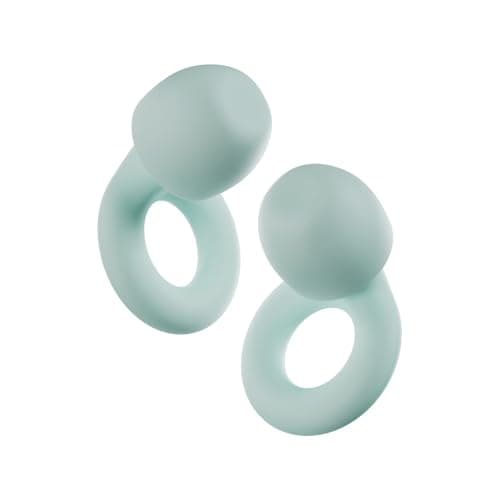 Loop Quiet 2 A soft, low-profile silicone flange you can wash and reuse for months. The comfortable everyday default, and my pick for most people who sleep on their side. Best for: Best reusable / side sleepers | Best reusable / side sleepers | $24.95 · View on Amazon Price as of September 10, 2026. #ad — we earn a commission. |
| 2 | 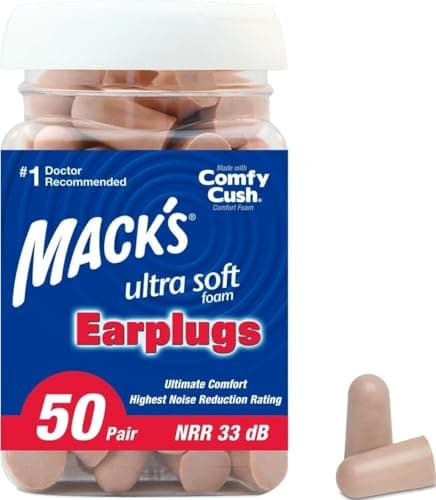 Mack's Ultra Soft Foam Earplugs (50 Pair) The foam benchmark: the highest listed blocking on this page and a cost-per-night that rounds to nothing — if you can sleep with a plug seated deep in the canal. Best for: Highest blocking / value | Highest blocking / value | $9.89 · View on Amazon Price as of September 10, 2026. #ad — we earn a commission. |
| 3 | 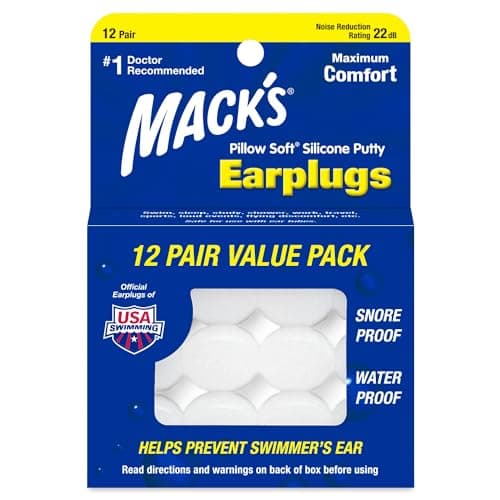 Mack's Pillow Soft Silicone Putty (12 Pair) The side sleeper's real answer: moldable putty that caps the ear over the canal instead of plugging into it, so there is nothing hard to press against the pillow. Best for: Side sleepers (flat, moldable) | Side sleepers (flat, moldable) | $12.99 · View on Amazon Price as of September 10, 2026. #ad — we earn a commission. |
| 4 | 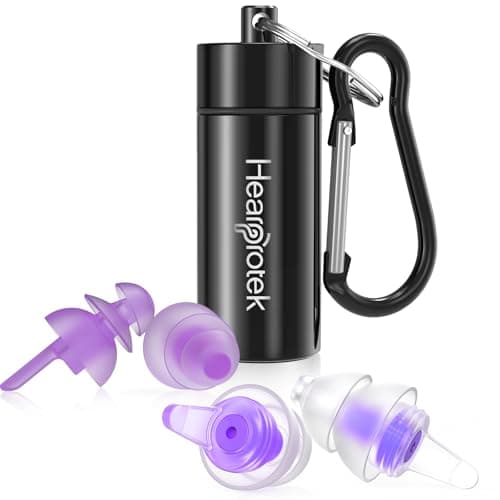 Hearprotek Sleeping Ear Plugs A reusable flange built specifically for sleeping and snoring, offered in two blocking strengths so you can match the plug to the actual problem. Best for: Reusable flange for side sleepers | Reusable flange for side sleepers | |
| 5 | 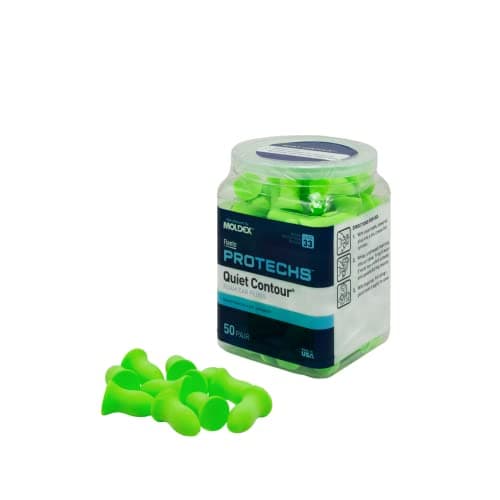 Flents Protechs Quiet Contour Foam (50 Pair) The alternative foam benchmark — the same top-of-page blocking as the Mack's in a contoured shape, at bulk value, for when the Mack's don't suit your canal. Best for: Foam value in bulk | Foam value in bulk | $16.99 · View on Amazon Price as of September 10, 2026. #ad — we earn a commission. |
| 6 | 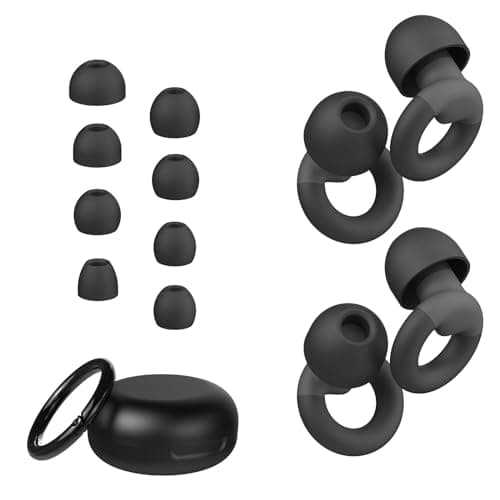 JUSTRVN Reusable Ear Plugs The cheap way to find out whether a reusable flange suits your ears at all, with a pile of tip sizes so at least one should seal. Best for: Best budget reusable | Best budget reusable | $9.99 · View on Amazon Price as of September 10, 2026. #ad — we earn a commission. |
For a plug you sleep in, comfort is half the job
Most earplug advice is written for a factory floor or the front row of a concert, where one thing matters: how much noise the plug keeps out. A plug you sleep in has a second job that's just as important and almost never gets mentioned — it has to be comfortable enough that you forget it's there for eight hours, including the hours you spend with the side of your head pressed into a pillow. The best-blocking plug on the shelf is worthless if it aches by 2am and you tug it out in your sleep without ever knowing you did.
That's the whole framing of this page. We are not chasing the single highest number on the box. We are balancing two things that pull against each other: how well a plug blocks noise, and how it feels when you're lying on it. Those two axes sort the entire category, and once you can see them you can pick the right type in about thirty seconds — which matters far more than picking the right brand.
And a word on what we can and can't tell you, up front. There is no test lab behind this site. We haven't sat in a sound booth with a meter, and nobody who bought a bag of foam plugs last week can honestly hand you a decibel reading either. What we can do is reason from how each type is built — foam expands, silicone seats, putty caps — and quote the manufacturer's own rating with the words "as listed" attached, because the number on the packet is theirs, not ours. Where a brand doesn't publish a rating, we say so rather than invent one.
The four types, and who each is for
Nearly every sleeping earplug is one of four things, and the type decides far more than the brand does. Get the type right and any decent example works; get it wrong and no amount of quality rescues it.
- Reusable silicone flange. A soft, pre-shaped plug with little fins that seat in the opening of your canal — the Loop, the Hearprotek and the JUSTRVN here. They block moderately, feel soft, wash and last for months, and usually ship with several tip sizes because canal size is the whole game. This is the everyday middle of the category and where most people should start.
- Foam.The disposable bullets you roll thin and let expand inside the canal — the Mack's Ultra Soft and the Flents. Foam blocks the most, full stop, because it expands to fill the canal completely; both foam picks here list a 33 dB NRR, the highest on the page. The catch is that it's firm once expanded, it sits deep, and it's effectively single-use — which is why it comes fifty pairs to a bag.
- Moldable silicone putty.A ball of soft putty you warm, flatten and press over the mouth of your ear — the Mack's Pillow Soft. Crucially it sits over the canal, not in it. It blocks the most gently of the group, but because there is nothing hard inside your ear it's the flattest, kindest option for a side sleeper.
- Low-profile reusable.Not so much a fourth material as a design priority: reusable plugs whose bodies are deliberately short and soft so they don't stick out and can be lain on. The Loop and the sleep-specific Hearprotek both aim here. If you sleep on your side but can't get on with putty, this is the compromise.
Two axes run under all of it: blocking, and comfort on your side. Foam wins blocking and loses comfort; putty wins side-sleep comfort and blocks gently; reusable flanges sit sensibly in the middle. There isn't a type that wins both, which is exactly why "best earplug" is the wrong question and "best earplug for how I sleep" is the right one.
Side sleepers: the plug is fighting the pillow
If you sleep on your side, this is the section that matters most, because the cheap generic advice actively hurts here. Picture what happens: your ear is trapped between the side of your skull and the pillow, and it is bearing the weight of your head. Now put a firm foam cylinder deep inside that canal. Every hour you spend on that side presses the pillow against the plug and the plug against the walls of your canal. It's the same logic as a too-hard pillow or the wrong mattress making a side sleeper miserable — a pressure point you can't escape while you're asleep on top of it.
So for side sleepers the ranking inverts. The plug that blocks best — foam — is the one most likely to ache. The two answers that actually work keep anything hard out of the canal. Moldable putty is the cleanest fix: it caps the outside of your ear and leaves the canal itself empty, so there's no core for the pillow to drive inward. A low-profile reusable flange is the next best thing — the Loop and the sleep-specific Hearprotek are built short and soft precisely so a cheek and a pillow can rest on them without a rigid stem poking back.
It's worth being honest that comfort here is partly about the rest of your setup, not just the plug. If your ear hurts on its side even without a plug in, the plug isn't your only problem — the surface under your head is. A side sleeper carries their shoulder and ear on the pillow all night, and getting that right does more for ear comfort than any plug swap; our side-sleeper pillow guide covers the half of this that isn't made of silicone. Get the pillow wrong and no earplug will ever feel good on that side.
NRR is a lab number, and your bedroom isn't the lab
NRR stands for Noise Reduction Rating — the decibel figure printed on foam and some reusable packets. Higher is more blocking, and it's a genuinely useful way to compare two plugs on a shelf. The two foam picks here list 33 dB; the Hearprotek lists 32 dB and 30 dB versions; the JUSTRVN lists 25 to 30 dB. We quote every one of those with "as listed" attached, because they are the manufacturers' figures and we haven't verified any of them.
Here's the part the packet won't tell you: you will almost never get the rated number in your own bed. NRR is measured on a carefully fitted plug in a lab, and the reduction real people get is reliably less — sometimes a lot less — because a plug rolled by a half-asleep hand at 2am doesn't seal like one fitted by a technician. That's not a scandal, it's just how ratings work, and it's why the gap between two plugs' NRR tells you more than the absolute figure does. Treat 33 dB as a ceiling you'll fall short of, not a promise you'll collect on.
It also means blocking isn't only about the plug. Very loud, low, close noise — a snoring partner is the classic — is the hardest kind to block, and no sleeping earplug erases it; it takes the edge off. If noise is genuinely wrecking your sleep, the plug is one lever among several, and the U.S. National Institute on Deafness and Other Communication Disorders keeps a plain-English primer on noise and hearing worth reading if loud environments are a regular part of your life and not just your bedroom. We are not a medical site and won't pretend otherwise — but a plug that takes thirty-odd decibels off in a lab and rather less in your bed is still a real and worthwhile thing.
How to use earplugs without hurting your ears
Earplugs are low-risk, but "low-risk" isn't "no-risk," and almost every problem people run into is a habit rather than the plug itself. This is practical consumer advice, not medical advice — if something hurts or won't settle, see a professional. A few rules keep the whole thing boring, which is exactly what you want from something you put in your ears every night:
- Don't push foam in too far.Foam should seal the canal, not vanish down it. Roll it thin, ease it in until it's snug, and stop — jamming it deep is how you irritate the canal and, over time, pack earwax against the eardrum.
- Keep them clean and replace them.A warm, closed ear canal is a happy home for bacteria. Bin foam once it stops springing back — that's what the fifty-pair bags are for — wash reusables as the maker directs, and retire putty once it's picked up hair and lint. A grimy plug is the fast track to itching or an infection.
- Take them out slowly. A plug makes a seal, and yanking it breaks that seal with a pop of pressure that tugs on your eardrum and can genuinely hurt. Ease it out gently; with foam, twist as you pull so the seal releases in stages rather than all at once.
- Not for young children.These are sized and rated for adults, and a small plug is a choking hazard for a little one. Keep them well out of reach, and don't use adult sleeping plugs on a young child.
Do those four things — not too deep, kept clean, out slowly, away from kids — and earplugs are about as low-drama as sleep gear gets. If you get lasting pain, itching, discharge or muffled hearing that doesn't clear, stop using them and get it looked at; those aren't things to sleep through.
Who shouldn't reach for earplugs first
On a page that earns a commission when you buy a pack, it's worth saying who shouldn't. If the noise is coming from inside your own room and you can fix it — a rattling fan, a phone left on loud, a partner's TV — fix that first; it's free and it doesn't go in your ear. If you need to hear an alarm, a baby or a smoke detector, plugs that block thirty-plus decibels are working against you, and that's a real safety trade you should make on purpose rather than by accident.
And if what you actually want is to hear something as you fall asleep — a podcast, an audiobook, rain — a plug is the wrong tool by definition, and sleep headphones are the only thing that blocks the room and plays audio at the same time.
And earplugs are only one input to a room you can actually sleep in. Noise is one signal; light is another, and if a bright room is half your problem a sleep maskdoes the other half of the job a plug can't touch. Some people settle faster under the steady weight of a weighted blanket than they ever will by subtracting noise. If you're a light sleeper on the road, the earplugs travel well alongside a proper travel pillow, which fixes the neck problem a strange hotel bed creates. And if you wake up hot rather than woken by sound, the plug isn't your purchase at all — start with the bed itself and our cooling-mattress guide. Earplugs are a cheap, narrow, genuinely useful tool. Buy them for the job they do, match the type to how you sleep, and don't ask them to fix a room they were never going to fix.
The picks, in full
1. Best for Best reusable / side sleepers
Loop Quiet 2
A soft, low-profile silicone flange you can wash and reuse for months. The comfortable everyday default, and my pick for most people who sleep on their side.
Price as of September 10, 2026. #ad — we earn a commission.
Key specs
- Reusable silicone flange plugs
- Multiple ear-tip sizes (as listed)
- Low-profile for side sleepers
- Washable, reusable
What's good
- The body sits shallow and soft rather than deep and firm, so when your ear is pressed into the pillow there's no hard core being driven into the canal — the single thing side sleepers feel every other plug do wrong
- Ships with several ear-tip sizes (as listed), which is the honest answer to the fact that ear canals aren't one size — a flange that's too big is the usual reason a reusable leaks or aches
- Washable and genuinely reusable, so the running cost is nothing and there's no 2am hunt for a fresh clean pair the way there is with foam
What's not
- Moderate blocking. A silicone flange seals the canal opening rather than filling the canal, so against a close snorer or a thin wall it lets more through than the Mack's foam does
- Loop don't print an NRR the way the foam brands do, so you're buying on design and reputation rather than a stated number to compare
- The flanges still seat in the canal opening; a committed side sleeper who dislikes anything in the ear at all is better served by putty that caps the outside of it
Skip this one if
You need the highest possible wall against a heavy snorer or traffic outside a night-shift bedroom. A silicone flange is comfort-first and blocks moderately — for maximum quiet, buy the Mack's Ultra Soft foam and accept the firmer feel.
2. Best for Highest blocking / value
Mack's Ultra Soft Foam Earplugs (50 Pair)
The foam benchmark: the highest listed blocking on this page and a cost-per-night that rounds to nothing — if you can sleep with a plug seated deep in the canal.
Price as of September 10, 2026. #ad — we earn a commission.
Key specs
- Soft foam earplugs
- 33 dB NRR (as listed)
- 50 pairs, Made in USA (as listed)
- Single-use foam
What's good
- A 33 dB NRR (as listed) is the highest rating here — compressed foam expands to fill the canal completely, which is why foam still out-blocks silicone for raw noise reduction
- 50 pairs (as listed) drops the per-night cost to almost nothing, and a fresh clean pair every night is the safest, most hygienic way to use plugs at all
- Made in USA (as listed) by a brand that has done nothing but earplugs for decades; the foam is genuinely soft rather than the stiff industrial kind, and the listing is stable
What's not
- Single-use in practice. Foam stops springing back and sealing well after a night or two, it can't be washed, and the reason there are 50 pairs is that you're meant to throw them away
- Once it expands, foam is a firm cylinder sitting deep in the canal — press that against a pillow on your side and plenty of people feel it all night long
- 33 dB is the lab figure on the packet, measured on a perfect fit almost nobody achieves half-asleep; the real-world reduction is lower, and rolling foam properly is a small skill
Skip this one if
You sleep on your side and feel every plug against the pillow. Foam is a firm cylinder deep in the canal — the flat Pillow Soft putty or the low-profile Loop sit shallower and will hurt far less.
3. Best for Side sleepers (flat, moldable)
Mack's Pillow Soft Silicone Putty (12 Pair)
The side sleeper's real answer: moldable putty that caps the ear over the canal instead of plugging into it, so there is nothing hard to press against the pillow.
Price as of September 10, 2026. #ad — we earn a commission.
Key specs
- Moldable silicone putty
- Sits over the ear canal, flat (as listed)
- 12 pairs, Made in USA (as listed)
- Reusable a few times
What's good
- It sits over the ear canal, flat (as listed), rather than pushing into it — which is exactly why it wins for side sleepers: there is no rigid core between your canal and the pillow to be driven inward
- You warm it, flatten it and mold it to the shape of your own outer ear, so the fit is whatever your ear happens to be, not a size someone else guessed at
- 12 pairs, Made in USA (as listed), from the same specialist brand; it's the classic swimmer's-and-sleeper's putty and it's genuinely a different tool from every in-canal plug here
What's not
- Blocking is gentler than a deep foam plug. Capping the opening cuts ambient noise but doesn't seal the canal itself, so it's better against household hum than a loud, close snorer
- Reusable only a few times — each ball picks up hair, lint and skin oil and loses its tack — so the running cost sits between disposable foam and the washable reusables
- Putty is fiddly and a little messy: it can stick to hair, and if you push it into the canal instead of capping the outside you've used it wrong and it can be hard to get back out
Skip this one if
You want maximum noise reduction or you hate anything tacky near your hair. Putty caps the canal gently and it's slightly messy — for a firmer seal buy the foam, and for a clean washable plug buy the Loop.
4. Best for Reusable flange for side sleepers
Hearprotek Sleeping Ear Plugs
A reusable flange built specifically for sleeping and snoring, offered in two blocking strengths so you can match the plug to the actual problem.
Key specs
- Reusable soft flange plugs
- 32 dB & 30 dB versions (as listed)
- For side sleepers and snoring (as listed)
- 2 pairs
What's good
- Designed for side sleepers and snoring (as listed) — a low, soft body meant to be lain on, which most general-purpose flange plugs are not
- Two versions, 32 dB and 30 dB (as listed), so you can pick more blocking for a snorer or a lower profile for comfort — a real choice most sleep plugs don't give you
- Washable and reusable like the Loop, so the ongoing cost is nothing and you're not binning foam every single morning
What's not
- Only 2 pairs in the box, so if you lose one — and small plugs get lost in bedding — you're down a set quickly
- The two dB versions mean you have to read the listing carefully to order the one you meant; grab the wrong strength and it's either less blocking or a longer stem than you wanted
- A flange still seats in the canal opening; the flattest option for a truly committed side sleeper remains the putty, not any in-canal plug
Skip this one if
You want a big supply or the highest printed NRR. This is a low-count, sleep-specific reusable — for bulk and a stated 33 dB, the Mack's or Flents foam is the cheaper, harder-blocking buy.
5. Best for Foam value in bulk
Flents Protechs Quiet Contour Foam (50 Pair)
The alternative foam benchmark — the same top-of-page blocking as the Mack's in a contoured shape, at bulk value, for when the Mack's don't suit your canal.
Price as of September 10, 2026. #ad — we earn a commission.
Key specs
- Contoured foam earplugs
- NRR 33 (as listed)
- 50 pairs (as listed)
- Single-use foam
What's good
- NRR 33 (as listed) matches the Mack's for the highest blocking here — contoured foam shaped to roll down and expand into the canal for a full seal
- 50 pairs (as listed) keeps the per-night cost near zero and a clean pair always on hand, which is exactly how foam is meant to be used
- A different foam shape and density from the Mack's, so if the Mack's feel too soft or won't hold their roll for your ears, this is the obvious second foam to try
What's not
- Single-use foam again — it stops sealing after a night or two and can't be washed, so 50 pairs is a supply to consume, not a set to keep
- Contoured or not, it still sits deep and firm in the canal; the side-sleeper problem of a plug pressed against the pillow is unchanged from any other foam
- NRR 33 is the idealized lab figure; the seal you actually get half-asleep is looser, so treat it as a ceiling you'll fall short of, not a promise
Skip this one if
You're a side sleeper, or you already know foam bothers your canal. This is a bulk foam pick with the same in-canal firmness as the Mack's — buy the putty or a reusable if comfort against the pillow is your issue.
6. Best for Best budget reusable
JUSTRVN Reusable Ear Plugs
The cheap way to find out whether a reusable flange suits your ears at all, with a pile of tip sizes so at least one should seal.
Price as of September 10, 2026. #ad — we earn a commission.
Key specs
- Reusable earplugs
- 25-30 dB reduction (as listed)
- 8 ear tips included (as listed)
- Budget reusable
What's good
- 8 ear tips included (as listed) is more sizing options than anything else here — tip size is the single biggest reason a reusable seals or leaks, and this hedges nearly every ear
- Reusable and washable at a budget price — the low-cost way to learn whether you're a reusable-flange person before spending up for the Loop
- 25-30 dB reduction (as listed) is moderate but real; enough to take the edge off household hum and a partner moving around the room
What's not
- 25-30 dB (as listed) is the lowest blocking on this page — a budget reusable won't wall off a close, loud snorer the way the 33 dB foam does
- JUSTRVN is an Amazon-native name with little history behind it, so you're buying on the tip selection and the price, not a track record
- More tips in the box means more small parts to keep clean and not lose, and budget silicone can feel less refined in the ear than the Loop's
Skip this one if
You want the last word in either comfort or blocking. This is a try-it budget reusable — if you already know reusables suit you the Loop is the nicer version, and if you need maximum quiet, buy foam.
Common questions
Are earplugs safe to sleep in every night?
For most adults, yes, if you keep them clean. The real risks aren't from the sleeping itself — they're from dirty or worn plugs and from earwax. Pushing a plug in night after night can pack wax deeper in the canal, and a foam plug reused past its life or a putty ball gone gray with lint introduces bacteria to a warm, closed canal. The safe routine is simple: a fresh clean pair of foam or well-cared-for reusables, seated snug but not jammed deep, and the occasional night off. If you get pain, itching, discharge or muffled hearing that lasts, stop and see a professional. This is practical care advice, not medical advice — we're not a medical site.
What earplugs are best for side sleepers?
The flattest ones. On your side, your ear is trapped between your skull and the pillow and bearing the weight of your head, so anything hard filling the canal gets driven into it all night. That pushes foam toward the bottom for comfort even though it blocks best. The two comfortable answers keep the canal empty: moldable silicone putty, which caps the outside of the ear over the canal opening, and a low-profile reusable flange like the Loop or the sleep-specific Hearprotek, whose bodies sit shallow and soft enough to be lain on. The plug is only half of it — a side sleeper's pillow decides how their ear feels on the mattress at least as much as the plug does.
What NRR do I need to block snoring?
More than any earplug alone will reliably give you, honestly. NRR — Noise Reduction Rating — is the decibel figure on the packet, and the highest here is 33 dB (as listed) on the foam. But snoring is low-frequency, close and right beside you, which is the hardest kind of noise to block, and the reduction you get in your own bed is always less than the lab NRR because your fit at 2am is never the lab's fit. Foam (33 dB as listed) gives you the best shot; a silicone flange or putty blocks less. Realistically, earplugs take the edge off a snorer rather than erase them, and pairing plugs with white noise does more than chasing a bigger number on the box.
Foam vs silicone vs reusable — which is best for sleep?
They trade blocking for comfort, and which wins depends on your ears and how you sleep. Foam blocks the most (up to 33 dB NRR as listed) because it expands to fill the canal, but it's firm, effectively single-use and sits deep — best for back sleepers who want maximum quiet. Reusable silicone flanges (the Loop, Hearprotek and JUSTRVN) block moderately, feel softer, wash and last, and sit lower — the everyday, side-sleeper-friendly middle. Moldable putty sits over the canal rather than in it, blocks the most gently, and is the flattest and kindest option for side sleepers. Buy foam for blocking, a reusable for daily comfort, putty for side sleeping.
Can earplugs hurt your ears?
They can if you use them carelessly, which is worth saying plainly. Push a foam plug in too far and you can irritate the canal or, over time, compact earwax against the eardrum. Pull any plug out fast and the pocket of pressure behind the seal tugs on the eardrum — that can genuinely hurt, so break the seal slowly and, with foam, twist gently as you ease it out. Reusing a plug past its life or letting reusables get grimy invites irritation or infection in a warm, closed canal. And they aren't for young children, both for fit and for the choking hazard of a small part. Used sensibly — clean, not too deep, out slowly — they're low-risk for most adults, and any lasting pain or discharge is a stop-and-see-someone sign.
Sources
Where the facts on this page come from. We cite other people's testing because we don't do our own — here's what that means.
Read next
- The Best White Noise MachinesSix white noise machines split by the only thing that matters - a mechanical fan versus a digital loop - across a bedside classic, a travel unit and budget all-rounders.
- The Best Sleep HeadphonesSleep earbuds, audio headbands and wired buds compared on profile against the pillow, battery, and what they actually block - plus who should buy earplugs instead.
- The Best Wake-Up LightsSix sunrise alarm clocks that wake you with a gradual dawn instead of a jolt - spanning a budget full-screen clock, a proven Philips, and a smart Hatch system.
- How to Stop a Partner From Disturbing Your SleepThe environment-and-gear fixes for a partner who wakes you: a mattress that absorbs their motion instead of passing it to your side, earplugs and white noise for snoring, separate blankets for the temperature fight, and an eye mask for a schedule mismatch. Plus when snoring is a reason to see a doctor, not rearrange the bed.
- The Best Sleep MasksSix sleep masks that actually block light, judged on the nose gap, the eye cavity and the strap — plus an honest verdict on silk.
- The Best Weighted BlanketsSix weighted blankets worth buying, judged on weight, fill, breathability and whether you can actually wash them - with no health claims attached.
- The Best Travel PillowsSix travel pillows sorted by mechanism, not brand — because a plain U-pillow only stops sideways lean, and the thing that wakes you upright is your head dropping forward.
- The Best Pillows for Side SleepersSix pillows tall and firm enough to fill a side sleeper's shoulder gap without collapsing into it by midnight.
- The Best Cooling Mattresses for Hot SleepersSix mattresses that actually sleep cooler, led by hybrids because a coil core is the only cooling feature that doesn't saturate by midnight — with honest cons on every pick.