The Best Sleep Headphones
Three different products share this name, and they solve different problems at wildly different prices. What decides whether you keep any of them is not sound quality - it is how they feel when your ear is mashed into a pillow at 2am. Six worth owning, and an honest warning that if you want silence rather than audio, earplugs are cheaper and better.
We earn a commission if you buy through our links. It doesn't affect our picks — and we never take free products. How this site is funded.
Quick picks
| # | Product | Best for | Price |
|---|---|---|---|
| 1 | 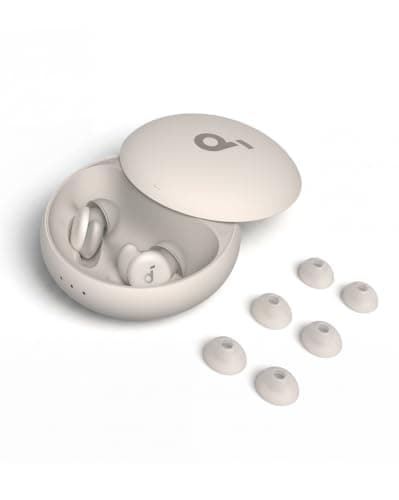 Soundcore Sleep A20 Set The sensible default in the category. Purpose-built earbuds that are small enough to lie on, carry their own sound library so your phone can be across the room, and last a full night with room to spare. Best for: Most people | Most people | |
| 2 | 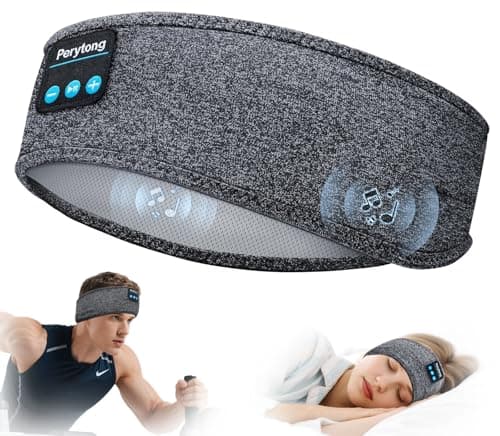 Perytong Sleep Headphones Wireless Headband A stretchy fabric headband with two flat speakers slid into a pocket. It is the least sophisticated product on this page and, for anyone who only wants something to listen to in bed, the one most people should try first. Best for: The cheapest thing that actually works | The cheapest thing that actually works | $15.99 · View on Amazon Price as of October 18, 2026. #ad — we earn a commission. |
| 3 | 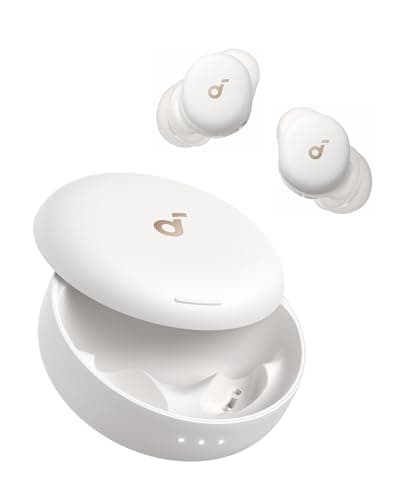 Soundcore Sleep A30 Special The only pick here that attacks snoring on two fronts: active noise canceling aimed at low-frequency sound, plus a case that listens for the snore and adapts the masking audio to it. If a partner is the reason you are shopping, this is the one. Best for: A partner who snores | A partner who snores | |
| 4 | 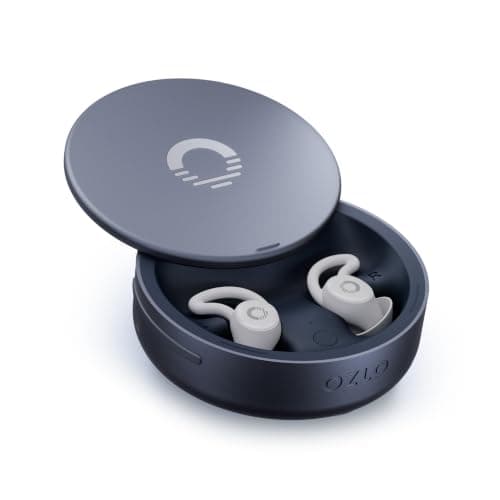 Ozlo Sleepbuds 2 The most thought-through product in the category and easily the most expensive. Built by ex-Bose sleepbuds engineers, it is 11mm thick, weighs under two grams a side, and knows when you have fallen asleep. Best for: The smallest buds for hard side sleepers | The smallest buds for hard side sleepers | $279.00 · View on Amazon Price as of October 18, 2026. #ad — we earn a commission. |
| 5 | 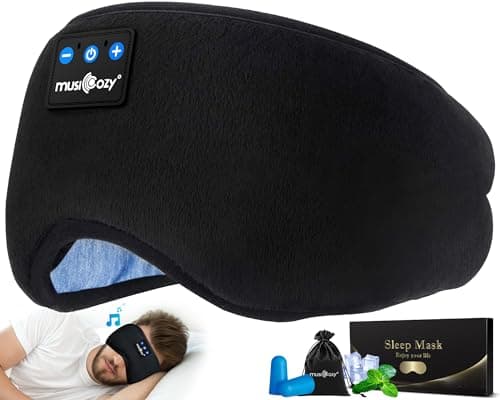 MUSICOZY Sleep Headphones Eye Mask One product doing the job of two. If you already sleep in an eye mask and were going to buy a headband as well, this is the version that does not stack two things on your head. Best for: Blocking light and playing sound at once | Blocking light and playing sound at once | |
| 6 | 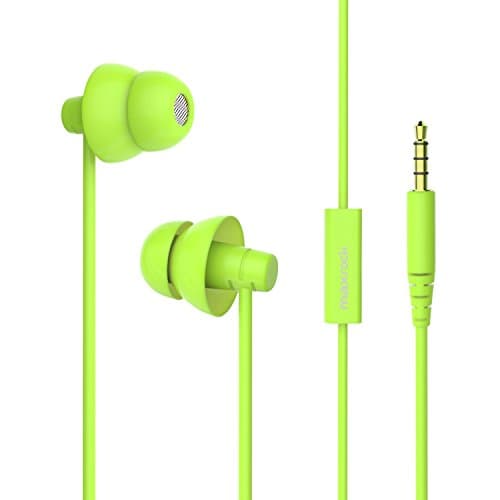 MAXROCK Wired Sleep Earphones Soft silicone buds on a cord, and that is the entire product. It costs less than a takeaway, it never needs charging, and it works with anything that has a headphone jack. Best for: No charging, no pairing, no app | No charging, no pairing, no app | $9.90 · View on Amazon Price as of October 18, 2026. #ad — we earn a commission. |
Three different products share this name
Search for sleep headphones and you get three unrelated things on the same results page, at prices that differ by a factor of thirty. It is worth separating them before you look at a single listing, because picking the wrong category is a far more expensive mistake than picking the wrong model within it.
Sleep earbuds are purpose-built in-ear devices, shrunk down so you can lie on them and given batteries long enough to last a night. They are the only type that blocks meaningful noise, because a sealed tip in the ear canal is the only thing here that seals anything. They are also the expensive end. Audio headbands are a stretchy fabric band with two flat speakers in a pocket. Nothing enters your ear, the band washes, they cost a few dollars, and they block essentially nothing. Wired earbuds designed for sleep are soft silicone buds on a cord: no battery, no pairing, nothing to charge, and a cable in your bed. There is also a hybrid worth knowing about - an eye mask with speakers built into it, which handles light and sound in one item.
Each of those solves a different problem. The rest of this page is about matching the problem to the product, and then about the three specs that decide whether you are still wearing the thing a month later.
First, be honest about what you want them to do
Most people who buy sleep headphones want one of two things, and they are not the same purchase.
If you want silence, you do not want headphones. You want earplugs. They block more than any earbud on this page, they cost a fraction, they need no charging, there is no app, no pairing and nothing to fail at 3am. Our best earplugs for sleeping roundup sorts them by comfort against the pillow, which for a side sleeper matters as much as the blocking figure printed on the box. This is the single most useful sentence on this page and we would rather you acted on it than bought something from us.
If you want a sound in the room - to cover a snore, a street or a thin wall - and you do not care that it comes from your ear, then a machine on the nightstand is simpler and cheaper than anything you wear. See best white noise machines, and if the problem is a specific person, how to stop a partner disturbing your sleep works through the options in order of cost.
Sleep headphones are for the third case: you want to hear something specific - a podcast, an audiobook, a meditation, rain - or you want to hear something and block the room at the same time. That last combination is the one job earplugs and sound machines genuinely cannot do, and it is the honest reason this category exists.
What we judged them on
We have no lab and we take no measurements, so the criteria here are all things you can check yourself on a listing or a manufacturer spec sheet, plus reasoning about how the thing is built. In rough order of how much they matter:
Profile against the pillow. The number one reason people abandon sleep audio is discomfort, not sound. Thickness and weight per earbud are published for the good ones, and they are the specs we weight most heavily. What it actually blocks. Passive sealing, active noise canceling and masking are three different mechanisms and only one of them is in most of these products. Battery against a real night. Eight hours is a night; six is not. Whether your phone has to be in the bed. Onboard sound libraries are worth more than they look, because taking the phone out of the bedroom is often the actual fix. Hygiene and washability. Anything worn on your head for eight hours a night needs cleaning, and whether it goes in your ear canal changes the risk profile. And price bracket - not because cheap is good, but because the cheapest option here is a legitimate way to test whether you like sleeping to audio before spending three figures finding out.
Thickness is the whole game for side sleepers
If you sleep on your back, most of this category works and you can buy on features. If you sleep on your side - and most people do - the geometry is brutal. Your ear is pressed between your skull and a compressed pillow, and anything protruding from your ear canal becomes a lever with your own head weight behind it. That is not a comfort preference; Cleveland Clinic notes that pressure from a poorly fitting bud over a whole night can damage the skin of the ear canal.
This is why the published dimensions are the specs worth reading. Ozlo puts the Sleepbuds 2 at 11mm high and 1.6 grams per bud; Soundcore puts the Sleep A20 at 3.1 grams and the A30 at about 3 grams. Those numbers are why these cost what they cost - they are what you are actually buying, far more than sound quality, which nobody is evaluating while unconscious. Ordinary earbuds and AirPods are built to a completely different brief and stick out proportionally further, which is why almost everyone who tries sleeping in them gives up.
A headband looks like it should win here and often does not: two speaker discs inside a fabric sleeve are frequently thicker than a well-designed sleep earbud, and the band adds warmth around your head. If you are a committed side sleeper, the honest ranking is a purpose-built earbud first, a headband second, and normal earbuds not at all. A pillow that keeps your head properly supported helps too - our best pillows for side sleepers roundup covers the loft side of the same problem.
Blocking, canceling and masking are three different words
The marketing in this category blurs three mechanisms that behave completely differently, and knowing which one you are buying prevents most of the disappointment.
Passive blocking is a physical seal. A silicone tip in your ear canal stops sound getting in, exactly like an earplug, and how well it works depends entirely on whether that tip fits you. The Soundcore A20 is a passive-only device - Soundcore states plainly in its own spec table that it has no active noise canceling - and so, notably, is the far more expensive Ozlo, which describes itself as passive cancellation via silicone tips plus masking audio, explicitly not ANC. That is unusually candid for a premium product and worth respecting.
Active noise canceling generates an inverted waveform to reduce incoming sound, and it works best on steady low-frequency noise: traffic rumble, a furnace, an appliance hum, a plane cabin. Soundcore describes exactly that band for the A30. What ANC does not do is remove speech, a door closing, or the irregular top end of a snore.
Maskingis the one most of these products actually rely on: play a broad, steady sound so the intrusive noise stops standing out against the quiet. This is the same principle as a sound machine, moved into your ear. The evidence for it is genuine but modest - Sleep Foundation's review notes a hospital study where white noise helped patients fall asleep 38% more quickly and improved sleep quality across three nights, alongside other work that found no benefit, and concludes the data are inconsistent enough that it comes down to personal preference. That is a fair description of what you are buying: something that helps many people and not everyone.
The A30's adaptive snore-masking is the most interesting version of this idea currently sold - the charging case listens for snoring in real time, analyzes its volume and frequency, and the earbuds adjust the masking audio to match, instead of you reaching for the volume at 2am.
Battery, and the four-in-the-morning problem
A product that only has to work while you are awake can get away with four hours. A product that works while you are unconscious cannot, and this is where the price difference between purpose-built and generic shows up hardest.
The published figures on this page: Soundcore rates the A20 at 14 hours per charge in sleep mode and 80 hours with the case, the A30 Special at 8 to 10 hours per charge and up to five nights with the case, and Ozlo rates the Sleepbuds 2 at up to 14 hours of playback. Budget Bluetooth headbands are typically a single night, which means charging one every day forever. Wired buds never run out, because there is nothing in them to run out.
Here is the thing most listings will not tell you though: you probably should not want audio playing all night. Cleveland Clinic's advice is to use a timer so the sound stops after you fall asleep rather than running until morning, to keep the volume at about half or lower - quiet enough that someone nearby could speak to you and you would hear them - and to be careful with noise canceling, because it also makes an alarm, a phone call or an emergency harder to hear. Set a fade-out timer, and battery life stops being the deciding spec at all.
The part nobody prints on the box
Anything you wear in your ear canal for eight hours a night, every night, has consequences that a product page will not mention. Cleveland Clinic's list is short and worth knowing before you commit to the habit rather than after.
Earbuds sit in the canal and push earwax deeper, which over months can compact into a blockage that causes temporary hearing loss and a stuffed-up feeling and needs removing professionally. Sleeping in them - particularly after a shower, when the canal is already damp - traps moisture in a warm, enclosed space, which is a good description of how an outer ear infection gets started. And the pressure point on a side sleeper is a skin problem as well as a comfort one.
None of that means do not buy them. It means clean them weekly, do not put them in wet ears, keep the volume down, use the timer, and take a night off now and then. It also means that the two cheapest options on this page have a genuine advantage the expensive ones cannot match: a headband and an audio eye mask keep everything outside your ear canal entirely. And if none of the risk appeals, the cleanest answer is to put the sound in the room rather than in your head - which is what a sound machine does, and why Cleveland Clinic names an external speaker as the safest option of all.
Who should buy which
If you want to fall asleep to something and the room is otherwise quiet, buy the Perytong headband. It is the cheapest thing here, nothing goes in your ears, and it will tell you within a week whether sleeping to audio is a habit you actually want. If it is, and you want blocking as well, the Soundcore Sleep A20 is the sensible upgrade and the pick for most people - small enough to lie on, a week of charge in the case, and its own sound library so the phone can stay out of the bedroom.
If the reason you are here is a partner who snores, the A30 is the one built for that specific problem, with canceling aimed at the low end and masking that adapts to the snore - but try a sound machine first, because it is cheaper and requires nothing in your ears. If you sleep hard on your side and have already found that ordinary sleep buds bother you, the Ozlo Sleepbuds 2 are the smallest and lightest option made, at a price that only makes sense once you know you will use them nightly. If light wakes you as much as noise, the MUSICOZY mask does both jobs adequately and neither perfectly - a dedicated sleep mask is better at blackout if that is the real problem. And if you simply do not want another thing to charge, the wired MAXROCK buds cost almost nothing and never go flat.
As always, nothing here was lab-tested. These picks come from reading what the manufacturers actually publish, refusing the claims they cannot support, and reasoning from how each design has to behave - the method described on how we review. Where a figure appears on this page, it is the manufacturer's or the seller's own, and it is labeled as such.
The picks, in full
1. Best for Most people
Soundcore Sleep A20 Set
The sensible default in the category. Purpose-built earbuds that are small enough to lie on, carry their own sound library so your phone can be across the room, and last a full night with room to spare.
Key specs
- Sleep mode 14 hours per charge, 80 hours with the case (manufacturer figure)
- Bluetooth mode 10 hours per charge, 55 hours with the case (manufacturer figure)
- 3.1g per earbud, Bluetooth 5.3 (manufacturer figure)
- Twin-Seal ear tips, passive blocking only - no active noise canceling (manufacturer states ANC: No)
- MEMS sensor tracks movement, sleep position and duration; alarm plays through the earbuds (manufacturer figure)
What's good
- It is designed around the pillow rather than around music: at roughly three grams a side with a low, rounded body, it is one of the few sets of earbuds you can actually lie on without your ear being levered by them
- The onboard sound library matters more than it sounds - you can leave your phone charging in the hall and still fall asleep to noise, which removes the single worst sleep habit most people who buy these are trying to fix
- 80 hours of sleep-mode playtime with the case means you charge it roughly once a week rather than fighting a dead earbud at bedtime, and the in-ear alarm wakes you without waking anyone else
What's not
- There is no active noise canceling here at all, and Soundcore says so in its own spec table - the blocking is entirely down to how well the ear tips seal, so a bad fit means no blocking
- Anything in your ear canal for eight hours a night has hygiene consequences: Cleveland Clinic notes earbuds push earwax deeper and can trap moisture, and that is as true of this pair as any other
- The sleep tracking is a movement sensor and a clock, not a medical instrument - treat the reports as a rough diary rather than data
Skip this one if
You want silence and nothing else. These are audio devices with good passive isolation, not hearing protection - a set of foam or silicone earplugs blocks more, costs a fraction, and needs no charging.
2. Best for The cheapest thing that actually works
Perytong Sleep Headphones Wireless Headband
A stretchy fabric headband with two flat speakers slid into a pocket. It is the least sophisticated product on this page and, for anyone who only wants something to listen to in bed, the one most people should try first.
Price as of October 18, 2026. #ad — we earn a commission.
Key specs
- Bluetooth headband with ultra-thin speakers (as listed)
- Speakers sit in a fabric sleeve, nothing enters the ear canal (as listed)
- Marketed for sleeping, workouts, travel and meditation (as listed)
- Sold in several colors (as listed)
What's good
- Nothing goes into your ear canal, which sidesteps the earwax and moisture problems that come with sleeping in earbuds entirely - the honest reason to prefer a headband over buds
- The speakers pull out of the sleeve so the band itself can be washed, and a fabric strip worn against your face every night for a year genuinely needs washing
- It costs about the same as a takeaway coffee round, which makes it the cheapest way to find out whether you like sleeping to audio at all before spending three figures on buds
What's not
- It blocks essentially nothing - a soft band over your ears is not a seal, so a snoring partner is still audible under whatever you are playing
- The band bunches and rides up on some head shapes, and a strip of fabric wrapped round your head is warmer than nothing, which is a real problem in a warm bedroom
- Battery life is a single night at best on most units, so it becomes another thing to charge daily, and cheap Bluetooth modules are usually the first part to fail
Skip this one if
You sleep on your side with your ear firmly into the pillow and you need real blocking. The speakers are thin but they are still discs against your ear, and the band does not isolate - buy sleep earbuds or earplugs instead.
3. Best for A partner who snores
Soundcore Sleep A30 Special
The only pick here that attacks snoring on two fronts: active noise canceling aimed at low-frequency sound, plus a case that listens for the snore and adapts the masking audio to it. If a partner is the reason you are shopping, this is the one.
Key specs
- Triple system: active noise canceling, passive isolation and adaptive snore-masking (manufacturer description)
- The smart case detects snoring in real time and analyzes its volume and frequency (manufacturer description)
- Sleep A30 Special: 8-10 hours per charge, up to 5 nights with the case (manufacturer figure)
- About 3g per earbud, Bluetooth 5.4 (manufacturer figure)
- Ships with silicone and foam ear tips in multiple sizes (manufacturer figure)
What's good
- Active noise canceling is genuinely useful against the low-frequency half of a bedroom - traffic rumble, a furnace, an appliance hum - which is exactly the band that passive tips leak the most
- The adaptive snore-masking is the more interesting idea: rather than playing a fixed noise all night, the case listens and the buds respond, so the masking rises to meet the snore instead of you turning the volume up
- It reports sleep duration, position and snoring, which for once is a tracking feature with a point - it tells you whether the person keeping you awake is snoring more on some nights than others
What's not
- It is the most expensive Soundcore option here and the Amazon listing for this particular Special edition is unusually thin - it does not spell out what is in the box, so read the listing carefully before you order
- Battery per charge is materially shorter than the A20's sleep mode, and running ANC is what costs you - a long sleeper streaming with ANC on can reach the end of a charge before morning
- ANC is not silence and no honest description of it is: it reduces low-frequency noise, it does not remove a voice, a door or a dog
Skip this one if
Your problem is a partner who snores and you do not want to wear anything at all. A sound machine on the nightstand solves the same problem with nothing in your ears - start there, and buy these only if the machine is not enough.
4. Best for The smallest buds for hard side sleepers
Ozlo Sleepbuds 2
The most thought-through product in the category and easily the most expensive. Built by ex-Bose sleepbuds engineers, it is 11mm thick, weighs under two grams a side, and knows when you have fallen asleep.
Price as of October 18, 2026. #ad — we earn a commission.
Key specs
- 11mm high, 1.6g per earbud - the smallest here (manufacturer figure)
- Up to 14 hours of playback per charge (manufacturer figure)
- Sleep-detecting accelerometer switches from streaming to noise masking once you are asleep (manufacturer description)
- Case carries ambient noise, temperature and light sensors (manufacturer figure)
- Passive noise cancellation via silicone tips - explicitly not ANC - plus adaptive masking audio; IPX4; four tip sizes (manufacturer figure)
What's good
- 1.6 grams and 11 millimeters is the real headline: this is the pair least likely to be felt through a pillow, and for a committed side sleeper that single number decides whether any of this works
- The auto-switch is the feature everyone else should copy - your podcast fades out when the accelerometer decides you are asleep and masking audio takes over, so you are not woken at 1am by an episode ending
- Ozlo is honest in its own spec sheet that this is passive isolation plus masking rather than ANC, which is more candour than most of this category manages
What's not
- The price is the whole objection. This costs more than a good mattress topper and several times what the A20 costs, for a device whose core job is playing sound quietly at your ear
- No ANC means it depends entirely on tip seal for blocking, exactly like the cheaper Soundcore A20 - you are paying for size, sensors and the auto-switch, not for more isolation
- It is a small company in a category with a graveyard behind it - Bose discontinued its own Sleepbuds line, and a discontinued audio product with an app dependency ages badly
Skip this one if
You are not certain you will still be wearing these in six months. Try a cheap headband or the A20 first; if you find you sleep in them every night and only the bulk bothers you, that is the moment this price makes sense.
5. Best for Blocking light and playing sound at once
MUSICOZY Sleep Headphones Eye Mask
One product doing the job of two. If you already sleep in an eye mask and were going to buy a headband as well, this is the version that does not stack two things on your head.
Key specs
- Sleep eye mask with built-in HD speakers (as listed)
- Bluetooth 5.4 (as listed)
- Speakers sit over the ears - nothing in the ear canal (as listed)
- Mask and electronics separate for washing (as listed)
What's good
- Combining the mask and the audio removes a real annoyance: a separate band and a separate mask fight each other on your head and one of them always slides
- Like the headband, it keeps everything out of your ear canal, which is the single biggest hygiene advantage over sleeping in earbuds
- It is the cheapest way to address light and noise in one purchase, and light is the variable most people underestimate - a summer sunrise at 5am beats most sleep problems
What's not
- It is a compromise on both jobs: the blackout is not as complete as a dedicated contoured mask and the audio is no better than the cheapest headband
- A padded mask with electronics in it is warm on your face, and anyone who already runs hot at night will notice it
- Side sleeping with a strap plus speakers plus a pillow is more pressure on the same ear than any single-purpose device here
Skip this one if
You need genuine blackout. A mask built around the audio is a mask first compromised by speakers second - if light is your actual problem, buy a proper contoured sleep mask and play sound from something else.
6. Best for No charging, no pairing, no app
MAXROCK Wired Sleep Earphones
Soft silicone buds on a cord, and that is the entire product. It costs less than a takeaway, it never needs charging, and it works with anything that has a headphone jack.
Price as of October 18, 2026. #ad — we earn a commission.
Key specs
- Wired 3.5mm connection (as listed)
- Total silicone body designed to sit flat in the ear (as listed)
- In-line microphone (as listed)
- No battery, no Bluetooth pairing (as listed)
What's good
- There is no battery to die at 3am and no pairing to fail, which is a genuine advantage for a device whose entire job happens while you are unconscious
- The soft silicone body is designed to sit flush rather than protrude, so it is one of very few wired options a side sleeper can tolerate
- At this price it is effectively disposable - you can lose one in the bedding, replace it, and not think about it, which is not true of anything else on this page
What's not
- A cord in a bed tangles, wraps and gets yanked, and there is no version of this that does not sometimes pull an earbud out overnight
- Most modern phones have no headphone jack, so for many people this needs a dongle or an old device kept by the bed
- Sound quality is what you would expect at this price, and the silicone body seals loosely, so it blocks very little
Skip this one if
You move a lot in your sleep or you share the bed. A cord across a bed with two people in it is the most reliably annoying thing on this list - go wireless, or use a sound machine instead.
Common questions
Is it safe to sleep with headphones in every night?
Mostly, with real caveats worth knowing before you make it a nightly habit. Cleveland Clinic lists four things to watch: earbuds sit in the ear canal and can push earwax deeper, which can cause temporary hearing loss and a blocked feeling; sleeping in them - especially after a shower - traps moisture in a warm canal, which is how outer ear infections start; side sleepers can get real pain and skin damage from a bud pressed into the ear all night; and noise-canceling audio makes it harder to hear an alarm, a phone call or an emergency. Their practical advice is to keep the volume at about half or lower, low enough that someone nearby could speak to you and you would hear them, to use a sleep timer so the audio stops rather than playing until morning, and to clean the buds weekly. The simplest way to avoid the ear-canal problems entirely is a headband or an audio eye mask, where nothing goes inside your ear at all.
Sleep earbuds or an audio headband - which should I buy?
Buy the headband first unless you specifically need blocking. If all you want is a podcast, an audiobook or rain sounds to fall asleep to, a fabric band with flat speakers does that for a few dollars, keeps your ear canal clear, and washes. Buy sleep earbuds when the sound in the room is the problem rather than the absence of sound - a partner, a street, a thin wall - because only a sealed tip in the ear canal blocks anything, and a soft band over your ears blocks essentially nothing. The other thing that pushes people to buds is side sleeping: a good pair of sleep earbuds is smaller against the pillow than a band with speakers in it, even though the band sounds like it should be flatter.
Do sleep headphones actually block snoring?
Not by canceling it. Snoring is loud, irregular and covers a wide frequency range, and no consumer earbud removes it. What these products do is mask it - play a broadband sound that reduces the contrast between the snore and the quiet around it, so the snore stops standing out as an event that wakes you. The evidence for masking is real but modest: Sleep Foundation's review of noise and sleep cites a hospital study where white noise helped patients fall asleep 38% more quickly and improved sleep quality over three nights, alongside other research that found no benefit, and concludes that the data are inconsistent enough that it comes down to personal preference. Active noise canceling, on the A30 here, helps with the low-frequency rumble underneath a room rather than with the snore itself. If a partner's snoring is the entire reason you are shopping, try a sound machine on the nightstand first - it costs less, needs nothing in your ears, and often does the same job.
Will they last all night?
The purpose-built ones will; the cheap ones usually will not. Soundcore publishes 14 hours per charge for the A20 in sleep mode and 80 hours with the case, and Ozlo publishes up to 14 hours of playback for the Sleepbuds 2. The A30 Special is rated at 8 to 10 hours per charge, which is a full night but not a long one with active noise canceling running. Budget Bluetooth headbands are typically good for one night and need daily charging, and a wired pair never runs out at all because it has no battery. Worth saying, though: you probably do not want audio playing all night anyway. A sleep timer that fades the sound out after you drop off is better for your ears, better for the battery, and means you can still hear your alarm.
Can I just use my normal earbuds or AirPods?
You can, and most people who try it stop within a week. Standard earbuds are built to survive being handled and to sound good, which makes them bulky - the housing protrudes well beyond the ear, so lying on your side drives it into your ear canal. That is uncomfortable within minutes, and Cleveland Clinic specifically warns that pressure from a poorly fitting bud can damage the skin of the ear canal over a long night. Standard buds also last a few hours rather than a full night, and they have no concept of a sleep mode, an onboard sound library or a gentle in-ear alarm. The entire design difference in a purpose-built sleep earbud is thickness and battery, and both of those are the things that decide whether you keep wearing them.
Are they better than earplugs?
They are a different product, and for a lot of people earplugs are the right answer. If your goal is silence, earplugs win on every axis that matters: they block more, they cost a fraction, they need no charging, there is no app, and there is nothing to fail at 3am. Sleep headphones are for when you want to hear something - a podcast, an audiobook, rain, a masking noise - or when you want to hear something and block at the same time, which is the one job earplugs genuinely cannot do. It is worth being honest with yourself about which of those you are, because the price gap between a pair of earplugs and a pair of sleep earbuds is large and the trap is buying the expensive one for a job the cheap one does better.
Do you make money from these links?
Yes. We earn an Amazon commission if you buy through the links on this page, and that is what pays for the site. We take no free products, we sell no placement, and no brand sees a page before it publishes. The commission is a percentage, which means the expensive picks here pay us more than the cheap ones - so it is worth pointing out that the cheapest product on this page is recommended as the one most people should try first, and that a page about sleep headphones spends several paragraphs telling readers that earplugs or a sound machine may be the better buy. That is deliberate. If our advice tracked our commission, this page would look very different.
Sources
Where the facts on this page come from. We cite other people's testing because we don't do our own — here's what that means.
- Sleep Foundation - noise and sleep (how noise fragments sleep; the mixed evidence on masking sound)
- Cleveland Clinic - is it safe to sleep with earbuds in (earwax, moisture, pressure, volume guidance)
- Soundcore - Sleep A20 published specifications (playtime, 3.1g, Bluetooth 5.3, ANC: No)
- Soundcore - Sleep A30 published specifications (ANC, adaptive snore-masking, playtime)
- Ozlo - Sleepbuds 2 published specifications (11mm, 1.6g, 14 hours, passive isolation not ANC, IPX4)
- FTC - Endorsement guides (why this disclosure exists)
Read next
- The Best Earplugs for SleepingSix earplugs judged for sleeping, where comfort against the pillow matters as much as the NRR on the box, from soft foam to moldable putty for side sleepers.
- The Best White Noise MachinesSix white noise machines split by the only thing that matters - a mechanical fan versus a digital loop - across a bedside classic, a travel unit and budget all-rounders.
- The Best Sleep MasksSix sleep masks that actually block light, judged on the nose gap, the eye cavity and the strap — plus an honest verdict on silk.
- How to Stop a Partner From Disturbing Your SleepThe environment-and-gear fixes for a partner who wakes you: a mattress that absorbs their motion instead of passing it to your side, earplugs and white noise for snoring, separate blankets for the temperature fight, and an eye mask for a schedule mismatch. Plus when snoring is a reason to see a doctor, not rearrange the bed.
- The Best Wake-Up LightsSix sunrise alarm clocks that wake you with a gradual dawn instead of a jolt - spanning a budget full-screen clock, a proven Philips, and a smart Hatch system.
- The Best Blackout Curtains for SleepSix blackout curtains split by the one thing that matters - room-darkening versus a true liner-backed 100% blackout - across a value default, a shift-worker pick, a no-drill renter option and a budget pair.
- The Best Pillows for Side SleepersSix pillows tall and firm enough to fill a side sleeper's shoulder gap without collapsing into it by midnight.
- The Best Travel PillowsSix travel pillows sorted by mechanism, not brand — because a plain U-pillow only stops sideways lean, and the thing that wakes you upright is your head dropping forward.