The Best Wake-Up Lights
Waking to a blaring alarm in a pitch-dark room is a small daily assault. A wake-up light simulates a sunrise so you surface gradually instead. Six of them, from a thirty-dollar clock to a smart bedside system - and who each is wrong for.
We earn a commission if you buy through our links. It doesn't affect our picks — and we never take free products. How this site is funded.
Quick picks
| # | Product | Best for | Price |
|---|---|---|---|
| 1 | 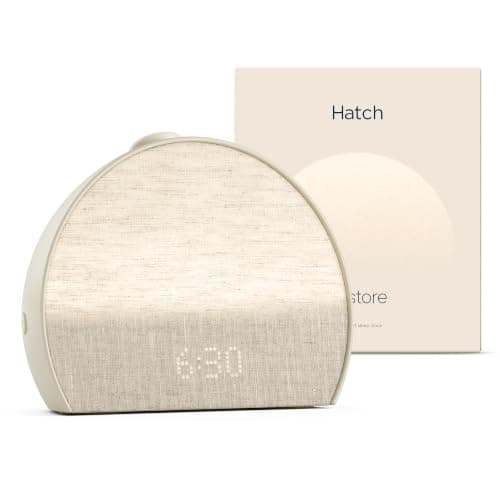 Hatch Restore 3 The one that tries to run your whole evening and morning - a smart light, a sound machine and a wind-down routine in one puck. Excellent, if you accept that some of it lives behind a subscription. Best for: A whole bedside system | A whole bedside system | $169.99 · View on Amazon Price as of September 12, 2026. #ad — we earn a commission. |
| 2 | 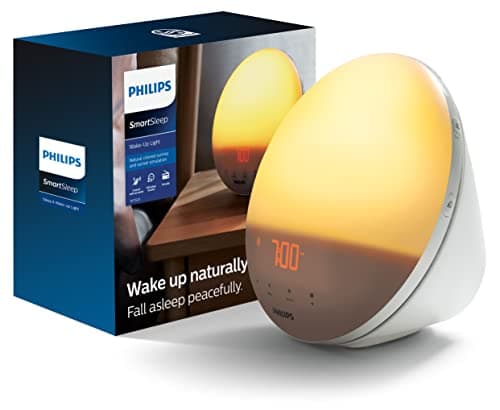 Philips SmartSleep Wake-Up Light The reference wake-up light: a colored sunrise and sunset, a handful of natural sounds, no app, no subscription. It does the job the category is named for and then leaves you alone. Best for: The proven middle ground | The proven middle ground | |
| 3 | 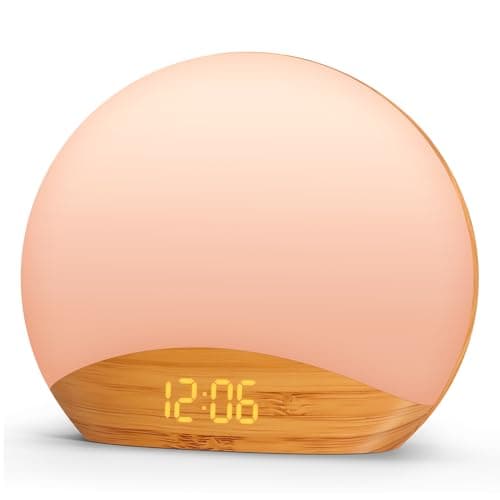 REACHER Wood-Grain Sunrise Clock A sunrise alarm and sound machine wrapped in a wood-grain shell that reads as decor rather than electronics - the pick if the nightstand look matters to you. Best for: Looking like furniture | Looking like furniture | $49.99 · View on Amazon Price as of September 12, 2026. #ad — we earn a commission. |
| 4 | 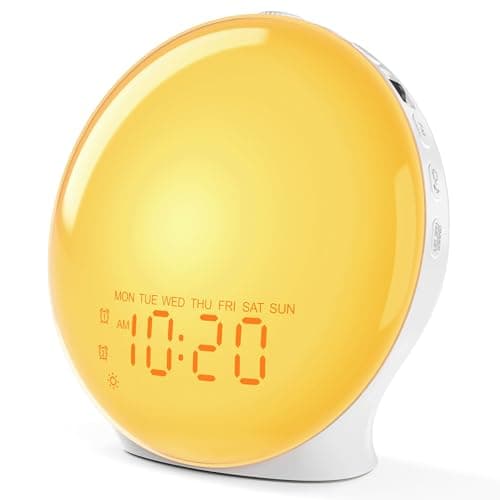 JALL Full-Screen Wake-Up Light Proof that the sunrise itself is not expensive. A dawn simulation, a big readable display, radio and dual alarms for about a third of the Philips price. Best for: The best cheap sunrise | The best cheap sunrise | $39.99 · View on Amazon Price as of September 12, 2026. #ad — we earn a commission. |
| 5 | 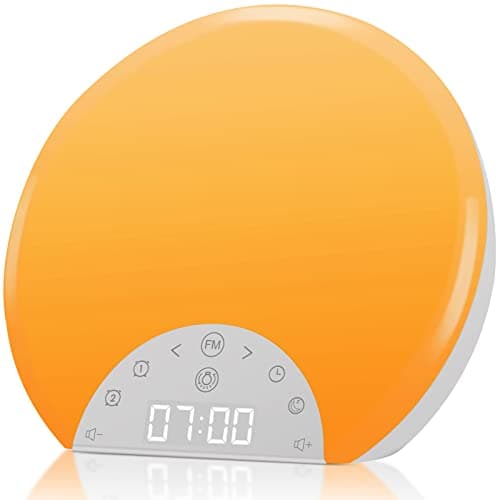 ANTDALIS Sunrise Alarm (Heavy Sleepers) Aimed squarely at the person a gentle light will never wake on its own - it pairs the sunrise with a loud, insistent backup and dual alarms, so the dawn is a bonus, not the whole plan. Best for: Heavy sleepers and kids | Heavy sleepers and kids | $39.99 · View on Amazon Price as of September 12, 2026. #ad — we earn a commission. |
| 6 | 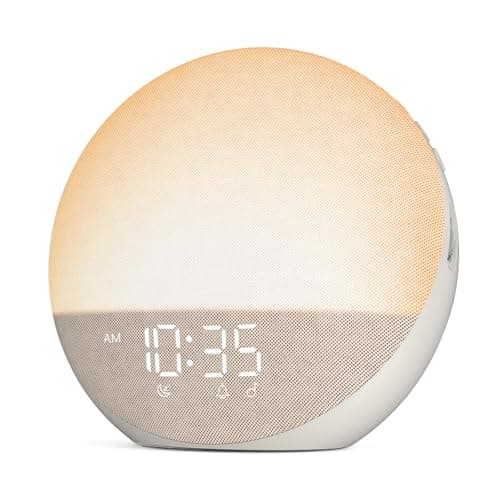 Odokee Sunrise Alarm + White Noise A mid-priced clock that takes the sound side more seriously - a genuine white-noise machine bolted to a sunrise alarm, for people who want both jobs from one device. Best for: Sunrise plus all-night sound | Sunrise plus all-night sound | $59.99 · View on Amazon Price as of September 12, 2026. #ad — we earn a commission. |
Why wake to light instead of noise
A standard alarm works by fright. You are in whatever sleep stage you happen to be in, and a sudden loud sound wrenches you out of it - which is why a jarring wake, especially from deep sleep in a dark room, leaves you groggy and irritable for the first stretch of the day. A wake-up light attacks the problem from the other side. It brightens gradually over the last part of your sleep, and because light is the single most powerful signal your internal clock reads, that brightening coaxes your body toward a lighter sleep stage before the alarm ever sounds. You surface instead of being yanked.
That is the whole pitch, and it is a genuinely good one for the right person: anyone who wakes before the real sunrise, anyone in a dark or windowless room, and anyone who simply hates the daily jolt. It is not a cure for being short on sleep - no clock fixes a 5-hour night - and, as every honest section below will keep saying, it is a gentle tool that some heavy sleepers will out-sleep. But as a way to make the morning less of an assault, the sunrise is a real idea, not a gimmick.
The real divide: a simple clock, or a smart system
Shop this category and you will notice the field splits cleanly in two, and the split is the first decision to make. On one end are simple sunrise clocks - the JALL, the ANTDALIS, the Philips. They do their job from the device itself, with buttons and a display, no app and no account. On the other end are smart bedside systems - the Hatch is the example here - that add an app, guided routines, a whole content library, and sometimes a subscription.
Neither end is wrong; they are aimed at different buyers. If you want a better alarm and nothing more, a simple clock is not a compromise - it is the correct, cheaper answer, and the sunrise itself is just as real on a thirty-dollar JALL as on anything pricier. If you want the device to also run an evening wind-down, play curated sleep content, and look like a design object, the smart system earns its money - as long as you go in knowing part of it may sit behind a subscription. Decide which buyer you are before you compare features, because the two ends barely compete.
The specs that matter, and the ones that don't
Ignore most of the feature list and look at these:
- How gradual and how bright the sunrise is. This is the entire product. Premium lights (Philips, Hatch) ramp through more, subtler steps and get brighter at the top; budget clocks do a coarser job. Both wake you; one is nicer about it.
- A sound backup, and how loud it goes. Every good model has one, because the light alone will not wake everyone. Heavy sleepers should treat the sound rating as a primary spec, not an afterthought.
- A display that dims truly low. A clock that glows all night is a sleep problem. The best ones dim to near-black or off.
- A sunset or wind-down mode, if you want help falling asleep as well as waking - a genuine bonus on the Philips and Hatch.
The features that rarely matter: FM radio (a leftover from clock radios), huge sound libraries you will never scroll through, and color-changing mood light. They are fine to have and a poor reason to spend more. If it is the all-night sound you actually care about, a dedicated white noise machine does that job better than any clock's built-in loop.
The subscription trap
This is the one place the category can quietly cost more than the sticker. Smart bedside systems increasingly gate part of their content - guided meditations, extra soundscapes, some routines - behind a monthly subscription. The core alarm and sunrise generally work without paying, but the experience the marketing shows you may not be the one you get for free. None of that makes a smart system a bad buy; it makes it a bigger buy than the price tag, and you should decide whether you want a recurring bill on your nightstand before you commit. A simple clock has no such asterisk: you pay once and own it.
Placement, and a note for a dark room
A wake-up light only works if it can reach your face, so it wants to be on the nightstand, roughly at bed height, not across the room or tucked behind a stack of books. That is the opposite of where you would put a phone alarm you have to get up to silence - which is worth remembering if you are a heavy sleeper, because the two strategies pull in different directions. One honest tension in this whole category: the people who most want a gentle light (deep sleepers) are also the ones most likely to sleep through it, so for them the light is the pleasant part and a well-placed sound alarm is the insurance.
And if you are someone who needs the room genuinely dark to fall asleep, make sure whatever you buy dims to near-nothing, and darken the room itself with blackout curtains - or, for the stray light the curtains miss at the edges, a sleep mask for the hours before the sunrise is due. A mask blocks stray light without stopping the clock from brightening the room when it is time - the two work together.
Who should skip a wake-up light entirely
Two people. If you already wake easily and cheerfully to a normal alarm, this is a nice-to-have, not a fix - spend the money on your bed or on blocking evening light instead. And if you are a genuinely heavy sleeper chasing a device that will drag you out of deep sleep, be realistic: the gentle ones will not, and the ones that will do it with a loud backup you could have bought for less. Everyone in between - the light and average sleepers who hate the jolt, the winter-dark-morning crowd, the windowless-room crowd - is exactly who this category is for.
As with everything here, none of these were tested in a lab; there isn't one. The picks come from reading the listings and sorting the field by the things that decide whether you keep the clock - the light, the backup, the dimming, and whether it quietly asks for a subscription. The full method is on how we review.
The picks, in full
1. Best for A whole bedside system
Hatch Restore 3
The one that tries to run your whole evening and morning - a smart light, a sound machine and a wind-down routine in one puck. Excellent, if you accept that some of it lives behind a subscription.
Price as of September 12, 2026. #ad — we earn a commission.
Key specs
- Sunrise + sunset light (as listed)
- Built-in sound machine
- App-controlled routines
- Reading light / night light
- Some content requires a paid subscription
What's good
- It handles both ends of the day: a sunset wind-down and sound at night, then a gradual sunrise and alarm in the morning, so it replaces a separate sound machine and reading lamp on the nightstand
- The app makes setting routines genuinely easy, and the light and sounds are a clear step up in quality and control from the budget clocks
- It looks like a piece of furniture rather than a gadget, which matters for something that sits in view on your nightstand every day
What's not
- The big one: a chunk of the guided content and some features sit behind a paid Hatch subscription, so the sticker price is not the whole cost - the core alarm works without it, but you are being upsold
- It is comfortably the most expensive pick here, and much of the premium is the app and the design rather than a brighter sunrise
- It depends on an app and an account, which is more setup and more surface area to break than a clock with buttons
Skip this one if
You just want a light that wakes you and nothing else. You would be paying for an ecosystem and a possible subscription you will not use - the Philips or the budget JALL below give you the sunrise without the account.
2. Best for The proven middle ground
Philips SmartSleep Wake-Up Light
The reference wake-up light: a colored sunrise and sunset, a handful of natural sounds, no app, no subscription. It does the job the category is named for and then leaves you alone.
Key specs
- Colored sunrise + sunset simulation (as listed)
- 5 natural wake sounds (as listed)
- FM radio (as listed)
- Tap-to-snooze top
- No app or subscription
What's good
- Philips has made these longer than almost anyone, and the colored sunrise - deep red through orange to bright yellow-white - is the one most imitators are copying
- Everything runs from the device itself with no app and no account, which is both simpler and one less thing that can stop working after a firmware update
- A proper sunset simulation as well as a sunrise, so it helps you wind down at night, not just wake in the morning
What's not
- It costs more than the budget clocks and gives you a small, curated set of sounds rather than a big menu - you are paying for the light quality, not variety
- The controls are more fiddly than a touchscreen; setting it takes a minute with the manual the first time
- No sound machine in the all-night sense - the sounds are for waking and winding down, not for masking noise all night
Skip this one if
Your budget is tight and you only need the sunrise itself. The JALL below simulates a dawn for a third of the price - buy the Philips for the better light and the brand, not because the cheaper one lacks a sunrise.
3. Best for Looking like furniture
REACHER Wood-Grain Sunrise Clock
A sunrise alarm and sound machine wrapped in a wood-grain shell that reads as decor rather than electronics - the pick if the nightstand look matters to you.
Price as of September 12, 2026. #ad — we earn a commission.
Key specs
- Sunrise simulation (as listed)
- Built-in sound machine (as listed)
- Dimmable night light
- Dual alarms (as listed)
- Snooze
What's good
- The wood-grain design genuinely looks the part on a nightstand, so it is a strong gift for someone who would never buy a plastic gadget clock
- It folds in a sound machine as well as the sunrise, so it covers the night as well as the morning at a mid-range price
- Dual alarms are useful for couples or for a weekday/weekend split without reprogramming every night
What's not
- The sunrise is effective but the light is not as refined or as bright as the Philips or Hatch - it is a mid-tier dawn, not a premium one
- The recorded sounds loop, so the same repeat caveat that applies to cheap sound machines applies here if you run them all night
- It is a smaller brand, so the long-term reliability is less certain than a Philips
Skip this one if
You want the brightest, most gradual sunrise on the page. This is a design-led mid-ranger; if the light quality is your priority, spend up on the Philips.
4. Best for The best cheap sunrise
JALL Full-Screen Wake-Up Light
Proof that the sunrise itself is not expensive. A dawn simulation, a big readable display, radio and dual alarms for about a third of the Philips price.
Price as of September 12, 2026. #ad — we earn a commission.
Key specs
- Sunrise + sunset simulation (as listed)
- Full-screen dimmable display
- Multiple colors and brightness levels (as listed)
- FM radio + nature sounds (as listed)
- Dual alarms
What's good
- It delivers the core promise - a gradual light that ramps up before the alarm sound - for a genuinely low price, which is the whole reason to consider the category budget-first
- The full-screen display is large and readable, and crucially it dims low enough not to light the room while you sleep
- Dual alarms, radio, colored light options and a snooze cover the practical bases a lot of pricier clocks charge more for
What's not
- The sunrise is real but coarser than the premium lights - fewer, less subtle steps from dark to bright
- It is a budget electronics brand, so build quality and button feel are what you would expect at the price
- The nature sounds are short loops, fine as a wake tone but not an all-night sound machine
Skip this one if
You are a very heavy sleeper who needs a loud, insistent backup. The gentle end of a budget clock may not be enough on its own - pair it with a phone alarm across the room, or step up to the ANTDALIS below aimed at deep sleepers.
5. Best for Heavy sleepers and kids
ANTDALIS Sunrise Alarm (Heavy Sleepers)
Aimed squarely at the person a gentle light will never wake on its own - it pairs the sunrise with a loud, insistent backup and dual alarms, so the dawn is a bonus, not the whole plan.
Price as of September 12, 2026. #ad — we earn a commission.
Key specs
- Sunrise wake light (as listed)
- Dual alarms (as listed)
- Loud backup alarm sounds
- Adjustable brightness
- Aimed at kids and deep sleepers (as listed)
What's good
- It accepts an honest truth the premium lights skate past: a sunrise alone does not wake a genuinely heavy sleeper, so this one leans on a strong sound backup as well
- Dual alarms suit a household - one for a child, one for a parent, or a weekday and a weekend time
- Marketed for kids' rooms, and the simple controls and colored light do suit that job at a low price
What's not
- The light quality is basic - this is a loud clock with a sunrise attached, not a premium dawn simulator
- Leaning on a loud backup somewhat defeats the gentle-waking purpose for people who chose the category to escape jarring alarms
- Budget brand, budget materials
Skip this one if
A gentle light already wakes you and a blaring backup is exactly what you were trying to leave behind. Buy the Philips - the whole point there is that you rarely reach the sound.
6. Best for Sunrise plus all-night sound
Odokee Sunrise Alarm + White Noise
A mid-priced clock that takes the sound side more seriously - a genuine white-noise machine bolted to a sunrise alarm, for people who want both jobs from one device.
Price as of September 12, 2026. #ad — we earn a commission.
Key specs
- Sunrise wake light (as listed)
- White noise / nature sounds (as listed)
- Dual alarm
- Dimmable display and light
- Snooze
What's good
- It puts real effort into the night as well as the morning, so it can replace a separate sound machine for people fighting both a noisy room and a hard wake-up
- Mid-range price for a two-in-one that would otherwise be two purchases
- Dimmable display and light, which is the feature people most often complain is missing on cheaper clocks
What's not
- Doing two jobs means it is a master of neither - the light is not Philips-grade and the sound is not a dedicated machine's equal
- Recorded sound loops, with the usual repeat caveat over a full night
- Smaller brand, so support and longevity are less proven
Skip this one if
You already own a sound machine you like. You would be paying for a second one built into the clock - buy a light-only sunrise clock and keep the machine you trust.
Common questions
Do wake-up lights actually work?
For a lot of people, yes - not as magic, but as a gentler way to surface. Light is the strongest signal your body clock uses, and a gradual brightening in the last stretch of sleep nudges you toward a lighter stage, so the alarm that follows meets you closer to already-awake instead of yanking you out of deep sleep. The effect is most noticeable if you wake before dawn or in a dark, windowless room. It is not a substitute for enough total sleep, and heavy sleepers usually still need a sound backup - but as a way to make waking less brutal, the sunrise is a real, well-established idea.
What is the difference between a wake-up light and a sunrise alarm clock?
Nothing meaningful - they are two names for the same product. Both brighten gradually before your set time to simulate a sunrise, and nearly all of them also include a backup sound alarm and a clock display. Some brands lean on one name over the other in their marketing, but if a device promises a gradual light before a set wake time, it is the same category whatever the box calls it.
Can a wake-up light help with dark winter mornings or seasonal low mood?
It can make waking in the dark far more pleasant, which is the honest, non-medical claim. Waking before the real sunrise in winter is exactly the situation a sunrise alarm is built for, and many people find the darker months easier with one. Be careful with bigger claims, though: treating seasonal affective disorder is a job for a doctor and, often, a dedicated light-therapy device with a specific brightness and duration. A bedside wake-up light is a nicer alarm, not a medical treatment - if you suspect a seasonal mood disorder, talk to a professional.
Are wake-up lights bright enough to wake a heavy sleeper?
Often not on their own, and any honest answer has to say so. A gradual light is gentle by design, which is wonderful for a light or average sleeper and sometimes not enough for someone who sleeps through everything. That is why every good model includes a sound alarm as a backup, and why we included a pick aimed specifically at heavy sleepers with a louder, more insistent one. If you are the person who sleeps through three phone alarms, treat the sunrise as a bonus and choose a model with a strong sound backup, or keep a second alarm across the room.
Should the light stay on all night?
No - keep it off or use only a very dim, warm night-light setting. Light suppresses the melatonin that keeps you asleep, so a bright display or glow works against you all night and undoes the gentle wake it is trying to buy you in the morning. Choose a model whose clock display dims genuinely low, set any night light to warm and faint, and let the room stay dark until the sunrise is meant to begin. If you want the room truly black, pair the clock with a sleep mask.
Sources
Where the facts on this page come from. We cite other people's testing because we don't do our own — here's what that means.
Read next
- The Best White Noise MachinesSix white noise machines split by the only thing that matters - a mechanical fan versus a digital loop - across a bedside classic, a travel unit and budget all-rounders.
- The Best Sleep MasksSix sleep masks that actually block light, judged on the nose gap, the eye cavity and the strap — plus an honest verdict on silk.
- The Best Earplugs for SleepingSix earplugs judged for sleeping, where comfort against the pillow matters as much as the NRR on the box, from soft foam to moldable putty for side sleepers.
- The Best Temperature for Sleep (and How Your Bedding Gets You There)The bedroom temperature commonly recommended for sleep is around 65-68 F (about 18-20 C), because your body lowers its core temperature to fall and stay asleep and a warm room fights that. This guide covers why, plus the bedding levers that get you there — breathable sheets, a mattress that ventilates, a cooler pillow, seasonal comforter weight, and simple airflow.
- The Best Weighted BlanketsSix weighted blankets worth buying, judged on weight, fill, breathability and whether you can actually wash them - with no health claims attached.
- How Your Sleep Position Changes the Bed You NeedEach sleep position presses a different shape into the bed. Side wants softer plus a tall pillow, back medium-firm plus medium loft, stomach firm plus flat or none.