Bamboo vs TENCEL Sheets
Buy TENCEL if you want to know what you are getting: it is a brand name with a traceable fiber and a closed-loop process behind it, and the Amelie Home set delivers it at a normal sheet price. Buy bamboo viscose if you want the same silky feel for less and do not need the paperwork - they are closer in the bed than the marketing suggests.
We earn a commission if you buy through our links. It doesn't affect our picks — and we never take free products. How this site is funded.
Both are rayon. That is the honest starting point
A bamboo sheet and a TENCEL sheet are made the same way. Plant cellulose - bamboo stalk in one case, eucalyptus wood in the other - is dissolved into a thick liquid and extruded back out through tiny holes as filament, which is then spun into yarn and woven. Fabric made that way is called regenerated cellulose, and in the US it gets labeled rayon, viscose, lyocell or modal depending on the process.
So the plant on the front of the package is close to irrelevant. What actually differs between these two sheets is the solvent chemistry used to dissolve the pulp, and what the label is allowed to tell you about it.
What TENCEL actually certifies
TENCEL is not a fiber. It is a brand - Lenzing's trademark for its lyocell and modal fibers - and that is precisely what makes it useful on a sheet listing. Because it is a brand, a seller using the word is pointing at a specific producer's fiber rather than an anonymous rayon from an unnamed mill. Lyocell is spun in a closed-loop solvent process that recovers the great majority of its solvent for reuse, and branded TENCEL comes with wood-sourcing certification behind it.
That is why the Sijo listing can name the country its eucalyptus grew in and the forest certification scheme behind it. You do not have to care about any of that to buy a nice sheet - but it is the one claim in this whole comparison that is traceable to something. Our what is TENCEL explainer goes further into the fiber itself.
Why "bamboo" is a labeling question, not a fiber
Bamboo sheets are viscose rayon in nearly every case, made with harsher chemistry than lyocell. US textile labeling rules require a fabric to be named for the fiber it is, which means this fabric has to be called rayon or viscose - and the FTC has published guidance saying so and brought enforcement action against large retailers over bamboo marketing.
Which gives you a genuinely useful shopping heuristic. A listing that says "bamboo viscose" or "rayon from bamboo"is following the rule. A listing that says only "100% bamboo" is not, and that is worth knowing about a seller before you trust its other claims. Both bamboo picks below pass this test, which is why they are the two we would actually buy. The longer version of the argument is on cotton vs bamboo sheets.
How they differ in the bed
| Property | TENCEL (lyocell) | "Bamboo" (viscose rayon) |
|---|---|---|
| What it is | Regenerated cellulose, usually from eucalyptus | Regenerated cellulose, from bamboo pulp |
| Process | Closed-loop solvent spinning, most solvent recovered | Viscose process, harsher chemistry, rarely disclosed |
| Feel | Smooth, drapey, cool to first touch | Smooth, slippery, cool to first touch - very similar |
| Moisture | Absorbs and releases well, stays less clammy | Absorbent, but holds damp longer against the skin |
| Durability | Better wet strength, survives laundering better | Weakest here when wet; thins at stress points |
| What the label tells you | A brand, a plant and often a certification | A plant - and whether the seller follows the labeling rule |
| Price band | Mid to high | Low to mid |
Read that table and the honest conclusion is unglamorous: in the bed they are close. Lyocell wins on moisture behavior, wet strength and documentation; viscose wins on price. Neither beats a long-staple cotton percale for all-night airflow, and if overheating is the actual problem you are solving, start at cooling sheets instead.
Which one to buy
Three rules cover almost everyone. If you want a documented fiber at a normal sheet price, buy branded TENCEL. If you want the silky feel for the least money, buy a correctly labeled bamboo viscose and wash it gently. And if a listing wants a premium for the word bamboo without saying viscose or rayon anywhere, walk away - that is the one case where you are paying extra for a claim the regulator has already ruled on.
Below are the four sets we would actually buy to act on that - two TENCEL, two bamboo, with live prices. The deeper rosters are on best TENCEL sheets and best bamboo sheets, and whichever you choose, how to wash bamboo sheets applies to both fibers - they fail the same way, for the same reason.
Quick picks
| # | Product | Best for | Price |
|---|---|---|---|
| 1 | 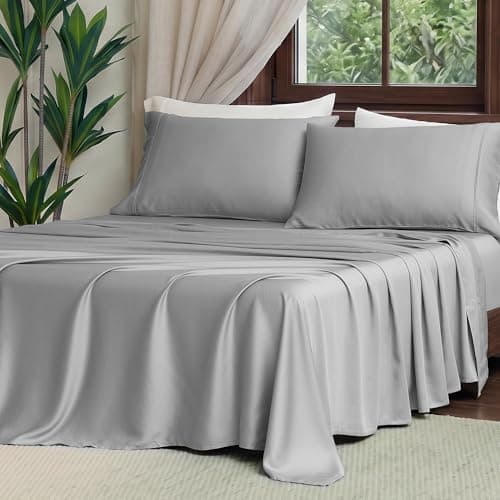 Amélie Home 100% Tencel Lyocell Sheet Set, Queen Branded TENCEL lyocell at roughly the price of a good cotton set, with all-around elastic and corner straps. The sensible way into the fiber. Best for: Most people who want TENCEL | Most people who want TENCEL | |
| 2 | 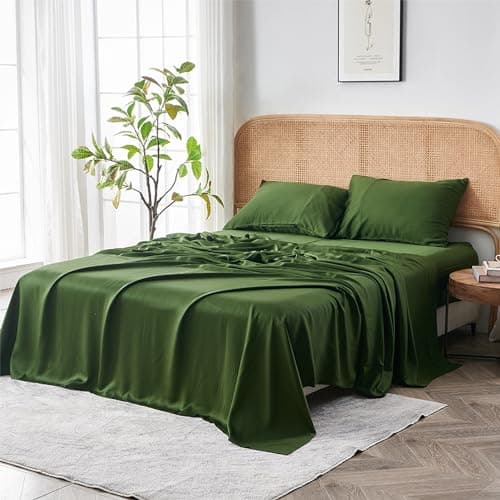 Sijo AiryWeight Tencel Sheet Set, 100% Lyocell Derived from Eucalyptus (4pc, Queen) Names the fiber, the forest certification, the fabric weight and an allergy certification. If the paperwork is the point, this is the sheet. Best for: The most documented set of the four | The most documented set of the four | |
| 3 | 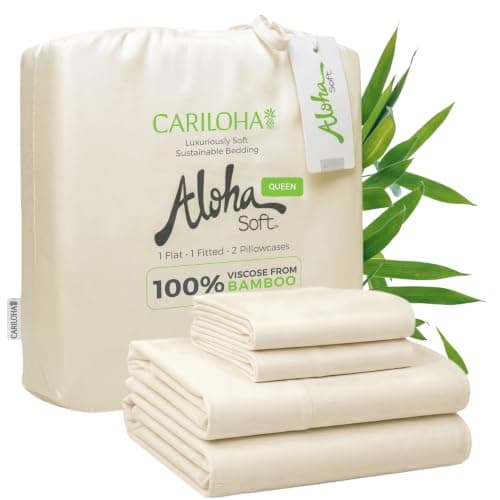 Cariloha Aloha Soft 100% Organic Bamboo Viscose Labels itself bamboo viscose rather than just bamboo, and carries OEKO-TEX Standard 100. The honest version of a category with a labeling problem. Best for: Bamboo viscose done properly | Bamboo viscose done properly | $119.00 · View on Amazon Price as of October 17, 2026. #ad — we earn a commission. |
| 4 | 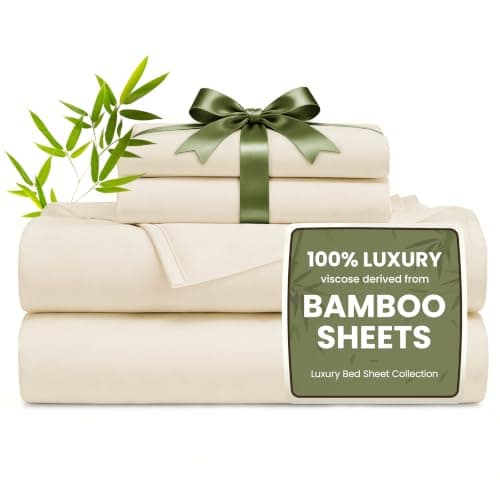 Love's cabin 100% Rayon from Bamboo Calls itself rayon from bamboo - the legally correct name - at the lowest price here. The low-risk way to find out if you like the feel. Best for: The cheapest correctly labeled option | The cheapest correctly labeled option |
The picks, in full
1. Best for Most people who want TENCEL
Amélie Home 100% Tencel Lyocell Sheet Set, Queen
Branded TENCEL lyocell at roughly the price of a good cotton set, with all-around elastic and corner straps. The sensible way into the fiber.
Key specs
- 100% TENCEL Lyocell, eucalyptus-derived (as listed)
- 16 in deep pocket, all-around elastic and corner straps (as listed)
- Grips mattresses 6-15 in thick (as listed)
- OEKO-TEX certified (as listed)
What's good
- It states TENCEL rather than generic lyocell, which means the fiber is traceable to Lenzing's branded production rather than being an unnamed rayon
- All-around elastic plus corner straps and a stated 6-15 inch grip range - unusually specific fit information for a sheet set at this price
- It costs less than half the premium TENCEL set here, which is what makes the fiber a realistic purchase rather than a luxury one
What's not
- A 16-inch pocket with a stated 6-15 inch mattress range rules it out on a tall mattress or a mattress with a topper
- Lyocell is slippery, so the sheet slides against a comforter more than cotton does
- OEKO-TEX certified is stated without a certificate number on the listing, so it is less checkable than the Sijo set's claim
Skip this one if
Your mattress is over 15 inches thick. The listing states its grip range; believe it, and buy a deep-pocket set instead.
2. Best for The most documented set of the four
Sijo AiryWeight Tencel Sheet Set, 100% Lyocell Derived from Eucalyptus (4pc, Queen)
Names the fiber, the forest certification, the fabric weight and an allergy certification. If the paperwork is the point, this is the sheet.
Key specs
- 100% lyocell derived from eucalyptus grown in Austria (as listed)
- TENCEL fiber; PEFC-certified forests (as listed)
- 130 grams per square meter (as listed)
- OEKO-TEX Class 1; certified Asthma & Allergy Friendly (as listed)
- 16 in deep pocket; 4-piece (as listed)
What's good
- It is the only sheet of the four that states a fabric weight in GSM, which is the number that actually tells you how substantial a lyocell sheet will feel
- Named wood source, PEFC forest certification, OEKO-TEX Class 1 and an Asthma & Allergy Friendly certification - four separate claims that can each be looked up
- OEKO-TEX Class 1 is the strictest tier of that standard, the one applied to products for babies
What's not
- It is by far the most expensive set here, and the fiber in it is the same lyocell as the Amélie set
- 130 GSM is a deliberately light fabric - airy in summer, thin if you wanted a substantial sheet
- A 4-piece set at this price makes a replacement fitted sheet an expensive proposition
Skip this one if
You want value rather than documentation. The Amélie set is the same branded fiber for less than half the price - this one is for people who want every claim certified.
3. Best for Bamboo viscose done properly
Cariloha Aloha Soft 100% Organic Bamboo Viscose
Labels itself bamboo viscose rather than just bamboo, and carries OEKO-TEX Standard 100. The honest version of a category with a labeling problem.
Price as of October 17, 2026. #ad — we earn a commission.
Key specs
- 100% organic bamboo viscose
- 4-piece Queen set
- 16 in deep pockets (as listed)
- OEKO-TEX Standard 100 (as listed)
- Cooling, hypoallergenic (as listed)
What's good
- The listing says viscose, which is what the fiber actually is - the FTC has taken action against sellers who call this fabric bamboo without the rayon or viscose word, so correct labeling is a real signal about a seller
- OEKO-TEX Standard 100 means the finished fabric was tested against a restricted substance list, which is the certification that matters most on a chemically processed fiber
- The silky, cool-to-the-touch hand that people buy bamboo sheets for, with a 16-inch pocket that fits most mattresses
What's not
- "Organic bamboo" is a claim about the plant, and the plant is dissolved in a chemical process - the organic part says nothing about how the pulp became fiber
- Viscose is the weakest of these fibers when wet, so it needs gentle washing to last
- "Hypoallergenic" is not a regulated bedding term; the OEKO-TEX certification is the part of this listing with teeth
Skip this one if
You want to know how the fiber was made. Viscose processing uses harsher chemistry than lyocell, and no listing in this category documents it - if that matters, buy the TENCEL.
4. Best for The cheapest correctly labeled option
Love's cabin 100% Rayon from Bamboo
Calls itself rayon from bamboo - the legally correct name - at the lowest price here. The low-risk way to find out if you like the feel.
Key specs
- 100% rayon derived from bamboo
- 4-piece Queen set
- Deep pocket up to 16 in (as listed)
- Cooling for hot sleepers (as listed)
What's good
- "Rayon from bamboo" is exactly what the FTC requires this fabric to be called, so the listing is telling you the truth in the words the regulator asks for
- It is the cheapest sheet on this page by a large margin, which makes it the sensible experiment if you have never slept on a cellulosic sheet
- Slick, cool-to-first-touch surface, which is the specific sensation hot sleepers are usually chasing
What's not
- No certification of any kind is stated, so there is nothing to check behind the claims
- Budget viscose is the least durable fabric here - expect it to thin at the stress points sooner than the others
- "Cooling" describes the initial touch, not all-night airflow; a cotton percale moves more air
Skip this one if
You want a sheet set to last years. This is the cheap way to test the fiber, not the way to buy it for the long run - the Cariloha or either TENCEL set is built better.
Common questions
Is TENCEL the same thing as bamboo?
No, but they are closer relatives than the marketing implies. Both are regenerated cellulose fibers: plant pulp dissolved into a liquid and spun back out as thread. The differences are the plant, the solvent process and the label. TENCEL is Lenzing's brand name for its lyocell and modal fibers, usually made from eucalyptus and spun in a closed-loop solvent process that recovers most of the solvent for reuse. Sheets sold as bamboo are almost always viscose rayon, made with harsher chemistry and from bamboo pulp. Confusingly, bamboo lyocell also exists - when you see it, the lyocell word is telling you about the process and the bamboo word is telling you about the plant.
Why does the FTC care what bamboo sheets are called?
Because under US textile labeling rules a fabric has to be named for the fiber it actually is, and rayon is rayon regardless of what plant the pulp came from. Calling a rayon sheet "bamboo" implies the natural plant's properties survived a process that dissolved it, which the FTC treats as deceptive - it has published guidance on the point and has brought enforcement actions against major retailers for bamboo marketing. The practical upshot for a shopper is useful: a listing that says "rayon from bamboo" or "bamboo viscose" is following the rule, and a listing that just says "100% bamboo" either does not know the rule or is ignoring it.
Which is cooler to sleep on?
They feel similar to the hand and neither is as cool as a cotton percale over a whole night. Both lyocell and viscose are smooth, dense, drapey fibers that conduct heat away from your skin on contact - which is the cool-to-the-touch sensation both categories advertise. What that does not tell you is all-night airflow, and a loose, plain-woven cotton percale moves more air than either. Lyocell has a small real advantage in moisture: it absorbs and releases moisture well, so it feels less clammy as the night goes on. If heat is your main problem, read our cooling sheets page rather than choosing between these two.
Which lasts longer?
Lyocell, generally - and the reason is wet strength. Both fibers lose strength when wet, which is why neither likes hot washing, but lyocell retains noticeably more of its dry strength than viscose does. In practice that means a TENCEL sheet tolerates regular laundering better, while a cheap bamboo viscose sheet tends to thin and tear at the stress points first. Neither will outlast a good long-staple cotton percale. Wash both cool, on a gentle cycle, and skip the fabric softener - it coats the fiber and kills the slip you paid for.
Is one more sustainable than the other?
Lyocell's process is the better documented of the two, and that is as far as we will go. Closed-loop lyocell production recovers and reuses the great majority of its solvent, and branded TENCEL fiber comes with wood-sourcing certification you can look up - the Sijo set here names PEFC-certified forests, for example. Viscose production uses carbon disulfide and is far less transparent at the sheet-listing level; essentially no bamboo sheet listing tells you where it was spun or how the effluent was handled. Note what neither claim covers: the organic label on a bamboo sheet describes how the plant was grown, not the chemistry that turned it into thread.
So which should I buy?
If you want a documented fiber at a normal price, buy branded TENCEL - the Amelie Home set is the value route and the Sijo set is the fully certified one. If you want the silky feel for the least money and the paperwork does not matter to you, a correctly labeled bamboo viscose is a perfectly good sheet, and the Cariloha is the better-certified one of the two here. What we would not do is pay a premium for a sheet that calls itself bamboo without saying viscose or rayon: that is the one combination where you are paying extra for a word the regulator has already ruled on.
Sources
Where the facts on this page come from. We cite other people's testing because we don't do our own — here's what that means.
Read next
- The Best Bamboo Sheets, Chosen HonestlySix bamboo-viscose sheet sets that sleep silky and cool for hot sleepers — chosen on fiber and label honesty rather than the word bamboo, with real cons on every pick.
- The Best TENCEL (Eucalyptus Lyocell) SheetsSix TENCEL and eucalyptus lyocell sheet sets ranked on what each listing commits to — 100% lyocell, the TENCEL name, a stated weight, pocket depth and elastic — with the cool-wash care caveat and honest cons on every pick.
- What Is TENCEL?TENCEL is a brand name for lyocell - a silky, moisture-wicking fiber made from wood pulp in a closed-loop process. What that means for your sheets, and its honest limits.
- Cotton vs Bamboo SheetsCotton's durability and get-softer-with-age value versus bamboo-rayon's silky, cool, drapey feel — plus the labeling truth almost no bamboo listing says out loud.
- Linen vs Bamboo SheetsLinen's airflow, longevity and lived-in look versus bamboo-rayon's silky, drapey, cool-to-the-touch feel — plus the labeling truth almost no bamboo listing says out loud.
- How to Wash Bamboo SheetsBamboo viscose is weak when wet, which is why these sheets pill and thin early. The routine that prevents it, what fabric softener actually does to the fiber, and the first-wash vinegar question.
- The Best Cooling Sheets for Hot SleepersSix sheet sets that actually breathe, chosen on fiber and weave rather than marketing — plus who should skip each one.