The Best Mattresses for Stomach Sleepers
Stomach sleeping is the one position where soft is dangerous. If your hips sink even slightly, your lower back arches backward all night. Six firm mattresses that hold your hips level — with an honest note on who should skip each.
We earn a commission if you buy through our links. It doesn't affect our picks — and we never take free products. How this site is funded.
Quick picks
| # | Product | Best for | Price |
|---|---|---|---|
| 1 | 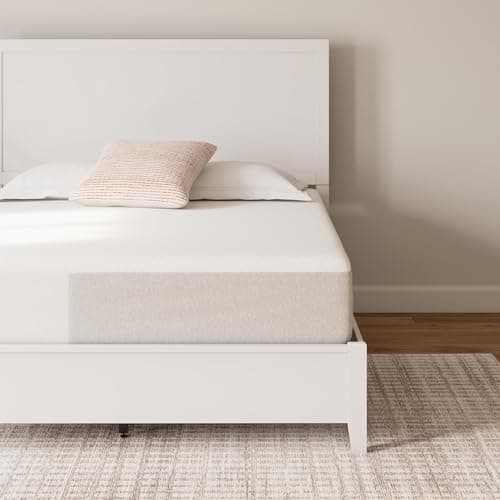 Signature Design by Ashley Chime 12" Memory Foam An all-foam bed whose listing separates the two things a stomach sleeper needs to keep apart - medium firm at the surface, firm support underneath - with a recognizable name behind the return. Best for: Most stomach sleepers | Most stomach sleepers | $298.00 · View on Amazon Price as of September 10, 2026. #ad — we earn a commission. |
| 2 | 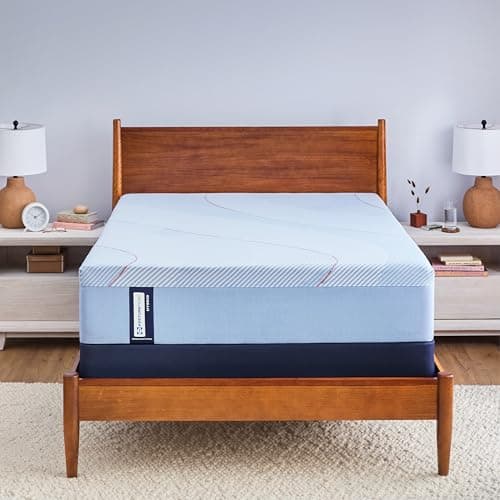 Sealy Posturepedic Fayette 12" Firm Hybrid The only bed here whose listing says "firm" outright, on a coil core. If you sleep on your stomach every night, this is the one built for it. Best for: Genuinely firm support | Genuinely firm support | $1,436.35 · View on Amazon Price as of September 10, 2026. #ad — we earn a commission. |
| 3 | 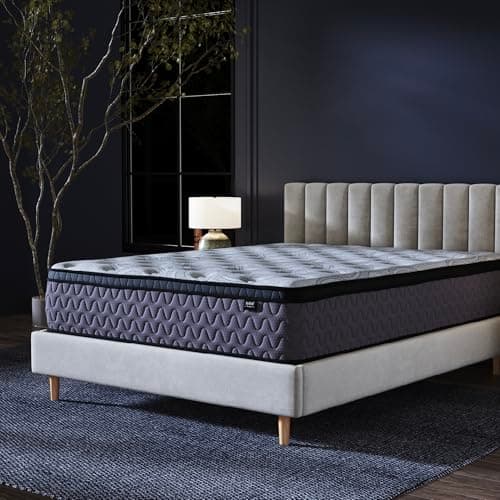 Signature Design by Ashley 12" Medium Firm Hybrid A medium-firm hybrid that puts coils under your hips for a fraction of the Sealy. The value pick for heavier stomach sleepers. Best for: A firm feel without the firm price | A firm feel without the firm price | |
| 4 | 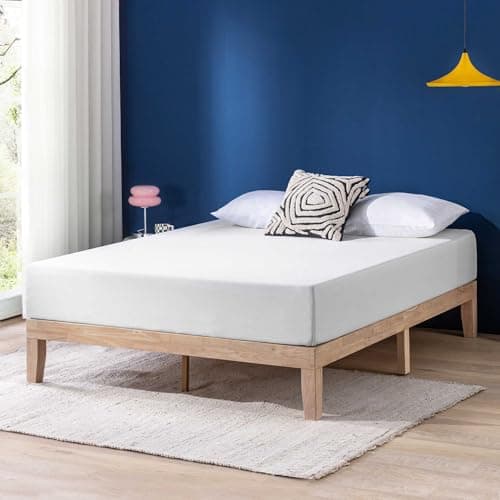 Best Price Mattress 10" Memory Foam, Medium Firm A medium-firm 10-inch foam bed at the bottom of the market. Right feel for the position, basic in every other way, as advertised. Best for: The lowest sensible price | The lowest sensible price | Check price on Amazon → #ad — we earn a commission. |
| 5 | 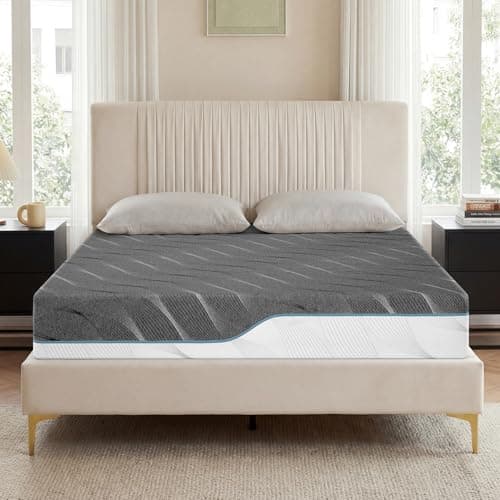 Opoiar 12" Extra Firm Flippable A dual-sided extra-firm bed you can turn over after delivery. If you're not sure how much firmness a stomach sleeper needs, this lets you find out without a return. Best for: Dialing in the firmness | Dialing in the firmness | $299.99 · View on Amazon Price as of September 10, 2026. #ad — we earn a commission. |
| 6 | 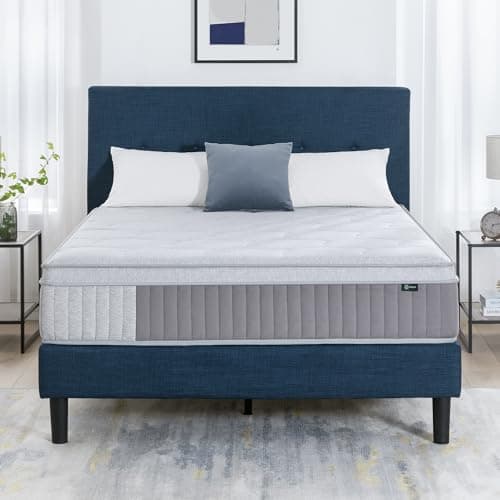 Zinus 12" Cool Support Hybrid, Medium Firm A medium-firm hybrid built around airflow. The pick if you sleep on your stomach and wake up hot on foam. Best for: Hot stomach sleepers | Hot stomach sleepers | Check price on Amazon → #ad — we earn a commission. |
The problem is your hips, and it's the opposite of every other position
Lie face-down and look at where your weight goes. Your pelvis is the heaviest single part of your body, and on your stomach it sits right in the middle of the mattress, unsupported by the natural width that props up a shoulder or a hip when you're on your side. If the surface under those hips gives way at all, they descend — and because your shoulders and feet stay roughly where they are, your lower back bends backward to make up the difference. You spend the night in a gentle, continuous arch through the lumbar spine.
That is the entire stomach-sleeper problem, and it flips the usual advice on its head. On our side-sleeper page the whole argument is for softness and depth, so a shoulder and hip can sink and the spine can straighten. Here it's the reverse: you want the firmest surface you can tolerate and the shallowest comfort layer, so your hips have nowhere to go. Every pick on this page is here because its published specs suggest it can hold a pelvis level. If you actually spend most of the night face-up rather than face-down, the target moves back toward the middle — our best mattresses for back sleepers covers that case, and it is not the same bed.
Why "firm" is finally the right instinct
For most sleepers, the belief that a firm mattress is the responsible, back-healthy choice is close to a myth — it's wrong for side sleepers and oversold for back sleepers. Our back-pain page spends a while dismantling it. Stomach sleeping is the exception that makes the rule. Here, firmness does exactly what people imagine it does everywhere: it stops the heaviest part of you from sinking and keeps your spine neutral.
Sleep Foundation puts stomach sleepers at the firm end of the scale, and the reasoning is the geometry above rather than any notion that firm is virtuous. The practical trouble is that genuinely firm beds are rarer than you'd think in the box-mattress market. Most budget beds are built medium or medium-firm, because that's what sells to the average shopper — which is why the only bed on this page whose listing says "firm" outright is the priciest one. For most people, medium-firm is the practical target and the closest widely-available approximation; the firmer options are there for heavier sleepers who compress medium-firm until it isn't.
Your weight decides how firm "firm enough" is
Firmness isn't a fixed property of a mattress. It's a relationship between the mattress and the load on it, which is why the same bed reads differently to two people. Foam and coils both compress in proportion to the pressure applied, so a heavier pelvis pushes further into the identical surface.
- Under about 150 lb:a medium-firm foam bed often holds your hips fine, because you don't compress it far. The all-foam picks here — the Ashley Chime 12", the Best Price 10" — are aimed at you.
- Roughly 150-230 lb:medium-firm is borderline. A hybrid gives you a safety margin, because the coils keep resisting after a foam layer would have bottomed out. The Ashley 12" Hybrid and the Zinus Cool Support are the sweet spot.
- Over about 230 lb:you'll compress a medium-firm foam bed until your hips drop regardless of the label. You want a genuine firm on a coil core — the Sealy Posturepedic — and the extra cost buys you the one thing your body actually needs.
The full mechanics of why the 1-10 firmness scale has no standards body behind it are in our firmness guide, and they're worth ten minutes before you spend real money on a word.
Foam or hybrid for this position?
The construction question sorts almost as cleanly as firmness. Deep memory foam is engineered to let you sink in and be cradled — a wonderful thing on your side and precisely the wrong thing on your stomach. A coil core does the opposite: it pushes back against a heavy pelvis and holds it up. That's why the beds here that lean on coils are the ones we point heavier stomach sleepers toward first.
If you buy all-foam anyway — and there are good budget reasons to — keep it firm and keep it shallow. A 10-inch medium-firm slab resists better than a 14-inch plush one, and it costs less. The one place foam wins outright is a shared bed with a restless partner, because solid foam absorbs movement instead of carrying it across the mattress the way coils do. Our memory foam vs hybrid guide takes the whole trade apart if you're torn.
The pillow is the other half, and most people get it backward
A firm mattress fixes your hips. Nothing about a mattress fixes your neck, and on your stomach the neck is under real strain — you have to turn your head sideways just to breathe. The worst thing you can add to that is a tall pillow, which lifts your head up and back and stacks a second bend on top of the sideways twist.
So the rule for this position is short: buy the flattest pillow you can find, or sleep with none at all. A lot of stomach sleepers also slide a thin pillow under their hips, which quietly reduces the lower-back arch for the price of a cheap cushion — a fix worth trying before you replace a whole bed. If you're shopping the mattress and the pillow together, our pillow pages are organized by the same logic: loft height set by sleeping position.
What we won't tell you
We haven't slept on any of these, on our stomachs or otherwise. There's no test lab behind this site, and if you find a review claiming a pressure map for a bed bought on Amazon last week, be suspicious. What we can do honestly is read the published firmness and construction, apply the geometry above, and tell you which bed is wrong for which body — which is why every pick has a "skip this one if" that points you somewhere better. The full method, including what we refuse to claim, is on how we review. And if you don't exclusively sleep on your stomach, read the general roundup too — a bed with more than one job to do needs judging on more than one position.
The picks, in full
1. Best for Most stomach sleepers
Signature Design by Ashley Chime 12" Memory Foam
An all-foam bed whose listing separates the two things a stomach sleeper needs to keep apart - medium firm at the surface, firm support underneath - with a recognizable name behind the return.
Price as of September 10, 2026. #ad — we earn a commission.
Key specs
- 12" all-foam
- "Medium Firm comfort and firm support" (as listed)
- Cooling knit cover over high-density gel foam (as listed)
- Compressed bed in a box (as listed)
- Queen
What's good
- Medium firm is the firmest label sold in volume on Amazon, and a stomach sleeper wants the firm end — the whole job is to stop the hips descending, and a firmer surface resists that
- The listing splits comfort from support in its own words — medium firm comfort, firm support (as listed) — which is exactly the distinction that decides whether a stomach sleeper's hips stay level, and almost no foam listing bothers to make it
- High-density gel foam (as listed) is what keeps a firm-ish foam bed firm; density, not thickness, is what resists the early softening that drops your hips a year in
What's not
- "Medium firm" is Ashley's label, not a measurement, and a truly firm bed would serve a heavier stomach sleeper better
- All-foam insulates, so this is a warmer build than the hybrids below — foam is an insulator no matter what the gel is called
- At 12 inches there is more foam over the core than on the 10-inch beds elsewhere on this page, and more foam means more room to sink before you meet resistance — the density has to do the work the shallow profile used to
Skip this one if
You weigh much over 230 lb. A heavier body compresses medium-firm foam until the hips drop anyway — you need a coil core pushing back, so take the Sealy Posturepedic or the Ashley 12-inch Hybrid below instead.
2. Best for Genuinely firm support
Sealy Posturepedic Fayette 12" Firm Hybrid
The only bed here whose listing says "firm" outright, on a coil core. If you sleep on your stomach every night, this is the one built for it.
Price as of September 10, 2026. #ad — we earn a commission.
Key specs
- 12" hybrid
- Firm, tight top (as listed)
- Innerspring coil support core
- Sealy Posturepedic line
- Queen
What's good
- The listing states "Firm" plainly, not medium firm — and firm is the correct end of the scale for the position, because every millimeter your hips don't sink is a millimeter your lower back doesn't arch
- A coil support core resists a heavy pelvis far better than foam does, and it does the resisting without the deep contouring cradle that lets hips settle
- Sealy is a decades-old brand with a genuine returns operation behind it — a real point of contact when something goes wrong, which most Amazon-native mattress brands can't offer
What's not
- The most expensive bed on this page by a wide margin, and the tight-top build means little pressure relief for a shoulder or hip if you ever roll onto your side
- The listing shows a 5-to-7-day dispatch rather than next-day — this is a made-to-order bed, not a warehouse box
- A firm hybrid is a punishing surface for a dedicated side sleeper, so it's the wrong bed the moment your default position changes
Skip this one if
You're a combination sleeper who spends real time on your side. A firm tight-top gives a shoulder nowhere to go — buy the Ashley 12-inch Hybrid below for a medium-firm middle ground, or read our side-sleeper page.
3. Best for A firm feel without the firm price
Signature Design by Ashley 12" Medium Firm Hybrid
A medium-firm hybrid that puts coils under your hips for a fraction of the Sealy. The value pick for heavier stomach sleepers.
Key specs
- 12" hybrid, innerspring
- Medium firm (as listed)
- Gel memory foam over pocket springs (as listed)
- Gel memory foam for lumbar support (as listed)
- CertiPUR-US certified foam (as listed)
What's good
- A coil core under a medium-firm comfort layer is the right structure for the position on a budget: the springs hold your hips up while the thin foam layer takes the edge off
- The listing names gel memory foam for lumbar support over a pocket-spring unit (as listed), which is the right order of materials for the position: springs under the hips, a thin foam layer over them
- Hybrids sleep cooler than the all-foam beds here, because air moves through the coil layer instead of being trapped in solid foam
What's not
- "Medium firm" from a gel-foam-over-coils build can feel softer than the number suggests once the pillowy top compresses — it's firm-ish, not firm
- Coils transmit a partner's movement in a way solid foam doesn't, so a restless bedmate is felt more here
- The listing states no trial length, so the one number that would de-risk the purchase isn't in the title
Skip this one if
You want the firmest possible surface and price isn't the deciding factor. The medium-firm label means this yields more than the Sealy Firm above — if maximum support is the point, pay up for the Sealy.
4. Best for The lowest sensible price
Best Price Mattress 10" Memory Foam, Medium Firm
A medium-firm 10-inch foam bed at the bottom of the market. Right feel for the position, basic in every other way, as advertised.
#ad — we earn a commission.
Key specs
- 10" all-foam
- Medium firm (as listed)
- Cooling gel infused
- Certified safe foams & fabric (as listed)
- Bed in a box
What's good
- Medium firm and only 10 inches deep — the two specs a stomach sleeper actually wants — at about the cheapest a real medium-firm bed gets
- The listing states certified safe foams and fabric, which is the reassurance you most want when buying at the bottom of the price range
- A shallow, firm foam layer resists hip sink better than the deep plush budget beds sold to the same shopper on price alone
What's not
- Budget all-foam softens fastest of any construction here, and a softening bed slowly becomes the too-soft surface a stomach sleeper must avoid
- "Cooling gel" on a solid foam slab is a first-contact effect — this still sleeps warm by the middle of the night
- No stated trial or warranty term, and at this price the company behind the return is the thinnest on the page
Skip this one if
This is your bed for the next decade. Budget foam fatigues into a dip where your hips land, which is exactly the failure that ruins the position — buy it for a guest room or a few years, not a lifetime. For a main bed, size up to the Ashley or the Sealy.
5. Best for Dialing in the firmness
Opoiar 12" Extra Firm Flippable
A dual-sided extra-firm bed you can turn over after delivery. If you're not sure how much firmness a stomach sleeper needs, this lets you find out without a return.
Price as of September 10, 2026. #ad — we earn a commission.
Key specs
- 12" memory foam
- Extra firm (as listed)
- Dual-sided, flippable (as listed)
- CertiPUR-US certified, made in USA (as listed)
- Queen, 80" x 60"
What's good
- Extra firm is the right starting point for a stomach sleeper — the hips are what sink first in this position, and a bed that refuses to let them is doing the main job
- Flipping to the other side is free and reversible, which is worth more than a paper firmness rating you can't verify until delivery
- It states CertiPUR-US certification and a US build at a mid-budget price, which is a low-risk way to test whether extra firm actually suits you before committing to a pricier bed
What's not
- A bed engineered to work two ways rarely nails either — extra firm here is firm-for-a-foam-bed, not innerspring firm
- At 12 inches split across two usable sides, each comfort layer is thinner than a one-way build, so heavier sleepers will feel the core sooner
- The listing does not publish a trial length or a warranty term, so the hedge only extends as far as the seller's returns window
Skip this one if
You already know you need a properly firm bed. A flippable foam mattress tops out softer than a firm hybrid — if you're certain, skip the hedge and buy the Sealy or the Ashley Hybrid outright.
6. Best for Hot stomach sleepers
Zinus 12" Cool Support Hybrid, Medium Firm
A medium-firm hybrid built around airflow. The pick if you sleep on your stomach and wake up hot on foam.
#ad — we earn a commission.
Key specs
- 12" hybrid
- Medium firm (as listed)
- Cooling foam over pocketed coils
- Zinus (established Amazon brand)
- Bed in a box
What's good
- A coil core is mostly open space, so air moves through the middle of the bed — the only cooling feature that doesn't saturate partway through the night, and it's impossible in an all-foam bed at any price
- Medium firm on a coil support core keeps the hips up while running cooler than any of the foam options on this page
- Zinus is one of the most established Amazon-native mattress brands, with stable listings and a long trading history behind the warranty
What's not
- Medium firm rather than firm, so a very heavy stomach sleeper may still want the Sealy's genuine firm rating
- Coils carry motion across the bed, so a restless partner is felt more than on the foam beds here
- The "cooling" foam layer is a surface treatment; the real cooling work is done by the coils, and the marketing credits the wrong layer
Skip this one if
You sleep alone and cool and just want the firmest bed for the money. The coil upgrade is wasted on you — an all-foam medium-firm like the Ashley Chime 12-inch costs less and isolates motion better.
Common questions
What firmness of mattress is best for stomach sleepers?
Firm, and this is the one position where that instinct is correct. On your stomach, your hips and pelvis are the heaviest part of your body and they sit at the middle of the bed. If the surface lets them sink even slightly, your spine bends backward into an arch and your lower back carries that curve all night. A firm surface holds your hips level with your shoulders so your spine stays neutral. Sleep Foundation places stomach sleepers at the firm end of the scale for exactly this reason. Your weight shifts it: a lighter person can get away with medium-firm, while a heavier person needs a genuine firm and usually a coil core.
Why is stomach sleeping considered hard on your back?
Two reasons, and a firm mattress only fixes one of them. The first is the hips: on a soft bed they sink, the lower back arches, and the lumbar spine is loaded in extension all night — a firm surface solves this. The second is the neck: lying face-down means turning your head 90 degrees to breathe, which twists the cervical spine, and no mattress fixes that. The mattress advice on this page is strictly about keeping the hips level and the lower back neutral. If you have persistent pain, that's a question for a doctor, not a mattress listing — we publish no medical advice.
Should stomach sleepers use memory foam or a hybrid?
A hybrid usually has the edge, because the goal is to stop your hips sinking and a coil core resists a heavy pelvis better than foam does. Deep memory foam is built to let you sink in and contour, which is the opposite of what this position needs. If you buy all-foam, keep it firm and shallow — a 10-inch medium-firm bed rather than a deep plush one. If you sleep hot, the hybrid wins twice over, because coils move air and foam traps it. Our memory foam vs hybrid guide has the full breakdown.
Do stomach sleepers need a thick or thin mattress?
Thinner comfort layers help, which is the reverse of the advice side sleepers get. A side sleeper wants a deep comfort layer so a shoulder can sink; a stomach sleeper wants a shallow one so the hips can't. That's why several picks here are 10 to 12 inches with firm surfaces rather than tall, plush builds. Total height matters less than what's on top: a 12-inch hybrid with a thin firm comfort layer over coils is better for the position than a 10-inch bed with a soft pillow top.
What kind of pillow should a stomach sleeper use?
The flattest one you can find, or none at all. Your mattress keeps your hips level; your pillow decides what your neck does. Because your head is already close to the mattress when you're face-down, a normal pillow pushes your head up and back and adds a second bend to a spine that's already twisted. A very thin pillow, or sleeping directly on the mattress, keeps the neck closer to neutral. Many stomach sleepers also put a thin pillow under the hips to reduce the lower-back arch — a cheap thing to try before replacing a bed.
Sources
Where the facts on this page come from. We cite other people's testing because we don't do our own — here's what that means.
Read next
- The Best Firm MattressesSix firm mattresses led by the two whose listings actually say "firm" — with honest cons and who each is wrong for. A genuinely firm bed is rarer than the label admits.
- The Best Pillows for Stomach SleepersSix low-profile pillows for stomach sleepers, led by dedicated ultra-thin pillows and an adjustable you can empty out flat — with honest cons and a skip-this-one on every pick.
- The Best Mattresses for Combination SleepersSix responsive mattresses that let a combination sleeper turn over easily, led by hybrids because a coil core springs back faster than a deep foam hug — with honest cons and a skip-this-one note on every pick.
- The Best Mattresses for Lower Back PainSix mattresses judged purely on support and spinal alignment — and why medium-firm, not firm, is where the evidence points.
- The Best Mattresses for Side SleepersSix mattresses with comfort layers deep enough to let a shoulder and hip sink — the actual problem side sleepers are trying to solve.
- Mattress Firmness: The 1-10 Scale, HonestlyWhat the 1-10 firmness scale actually means, why one brand's 6 is another's 7, and how your bodyweight changes the answer.
- Memory Foam vs Hybrid MattressesFoam or coils? The six differences that matter, and the one axis that settles it for most buyers.
- The Best MattressesSix mattresses worth buying, from a budget hybrid to a deep-foam premium bed — with a plain note on who each one is wrong for.