The Best All-Season Comforters
Start with the Serta Goose Feather Down Fiber if you want one comforter for the whole year: it is the only pick here that states a cotton shell, a warmth level and a size in inches on the same listing. Four more below for baffle-box construction, a wool fill that handles a room that swings, the cheapest fully washable option, and a tall mattress that needs more drape.
We earn a commission if you buy through our links. It doesn't affect our picks — and we never take free products. How this site is funded.
Quick picks
| # | Product | Best for | Price |
|---|---|---|---|
| 1 | 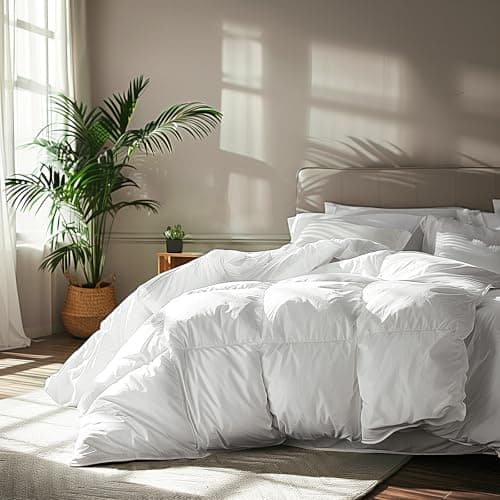 Serta Goose Feather Down Fiber Comforter The only pick that states a cotton shell, a warmth level and a size in inches on the same listing. That combination is why it is first, not the brand name on it. Best for: Most people | Most people | $62.99 · View on Amazon Price as of October 18, 2026. #ad — we earn a commission. |
| 2 | 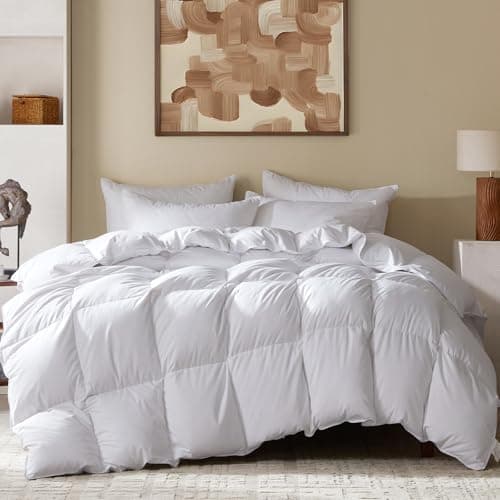 Three Geese Goose Feather Down Fiber Comforter The cheapest pick here that states baffle box rather than box stitch, plus eight corner loops. Buy it if the comforter is going inside a cover. Best for: Baffle-box construction for the money | Baffle-box construction for the money | $72.99 · View on Amazon Price as of October 18, 2026. #ad — we earn a commission. |
| 3 | 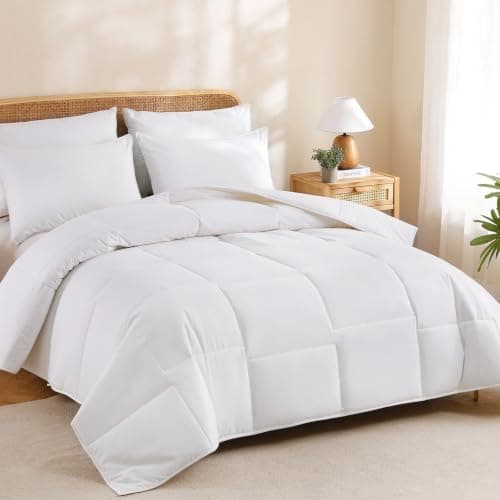 YOUR MOON Washable All-Season Wool Comforter Wool is the one fill that genuinely handles both directions of an all-season problem, and this is the washable blend version of it. The pick if you overheat some nights and shiver on others. Best for: A bedroom that swings hot and cold | A bedroom that swings hot and cold | $95.99 · View on Amazon Price as of October 18, 2026. #ad — we earn a commission. |
| 4 | 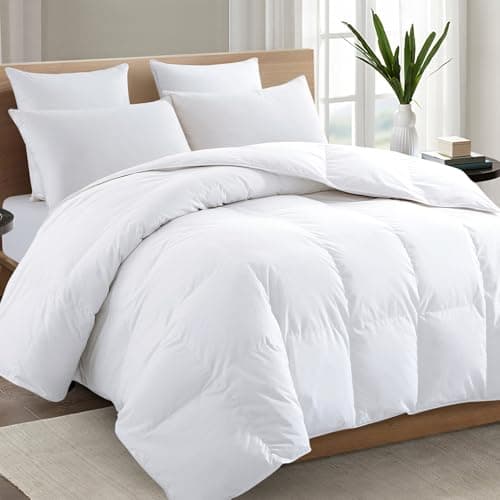 TEXARTIST All-Season Down Alternative Duvet Insert No feathers, no quills, no careful laundering - the cheapest honest way to get an all-season comforter you can wash at home. Buy it to live inside a cover. Best for: The lowest price, fully washable | The lowest price, fully washable | |
| 5 | 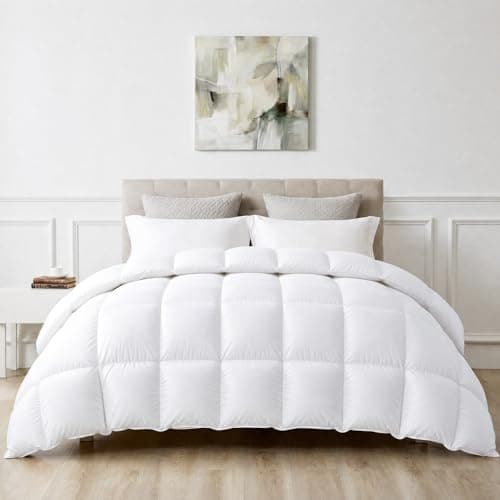 puredown Goose Feather Down Fiber Comforter, Oversized Queen The only pick sold at 98 x 98 inches, which is eight inches more fabric per side than a standard queen comforter. Buy it if your bed is tall and everything else hangs short. Best for: A tall mattress that needs more drape | A tall mattress that needs more drape |
"All-season" is a marketing rung, not a measurement
There is no standards body behind the words lightweight, all-season and extra warmth on a comforter. No test, no threshold, no referee. What a maker means by all-season is the middle rung of its own three-rung range - warm enough for a mild bedroom through most of the year, short of what a cold one needs in January, and more than a hot sleeper wants in August. Two comforters both labeled all-season can differ in fill weight by a factor of two.
That is not a reason to ignore the label. It is a reason to stop treating it as the spec and start reading the three things underneath it that a listing can actually prove: what the fill really is, how the shell and the stitching are built, and what size it is in inches. Those three sort this category quickly, and they are why the picks above are ordered the way they are. The Serta is first because it is the only one that states a shell material, a warmth level and a size on the same listing - not because Serta is on the label.
If you have not decided between a comforter and the insert-and-cover system yet, start at duvet vs comforter. If you already know you want the warmest thing available rather than a year-round one, our winter comforter picks are the better page.
The word "down" on a cheap all-season comforter
This is the single most useful thing on the page, and it is documented rather than editorial. Search for an all-season down comforter and almost everything that comes back in the budget and mid price brackets states a fill of goose or duck feather down fiber. Down fiber is not down cluster. It is the loose filament that breaks off a cluster, and it does not loft the way a cluster does.
The USA-2000 labeling standard used by the American down industry is explicit about the difference. A product labeled DOWN requires "75% minimum down clusters (down, nestling down, and plumules)… No tolerance is allowed", and the standard removed the older allowance that let down fiber count toward it: "the new standards do NOT include a down fiber allowance." Fiber content above 10% has to be listed separately, because it is treated as the inferior material.
So the practical rule is: read the fill line in the bullets, not the word DOWN in the title. Three of the five picks here are feather-and-down-fiber comforters, and we say so on each one rather than letting the title imply otherwise. There is nothing wrong with buying one - they are warm, they are cheap, and in an all-season comforter you are not chasing maximum warmth-per-ounce anyway. You just should not pay a down price for them. Our down comforter page is where the fill-power conversation belongs, and what fill power is explains why a figure quoted without a test method is just a number.
Fill: the four options and who each one is for
- Feather and down fiber. The default in this price bracket. Warm, heavy for its warmth, cheap, and it contains quills - expect a few feather tips to work through a woven shell eventually. Needs careful laundering. The Serta, Three Geese and puredown picks.
- Down alternative (polyester). Washable at home, no quills, no feather allergy, cheapest of all. Holds less heat per ounce than down, so it is bulkier at the same warmth, and it does not breathe. The TEXARTIST pick, and the whole subject of our down alternative page.
- Wool. The best genuine all-season fill, because it moves moisture as a fiber property rather than relying on the shell. Lies flat instead of lofting, often not washable, and frequently sold as a blend. The YOUR MOON pick.
- Real down cluster. The most warmth for the least weight, and the only fill where fill power is a meaningful spec. It costs several times what this page covers, and it is the hardest to wash. Down vs down alternative is the straight comparison.
Shell and stitching: where the money actually goes
Two picks here state a 100% cotton shell and the rest state nothing at all. That gap matters more than it sounds. The shell is the layer against your skin and the barrier the fill has to breathe through - a cotton shell moves moisture out, and a polyester or brushed microfiber shell holds it against you. On a comforter you sleep under every night of the year, that is the difference between comfortable and clammy. A listing that will not name its shell material is usually not naming cotton.
Construction is the other one. Box stitch sews the top and bottom of the shell straight through each other in a grid: cheap, effective at stopping fill migration, and it pinches the comforter flat along every seam, so each quilting line is a thin cold stripe. Baffle box inserts a vertical strip of fabric between the layers so every chamber keeps its full loft right to the edge, with no sewn-through lines at all. Baffle box is better and normally costs more, which is exactly why the Three Geese pick is notable: it states baffle box at the second-lowest price on the page.
Then loops. Four corner loops is the convention and eight is better, because loops are the only thing stopping an insert from sliding to the foot of a duvet cover overnight. Two picks here state eight.
How the five compare, from the listings
| Pick | Stated fill | Stated shell | Construction | Stated size |
|---|---|---|---|---|
| Serta | Goose feather + down fiber | 100% cotton | Not stated | Queen, 90 x 90 in |
| Three Geese | Goose feather + down fiber | Not stated | Baffle box, 8 loops | Queen |
| YOUR MOON wool | 51% wool blend | Not stated | Not stated | Queen |
| TEXARTIST | Down alternative | Not stated | Not stated | Queen |
| puredown oversized | Goose feather + down fiber | 100% cotton | Not stated | Oversized Queen, 98 x 98 in |
The blanks are the finding. Not one listing in this category gives a fill weight in ounces, which is the only number that would let you compare two all-season comforters directly. Three will not name a shell fabric. Three will not state a size in inches. When you see a column of not stated, the honest read is that the product is middling on that axis and the seller would rather you did not know - which is why the picks that do state things rank above the ones that do not.
Size: measure the bed with everything on it
This is where most comforter disappointment actually comes from, and it has nothing to do with warmth. A standard queen comforter runs about 88 to 90 inches wide. That drapes properly over a mattress of roughly 10 to 12 inches. Beds have gotten taller - a 14-inch mattress is common now - and once you add a topper the same comforter barely reaches the mattress edge instead of hanging over it. The bed looks unfinished and the comforter feels too small, because relative to that bed it is.
So measure: mattress height including the protector, the topper and the fitted sheet, then double it and add the mattress width. That is roughly the comforter width that will reach the bottom of the mattress on both sides. If the number lands past 90 inches, you want the oversized 98-inch option. If it does not, buying oversized gives you fabric puddling on the floor and dragging when you turn over. Comforter sizes has the full table, and mattress sizes has the bed dimensions to work from.
When a different page is the right one
An all-season comforter is a compromise by design, and a compromise is the wrong purchase if your problem has a direction to it. Three honest redirections:
- You wake up sweating. Do not buy a middling comforter and hope. Go to cooling comforters, and change your sheets first because they are cheaper and sit closer to you.
- Your bedroom is genuinely cold. All-season will not get there. Our winter comforter picks are the page, and tog ratings explain the one warmth scale in bedding that actually has a test behind it.
- You want the insert-and-cover system. Then warmth is only half the decision and the cover matters as much as the fill - duvet inserts compares fills for that system specifically.
Living with one
Two expectations worth setting. Feather fill sheds quills: a few tips working through the shell in the first year is the construction, not a fault, and you pull them out rather than returning the comforter. Polyester fill flattens: it compresses permanently with washing, so a synthetic all-season comforter is a several-year purchase. Wool does neither, which is part of why it costs more, and it also will not loft.
Whatever the fill, the cheapest way to make a comforter last is to stop washing it. Put it inside a cover, wash the cover weekly, and wash the comforter itself once or twice a year. How to wash a comforter covers the fill-specific bits, and how often to change your sheets is the schedule the whole bed runs on. The same principle - wash the cheap layer, not the expensive one - is why a pillow protector is the best few dollars on the bed.
What we will not tell you
We have not slept under these. There is no test lab behind this site and we will not hand you a warmth rating we never measured, or a score that implies one. What we can do is read the stated fill, shell, construction and size off each listing, hold them against a published labeling standard, and say which comforter is wrong for which bed - which is why every pick above carries a "skip this one if." Our full method is here.
The picks, in full
1. Best for Most people
Serta Goose Feather Down Fiber Comforter
The only pick that states a cotton shell, a warmth level and a size in inches on the same listing. That combination is why it is first, not the brand name on it.
Price as of October 18, 2026. #ad — we earn a commission.
Key specs
- Goose feather and down fiber fill (as listed)
- 100% cotton cover (as listed)
- All-season, medium warmth (as listed)
- 90 x 90 in, Queen (as listed)
- Hypoallergenic (as listed)
What's good
- A 100% cotton shell is the single most useful thing on this listing - cotton moves moisture away from you where a polyester shell holds it against your skin, and it is the layer that decides whether an all-season comforter sleeps comfortable or clammy
- It states a warmth level (medium) and an exact size (90 x 90 inches), which sounds basic until you read ten competing listings that give neither - the gaps are how this category hides a middling product
- Feather-and-down-fiber fill is heavier than pure down for the same warmth, but it is also a fraction of the price, and in an all-season comforter you are not chasing maximum warmth anyway
What's not
- "Goose Feather Down Fiber" is three different materials in one phrase, and down fiber is not down cluster - under the USA-2000 labeling standard a product labeled DOWN needs 75% down clusters, and down fiber does not count toward it
- The listing does not state a fill weight in ounces or a fill power, so there is no way to compare its warmth against another comforter numerically
- Feather fill means quills, and quills eventually work their way through a woven shell - a few feather tips poking out after a year is normal for this construction, not a defect
Skip this one if
You want a comforter you can throw in your own washing machine every month. Feather fill needs careful laundering or a commercial machine. Buy the TEXARTIST down alternative insert or the washable wool blend instead.
2. Best for Baffle-box construction for the money
Three Geese Goose Feather Down Fiber Comforter
The cheapest pick here that states baffle box rather than box stitch, plus eight corner loops. Buy it if the comforter is going inside a cover.
Price as of October 18, 2026. #ad — we earn a commission.
Key specs
- Goose feather and down fiber fill (as listed)
- Baffle box design (as listed)
- 8 corner loops (as listed)
- All-season duvet insert (as listed)
- Queen
What's good
- Baffle box is the construction upgrade that matters most on a comforter and it is normally a premium feature - a fabric wall between the shell layers lets every chamber keep its full loft right to the edge instead of being pinched flat along each seam
- Eight corner loops is double what most inserts give you, and loops are the only thing that stops an insert sliding to the foot of a duvet cover by morning
- It is the second-cheapest pick on the page while being the best-constructed, which is an unusual combination in bedding and the reason it ranks this high
What's not
- The listing says "All-Season Down Duvet Insert" in one breath and "Goose Feather Down Fiber" in another; the fill statement is the accurate one and the word down in the title is doing marketing work
- No shell material is stated anywhere on the listing, which for a feather fill is a real gap - the shell is what keeps quills in and determines whether it breathes
- No fill weight, no fill power and no size in inches, so the only verifiable specs are the construction and the loop count
Skip this one if
You want to use the comforter bare on the bed. This one is sold as an insert with corner loops - it is built to live inside a cover. The Serta or the oversized puredown look more finished on their own.
3. Best for A bedroom that swings hot and cold
YOUR MOON Washable All-Season Wool Comforter
Wool is the one fill that genuinely handles both directions of an all-season problem, and this is the washable blend version of it. The pick if you overheat some nights and shiver on others.
Price as of October 18, 2026. #ad — we earn a commission.
Key specs
- 51% wool blend fill (as listed)
- Washable (as listed)
- All-season (as listed)
- Queen, white (as listed)
What's good
- Wool is the only common comforter fill that moves moisture as a fiber property rather than relying on the shell - it absorbs water vapor and releases it, which is why a wool comforter feels less clammy than a synthetic one at the same warmth
- It is sold as washable, which wool comforters frequently are not, and that removes the main practical objection to buying wool in the first place
- Wool fill is denser and flatter than down or polyester, so it drapes closely instead of sitting up like a cloud - better for a sleeper who dislikes a puffy comforter
What's not
- 51% wool means 49% something the listing never names, and that unnamed half is almost certainly polyester - you are buying a blend, not a wool comforter, and the price reflects that
- No GSM, no fill weight and no shell material are stated, so there is nothing to compare against a full-wool comforter beyond the blend percentage
- Wool has a faint smell when new and when damp; it fades, but it is real, and some people never stop noticing it
Skip this one if
You want maximum loft and that classic puffy hotel look. Wool lies flat by nature. Buy the oversized puredown or the Serta if the look of the bed is the point.
4. Best for The lowest price, fully washable
TEXARTIST All-Season Down Alternative Duvet Insert
No feathers, no quills, no careful laundering - the cheapest honest way to get an all-season comforter you can wash at home. Buy it to live inside a cover.
Key specs
- Down alternative fill (as listed)
- All-season (as listed)
- Duvet insert (as listed)
- Queen, white (as listed)
What's good
- Polyester fill is machine washable at home in a way feather and down fills are not, and for a comforter that gets slept under every night of the year that is the most practical feature on this page
- It is the cheapest pick here by a wide margin, which makes it the sensible insert when a duvet cover is doing all of the decorative work anyway
- No feathers means no quills working through the shell and nothing to trigger a feather allergy
What's not
- Down alternative is polyester fiber, which holds less heat per ounce than down - so an all-season polyester comforter is heavier and bulkier than an all-season down one at the same warmth
- Polyester does not breathe; fill and shell together trap moisture against you, which is the main reason hot sleepers end up disappointed by budget comforters
- Polyester fiber compresses permanently as it is washed, so this is a several-year comforter rather than a decade-long one
Skip this one if
You sleep hot. The cheapest all-season synthetic is the least breathable thing on this page. Spend up to the cotton-shelled Serta, the wool blend, or read our cooling comforter picks instead.
5. Best for A tall mattress that needs more drape
puredown Goose Feather Down Fiber Comforter, Oversized Queen
The only pick sold at 98 x 98 inches, which is eight inches more fabric per side than a standard queen comforter. Buy it if your bed is tall and everything else hangs short.
Key specs
- Goose feather and down fiber fill (as listed)
- 100% cotton duvet insert shell (as listed)
- Medium warmth, all-season (as listed)
- Oversized Queen, 98 x 98 in (as listed)
What's good
- 98 x 98 inches is the whole reason to buy it: a standard queen comforter is usually 88 to 90 inches, and on a 14-inch mattress with a topper on it that disappears under the mattress edge instead of draping
- A 100% cotton shell, like the Serta, so the layer against you breathes rather than trapping moisture
- It states both a warmth level and the exact dimensions, which makes it one of only two picks here you can size-check before buying
What's not
- Oversized is wrong for a standard-height bed - too much fabric puddles on the floor, drags when you move, and makes the bed look sloppy rather than generous
- Same fill-labeling issue as the other feather picks: down fiber is not down cluster, and the word down in the title is not the fill statement
- An oversized comforter needs an oversized duvet cover, and those are much harder to find, so check cover sizing before you commit
Skip this one if
Your mattress is a standard height with no topper. You will be paying for fabric that ends up on the floor - buy the 90 x 90 Serta instead and get the drape right.
The cheap stuff worth having
One add-on this page's advice actually calls for: loops and tabs only help if something ties into them, and an oversized insert is the one most likely to shift inside a cover.
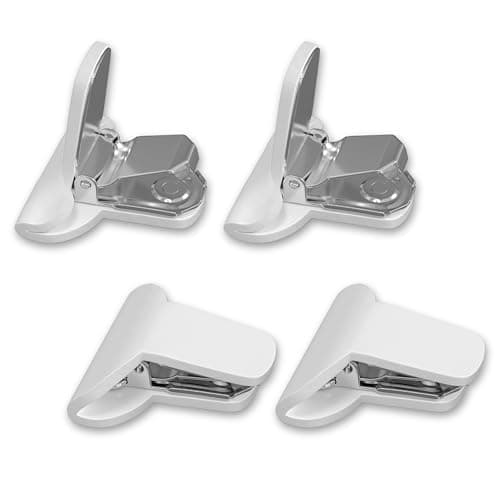
Fresh Ideas Comforter Clips for Duvet Covers (4-Pack)
Clips that grip the insert through the cover, so the duvet stops migrating into one corner overnight. The retrofit for an insert that came without corner loops.
Skip it if Your insert has loops and your cover has ties. Use those — a sewn-in tie holds better than anything clipped on from outside.
Common questions
What does "all-season" actually mean on a comforter?
Nothing standardized. There is no industry body defining all-season, lightweight or extra-warmth on bedding, and no test a comforter has to pass to use the phrase. In practice makers use it to mean the middle rung of their own three-rung warmth range - warm enough for a mild bedroom most of the year, not warm enough for a genuinely cold one in January, and too warm for a hot sleeper in August. Treat it as a relative hint about where this comforter sits in that maker's own lineup, not as a measurement you can compare across brands. The specs you can compare are the fill material, the fill weight in ounces if it is given, the shell, and the construction.
Is an "all season down comforter" on Amazon actually down?
Usually not in the way the shopper means. Most comforters in this price band state a fill of goose or duck "feather down fiber" - and down fiber is not down cluster. The USA-2000 labeling standard used by the US down industry requires "75% minimum down clusters (down, nestling down, and plumules) for products labeled 'DOWN,'" with no tolerance allowed, and the standard explicitly dropped the older down-fiber allowance: "the new standards do NOT include a down fiber allowance." Down fiber is the loose filament broken off a down cluster; it does not loft the same way and is treated as the inferior material. So read the fill statement in the bullets rather than the word DOWN in the title. If the fill really is mostly down cluster, the listing will usually say so with a fill power figure - and it will cost considerably more than anything on this page.
Should I buy one all-season comforter or two seasonal ones?
One all-season comforter plus a blanket beats two comforters for most people, and it is cheaper. The failure mode of the two-comforter plan is storage and timing: the winter one is in a bag in the closet on the first cold night, and the summer one is still on the bed in October. An all-season comforter with a folded blanket at the foot of the bed solves the same problem continuously - you add the blanket when it is cold and push it off when it is not. The exception is a genuinely cold bedroom, where all-season will not be enough on its own no matter what you layer, and a dedicated winter comforter is the honest answer.
Do I need a duvet cover with an all-season comforter?
You need one if the comforter is sold as an insert, and you can skip it if the shell is finished. Of the picks here, the Three Geese and TEXARTIST are inserts - plain shells and corner loops, built to be covered. The Serta and the oversized puredown are finished enough to use bare. The bigger argument for a cover is laundry: a feather or wool comforter is awkward to wash, so wrapping it in something you can launder weekly is how you keep it clean without destroying it. If you go the cover route, match the stated inches rather than trusting two things both labeled queen, because makers use 88 x 88, 90 x 90 and 98 x 98 for beds with the same name.
Is wool really better for all-season use than down or polyester?
For a room that swings in both directions, yes, and the reason is a fiber property rather than a construction trick. Wool absorbs water vapor into the fiber itself and releases it to the air, so it keeps moving moisture away from you at temperatures where a polyester fill has already saturated. That is why a wool comforter feels less clammy than a synthetic one of the same warmth. What wool does not do is loft - it lies flatter and heavier than down, so the bed looks different, and a lot of people buy a comforter for exactly that puffy look. Also check the blend percentage: a 51% wool blend is half something else, usually polyester, and it behaves accordingly.
What size all-season comforter should I buy?
Measure the mattress with everything already on it - the protector, the topper, the fitted sheet - then decide how far you want the comforter to hang down each side. A standard queen comforter is usually 88 to 90 inches wide, which drapes properly over a mattress of roughly 10 to 12 inches. Add a 3-inch topper to a 14-inch mattress and that same comforter now barely reaches the mattress edge, which is the single most common reason a comforter looks and feels too small. That is the case for an oversized 98-inch comforter. Going oversized on a standard-height bed causes the opposite problem, so this is a measurement, not a preference.
Can I wash an all-season comforter at home?
It depends entirely on the fill, and it is the main practical difference between the picks here. A down alternative comforter can usually go through a home machine if the drum is big enough for it to tumble freely - gentle cycle, cool water, mild detergent, no fabric softener, low heat with dryer balls. Feather and down fills clump when wet and need hours of careful drying, so they are better handled commercially or protected by a duvet cover you wash instead. Wool is often dry-clean or spot-clean only unless the listing specifically says washable, which is why the washable wool blend here is notable. In every case the limit is usually your washer size, not the comforter: a queen comforter crammed into a small top-loader will not rinse and may tear at the seams.
Sources
Where the facts on this page come from. We cite other people's testing because we don't do our own — here's what that means.
Read next
- The Best ComfortersSix comforters worth buying, the comforter-versus-duvet decision most buyers get backwards, and why all-season weight is usually the wrong compromise.
- The Best Down ComfortersSix down comforters worth buying, the difference between real down and the feather blends most listings hide, and how fill power, fill weight and the shell decide what you get.
- The Best Down Alternative ComfortersFive down alternative comforters chosen on the three specs that actually matter for polyester fill - shell, stitch pattern and stated warmth weight - plus why fill power means nothing here.
- The Best Comforters for WinterSix genuinely warm comforters for a cold bedroom, sorted by how each fill holds heat - premium down, temperature-regulating wool, and dense down alternative - with an honest note on who should skip each.
- The Best Cooling ComfortersSix comforters for hot sleepers and night sweats, sorted by how they actually keep you cool - cold-touch fabric at bedtime versus a light, breathable fill all night - with an honest note on who should skip each.
- The Best Duvet InsertsSix duvet inserts worth buying, plus the two numbers sellers conflate, why baffle-box construction beats box stitching, and how to pick warmth for your room.
- Comforter Sizes: What Size Fits Your BedTypical comforter and duvet-insert dimensions by bed size, why comforters run small on thick modern mattresses so many people size up, and how to measure for the drape you want.
- TOG Ratings: What the Warmth Number Really MeansA TOG rating measures a duvet's warmth — higher means warmer — and nothing about its quality or fill amount. Here's how to pick a TOG by season and by whether you sleep hot or cold, plus why US comforters often skip the number entirely.
- How to Choose a ComforterFive levers decide a comforter: fill (down, down alternative, wool, or cotton), warmth level for your climate, finished comforter versus insert-plus-cover, size and drape, and construction and care.