The Best Pillow Protectors
Start with the SureGuard set if you want a real barrier: it states waterproof, bed-bug-proof and a cotton face on the same listing, which almost nothing else in the category does. Four more below for a name-brand allergen cover that costs less, a breathable cover with no membrane at all, hot sleepers, and the cheapest way to do a whole house.
We earn a commission if you buy through our links. It doesn't affect our picks — and we never take free products. How this site is funded.
Quick picks
| # | Product | Best for | Price |
|---|---|---|---|
| 1 | 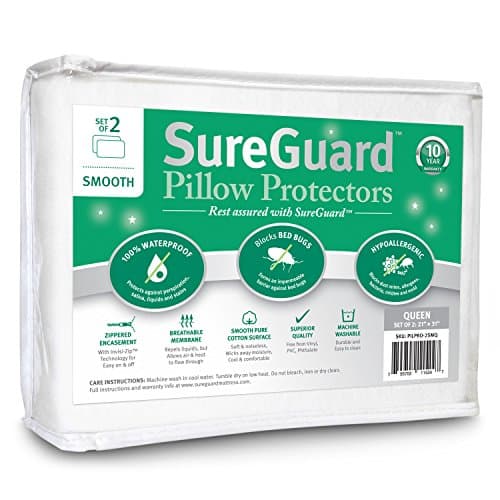 SureGuard Queen Pillow Protectors (Set of 2) The only pick that states waterproof, bed-bug-proof and a cotton face on one listing. If you want the protector to actually stop something, this is it. Best for: A real barrier | A real barrier | $37.97 · View on Amazon Price as of October 17, 2026. #ad — we earn a commission. |
| 2 | 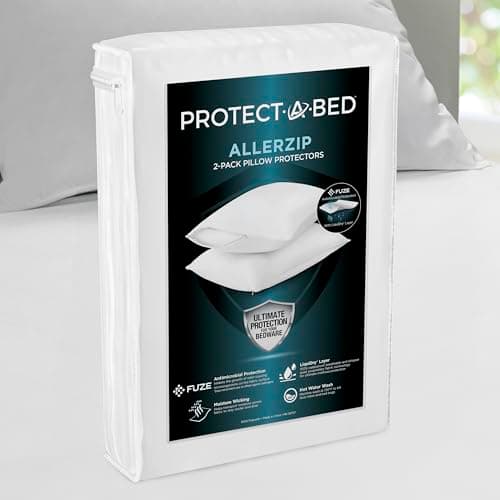 Protect-A-Bed AllerZip Pillow Protectors The established brand in encasements at roughly half the price of the SureGuard set. Buy it if dust mites rather than spills are the reason you are here. Best for: An allergen barrier for less | An allergen barrier for less | |
| 3 | 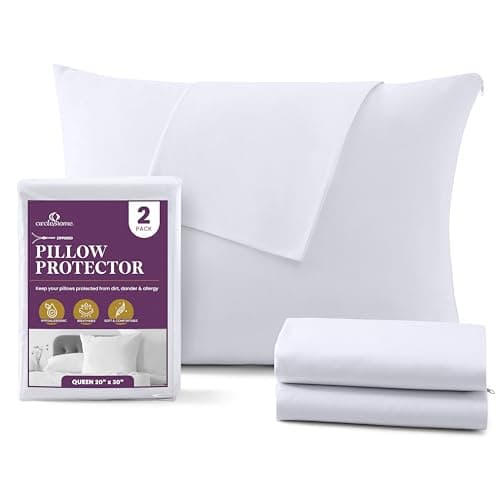 CirclesHome Zippered Pillow Protectors (Set of 2) No membrane, no laminate, no waterproof claim - just a zippered cover between your pillow and your pillowcase. The right default for most people. Best for: Breathability over barrier | Breathability over barrier | $14.99 · View on Amazon Price as of October 17, 2026. #ad — we earn a commission. |
| 4 | 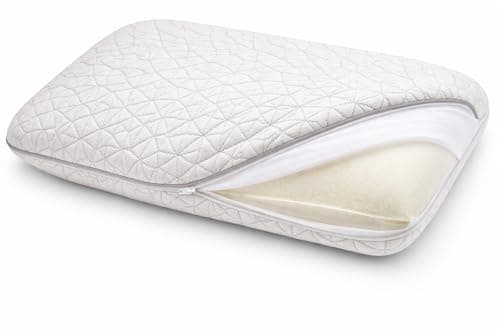 eluralux Quilted Bamboo Cooling Pillow Protector A quilted bamboo viscose face with a zip and no waterproof claim. The pick if the last protector you bought made you sweat. Best for: Hot sleepers | Hot sleepers | $19.99 · View on Amazon Price as of October 17, 2026. #ad — we earn a commission. |
| 5 | 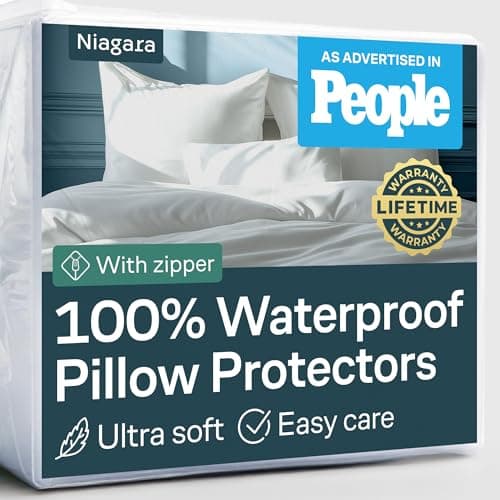 Niagara Waterproof Pillow Protectors (4-Pack) Four waterproof protectors for less than one premium pair. Buy it when you have four pillows and a guest room, not one favorite pillow. Best for: Doing the whole house | Doing the whole house |
One question sorts this entire category
Barrier or breathable? You cannot have both, and every disappointed protector review is somebody who bought one and wanted the other.
A waterproof protector works by laminating a polyurethane film to a face fabric. That film stops liquid, which is the point - and because it stops liquid it also slows water vapor, which is your sweat. So it sleeps warmer and slightly damper than no protector at all. A non-waterproof protector is just a zippered woven cover: it sleeps like the pillowcase it hides under, catches sweat and hair oil, and does nothing about a spill.
Decide which one you are buying before you compare anything else. If there is a child, a pet, a drink on the nightstand or a pillow you spent real money on, you want the barrier and the warmth that comes with it. If your pillow is cheap and the only thing that ever reaches it is you, buy the breathable cover and wash it weekly. That is the whole decision, and the five picks above are two barriers, two breathables and one cheap multipack for a house full of pillows.
What the allergy research actually supports
"Hypoallergenic" is not a regulated word on bedding, so a protector printing it has told you nothing. What the allergy literature does give you is a real specification. The practice parameter on dust mite exposure control published in Annals of Allergy, Asthma & Immunology states that "woven microfiber fabrics with a mean pore size smaller than 10 µ can effectively block passage of Der p 1" - Der p 1 being the principal house dust mite allergen. That is the number separating an encasement from a cover: a weave tight enough to hold allergen particles on the inside.
The same paper is careful about what that buys you: "although encasings effectively contain mite allergens, in many cases mite covers alone are unlikely to achieve a clinical benefit unless they are used as part of a more comprehensive multifaceted avoidance plan." That is the honest framing. An encasement is a cheap, sensible first layer. It is not a treatment, and a protector that promises to fix your allergies is overselling what a fabric can do.
Practically: none of the listings on this page publishes a pore size, and almost none in the category do. So if allergen containment is specifically why you are shopping, buy a full zippered encasement from a maker that has been in the allergy market for years rather than a slip-on cover with marketing words on it - which is why the Protect-A-Bed AllerZip is the pick we point allergy shoppers at, with the caveat that its listing is thin on verifiable specs too. The broader room matters more than the pillow, and our dust mite guide covers the washing temperatures and the parts of the bed people forget.
Closure: the spec most listings get away with hiding
There are three closures in this category and they are not interchangeable.
- Full-perimeter zip (an encasement). The pillow goes fully inside and the zip runs the length of one end with a proper stop. This is the only closure that can contain anything, and it is what the allergy research means by a cover.
- Partial zip or short zip. Cheaper, faster to use, and it leaves a gap at the zip end. Fine as a sweat-and-oil cover, useless as a barrier.
- Envelope or slip-on (no zip). An extra pillowcase, sold as a protector. It will catch some oil and nothing else, and it migrates off the pillow overnight.
The zip is also the part that fails. On a budget protector the zip teeth are the thinnest component in the package, and a protector with a broken zip has become a loose pillowcase. That is a genuine argument for buying the cheap multipack as a consumable and the premium cover for the pillow you care about - which is exactly how the top and bottom picks here are framed.
How the five compare, from the listings
| Pick | Waterproof | Stated face fabric | Closure | Pack |
|---|---|---|---|---|
| SureGuard | Yes, 100% (stated) | Cotton, smooth | Zippered | 2 |
| Protect-A-Bed AllerZip | Yes (stated) | Not stated | AllerZip zip | 2 |
| CirclesHome | No claim made | Not stated | Zippered | 2 |
| eluralux bamboo | No claim made | Bamboo viscose, quilted | Zippered | 1 |
| Niagara 4-pack | Yes (stated) | Not stated | Zippered | 4 |
Three of five listings will not name the fabric that touches your face, and none of the five publishes a pore size. That is the state of the category, and it is worth knowing before you read any protector listing: the claims that get made loudly - hypoallergenic, breathable, cooling - are the unregulated ones, and the specs that would let you compare two products are the ones left blank.
Sizing: measure the pillow, not the bed
Protector sizes follow pillow sizes, not mattress sizes, and the two share names in a way that trips people up: a queen pillow is 20 by 30 inches, which has nothing to do with whether your mattress is a queen. A standard pillow is 20 by 26, a king pillow is 20 by 36, and a body pillow is its own thing entirely. Buy for the pillow you own.
Fit also depends on loft. A thick memory foam or latex pillow fills a protector that a flat down pillow swims in, and a protector stretched tight over a tall pillow puts all the strain on the zip. If your pillow is unusually lofty, size up rather than fighting it. Pillow sizes has the full table, and how to choose a pillow covers loft if you are replacing the pillow at the same time.
The protector is only half the maintenance
A protector buys the pillow time; it does not make the pillow immortal. A covered pillow still needs washing a couple of times a year, and it still has an end date. How to wash pillows has the method per fill type - and the important caveat that memory foam and latex pillows generally cannot go in a machine at all, which is the case where a protector is doing most of the work. When to replace your pillow is the other half: once a pillow no longer holds its shape, no amount of protecting or laundering brings the support back.
If yellowing is already the problem, whitening pillows covers what actually works and what is a waste of an afternoon. And the same logic scales up one layer: the mattress underneath is the item in the room you genuinely cannot wash, which is why a mattress protector is the higher-value version of this purchase, and whether you need one is the argument in full.
What a protector will not do
It will not make a bad pillow comfortable. It will not cure allergies - the research above is explicit that covers alone rarely achieve a clinical benefit on their own. It will not make a pillow cooler; every protector is at best neutral on temperature and a waterproof one is actively warmer. And it will not fix a bed bug problem, because the bugs live in the frame and the baseboards, not primarily in your pillow.
What it does is narrow and genuinely worth the money: it moves the dirty job from an expensive, awkward-to-wash object onto a cheap one you can throw in with the sheets. That is it, and that is enough.
What we will not tell you
We have not slept on these and there is no test lab behind this site. We will not give you a waterproofing score we never measured or a pore size a listing never published. What we can do is read what each listing commits to, hold it against published allergy guidance, and say which protector is wrong for which sleeper - which is why every pick above carries a "skip this one if." Our full method is here.
The picks, in full
1. Best for A real barrier
SureGuard Queen Pillow Protectors (Set of 2)
The only pick that states waterproof, bed-bug-proof and a cotton face on one listing. If you want the protector to actually stop something, this is it.
Price as of October 17, 2026. #ad — we earn a commission.
Key specs
- 100% waterproof (as listed)
- Bed bug proof (as listed)
- Hypoallergenic (as listed)
- Zippered cotton cover, smooth finish (as listed)
- Queen, set of 2
What's good
- It commits to all three claims at once - waterproof, bed bug proof and hypoallergenic - where most of the category picks one and stays vague about the rest
- A cotton face over the membrane is the comfort difference you can actually feel: your cheek rests on woven cotton rather than on polyester laminate, and it is why this costs several times the cheapest pick here
- "Smooth" rather than terry matters under a thin pillowcase - terry is grippier and quieter, but it adds bulk and shows through a percale case
What's not
- It is the most expensive pick on the page by a wide margin, and the gap buys you comfort and claim clarity rather than more protection than a cheap waterproof cover provides
- Any fully waterproof protector means a polyurethane membrane, and a membrane is a vapor barrier - it will sleep warmer than the pillowcase alone, no matter what the face fabric is
- The listing states "bed bug proof" but no pore size or test standard, so the claim is the seller's rather than something you can check against a specification
Skip this one if
You run hot and nothing has ever been spilled on your pillow. You are buying a membrane you do not need and will feel every night - the CirclesHome zippered cover or the bamboo cooling cover is the right answer instead.
2. Best for An allergen barrier for less
Protect-A-Bed AllerZip Pillow Protectors
The established brand in encasements at roughly half the price of the SureGuard set. Buy it if dust mites rather than spills are the reason you are here.
Key specs
- Waterproof (as listed)
- AllerZip zip closure (as listed)
- Queen, 2-pack (as listed)
What's good
- Protect-A-Bed has been making encasements for the allergy market for decades, and the AllerZip closure is specifically a full-perimeter zip rather than the partial zip a lot of cheap covers use - that matters because a gap at the zip end defeats the point of an encasement
- It is roughly half the price of the premium barrier pick for the same basic job, which makes a four-pillow household affordable
- A full encasement rather than a slip-on cover is what the allergy literature is actually talking about when it discusses mite covers
What's not
- The listing is thin on specs: it states waterproof and nothing about pore size, fabric weight or face material, so there is less to verify here than on the SureGuard
- Same membrane trade-off as any waterproof cover - it holds heat and moisture against the pillow and the sleeper
- A zippered encasement is fiddlier to get on and off than a slip-on cover, and the zip teeth can be felt through a thin pillowcase if you sleep near the edge
Skip this one if
Your actual problem is sweat and hair oil rather than allergies. You do not need an encasement for that - a plain zippered cover you wash weekly does the same job and breathes far better.
3. Best for Breathability over barrier
CirclesHome Zippered Pillow Protectors (Set of 2)
No membrane, no laminate, no waterproof claim - just a zippered cover between your pillow and your pillowcase. The right default for most people.
Price as of October 17, 2026. #ad — we earn a commission.
Key specs
- Zippered pillow cover (as listed)
- No waterproof claim made
- White
- Queen, set of 2
What's good
- Because there is no membrane, it sleeps essentially the same as the pillowcase alone - which is the whole reason to buy a non-waterproof protector and the reason this is the right default
- It still does the job people actually need a protector for: catching sweat, hair oil and skin cells before they soak into the fill, so the weekly wash is a thin cover rather than the whole pillow
- Cheap enough to buy two sets so there is always a clean one while the other is in the wash, which is how a weekly habit survives
What's not
- It is not a barrier: no waterproof claim, so a spilled drink or a sick child goes straight through into the fill
- The listing for this size does not state a fiber content, so you are buying on the brand's consistency rather than on a stated fabric
- A thin woven cover will not stop dust mite allergen the way a tested encasement does - if allergy is the reason you are shopping, this is the wrong pick
Skip this one if
You are buying a protector because of allergies, bed bugs, a child who wets the bed, or a pillow you spent real money on. All four of those need a barrier. Buy the SureGuard or the AllerZip.
4. Best for Hot sleepers
eluralux Quilted Bamboo Cooling Pillow Protector
A quilted bamboo viscose face with a zip and no waterproof claim. The pick if the last protector you bought made you sweat.
Price as of October 17, 2026. #ad — we earn a commission.
Key specs
- Bamboo (viscose) face fabric (as listed)
- Quilted (as listed)
- Cooling pillow protector (as listed)
- Zipper closure (as listed)
- Washable (as listed)
- Queen, white
What's good
- Bamboo viscose is a genuinely good fiber against skin for a hot sleeper - it is a smooth, absorbent cellulose fiber that moves sweat off you rather than sitting on top of it like polyester does
- No waterproof membrane means no vapor barrier, which is the real reason protectors sleep hot; the fiber choice is a bonus on top of that
- The quilting adds a little padding, so it softens a firm pillow slightly rather than just wrapping it
What's not
- "Cooling" here comes from the absence of a membrane plus a breathable fiber - there is no phase-change material or tested cooling technology, and the listing does not claim one
- Bamboo viscose is a chemically processed cellulose fiber; the eco framing on it is mostly noise, and it is less durable through hot washes than cotton
- Quilting makes it bulkier than a plain cover, so it can show through a thin pillowcase and takes longer to dry
Skip this one if
You need waterproofing. This has no membrane at all, which is exactly why it is cool - and exactly why it will not stop a spill. Buy the SureGuard if a barrier is the job.
5. Best for Doing the whole house
Niagara Waterproof Pillow Protectors (4-Pack)
Four waterproof protectors for less than one premium pair. Buy it when you have four pillows and a guest room, not one favorite pillow.
Key specs
- Waterproof (as listed)
- 4-pack (as listed)
- Queen size, white (as listed)
What's good
- Four waterproof covers at this price is the cheapest route to protecting every pillow in the house, including the guest bed and the kids' room where accidents actually happen
- Getting protection onto all four pillows beats getting the best protector onto one - the pillow that gets ruined is always the one you did not cover
- Cheap enough to treat as consumable: when one gets stained or the zip goes, you replace it rather than nursing it along
What's not
- The listing does not state a face fabric, a pore size or a bed-bug claim, so you are buying a waterproof cover and nothing more specific than that
- At this price the face is very likely a thin polyester knit over the membrane, which means two layers of plastic between you and the pillow - it will be the warmest and the crinkliest option here
- Zips on budget protectors are the first thing to fail, and a protector with a broken zip is a pillowcase
Skip this one if
You bought an expensive pillow and want to keep it nice for years. Spend up on one good protector for that pillow instead of four thin ones - comfort is the thing you notice nightly.
Common questions
What does a pillow protector actually do?
It puts a washable layer between you and the pillow fill, so the things that ruin a pillow land on something you can launder. Sweat, hair oil, skin cells, saliva and makeup all soak straight through a pillowcase into foam or down, where they stay - that is what the yellowing on an old pillow is. A protector catches that. A waterproof protector adds a membrane that also stops liquid, and a tested encasement adds a tight enough weave to hold dust mite allergen on the inside. Those are three different jobs at three different comfort costs, which is why there is no single best protector.
Pillow protector or pillowcase - what is the difference?
A pillowcase is the decorative, open-ended layer you see; a protector is a plain, usually zippered layer that goes on first and stays on. The order is pillow, protector, pillowcase. People who try to use a pillowcase as a protector end up washing the pillow instead, because an open-ended case lets everything migrate around the edges and down into the fill. The protector exists to be the thing you wash and the thing that wears out, so the pillow does not have to be.
Do pillow protectors help with dust mite allergies?
They can contain the allergen, but the research is careful about what that achieves on its own. The allergy practice parameter on dust mite exposure control states that "woven microfiber fabrics with a mean pore size smaller than 10 micron can effectively block passage of Der p 1" - the main mite allergen - so a tight enough weave genuinely works as a barrier. The same document is blunt about outcomes: "although encasings effectively contain mite allergens, in many cases mite covers alone are unlikely to achieve a clinical benefit unless they are used as part of a more comprehensive multifaceted avoidance plan." So an encasement is a reasonable first step, not a treatment, and the pore size is the spec that separates a real encasement from a cover with the word hypoallergenic printed on it. Most Amazon listings, including the ones on this page, do not publish a pore size.
Why do waterproof pillow protectors sleep so hot?
Because waterproof means a membrane, and a membrane is a vapor barrier. The polyurethane film that stops liquid getting in also slows water vapor - your sweat - getting out, so the moisture stays between you and the film. Face fabric changes how it feels but not the physics: a cotton or bamboo face over a membrane is more pleasant than bare laminate, and it is still a membrane. If overheating is your main complaint, the honest answer is to drop the waterproofing and buy a plain zippered cover you wash weekly. If you need the barrier anyway - a child, a pet, an expensive pillow - buy the barrier and accept the warmth.
How often should I wash a pillow protector?
Every one to two weeks, on the same trip as the sheets. That is the entire point of owning one: a thin cover is easy to wash often, and washing it often is what keeps the pillow itself out of the machine. Follow the care label, which for a waterproof protector almost always means a warm or cool wash and low heat drying - hot water and high dryer heat are what crack and delaminate a polyurethane membrane, and a cracked membrane is no longer waterproof. For dust mite control, the practice parameter notes that hotter washing kills slightly more mites but comes with a scald risk if household water is kept at 130 degrees Fahrenheit or higher, so this is not a case where hotter is simply better.
Do I still need to wash the pillow itself?
Yes, just much less often. A protector catches most of what reaches the pillow, but not all of it, and the fill still collects dust and loses loft. Twice a year is a reasonable schedule for a washable pillow with a protector on it, against every three months without one. Check the pillow's own care label first - memory foam and latex pillows are generally not machine washable at all, and for those the protector is doing even more work. Our guide on washing pillows covers the fill-specific method, and the pillow replacement guide covers the point at which washing stops helping.
Can a pillow protector stop bed bugs?
A sealed encasement can contain them, which is a real part of a treatment plan but not a treatment by itself. The mechanism is simple: a zippered encasement with no gap traps anything already inside the pillow and denies new bugs a harborage in the seams. That is why pest control guidance treats encasements as a containment and monitoring aid alongside actual treatment of the room. Two cautions. First, "bed bug proof" on a listing is a seller's claim, not a test result, and none of the listings on this page publish a standard they were tested against. Second, an encasement does nothing about the bed frame, the headboard or the baseboards, which is where the population usually lives. Treat it as one layer, and deal with the room properly.
Sources
Where the facts on this page come from. We cite other people's testing because we don't do our own — here's what that means.
- Environmental assessment and exposure control of dust mites: a practice parameter (Annals of Allergy, Asthma & Immunology, 2013)
- Evaluation of materials used for bedding encasement: effect of pore size in blocking cat and dust mite allergen (PubMed)
- Impermeable dust mite covers in the primary and tertiary prevention of allergic disease: a meta-analysis (NCBI Bookshelf)
Read next
- The Best Mattress ProtectorsSix mattress protectors that block liquid without sleeping hot or crinkling — fitted pads and zippered encasements — with an honest note on who each is wrong for.
- How to Wash Pillows (by Fill Type)A wash-and-dry method for every pillow fill type — down, down-alternative, memory foam, latex and buckwheat — plus the protector trick that cuts the job in half and the fold test for when it's time to replace one.
- When to Replace Your PillowThe honest signs a pillow is finished — lost loft, permanent lumps, waking stiff, yellowing and odor — plus rough lifespans by fill type and the fold and flat-hand tests that tell you for sure.
- How to Get Rid of Dust Mites in Your BedYou cannot get rid of dust mites completely - but you can cut their numbers and allergen load. The habits that genuinely work, ranked, minus the hype.
- How to Whiten Yellowed PillowsWhy pillows yellow and how to strip it out — a hot-wash-and-soak whitening method with a booster and a sun-dry — plus the fills that can't be washed and the point where yellowing means it's time to replace.
- The Best Pillows, Picked by How You SleepSix pillows picked by sleeping position and fill type — side, back, stomach, adjustable vs fixed — with honest cons and a skip note on every one.
- The Best Silk PillowcasesSix silk pillowcases chosen on momme rather than marketing grade, with honest cons on every pick and a clear-eyed take on what silk really does for hair and skin.
- Do You Need a Mattress Protector?A mattress protector guards against spills, sweat, oils, dust mites and warranty-voiding stains. It is close to essential for kids, pets, allergies and a new expensive bed, and genuinely optional for a careful adult on a cheap mattress.