The Best Microfiber Sheets
Microfiber is polyester woven very fine: the cheapest genuinely soft sheet you can buy, wrinkle-free out of the dryer, and warmer than any cotton. Six sets whose listings actually say what they are - and an honest warning that if you sleep hot, you are on the wrong page.
We earn a commission if you buy through our links. It doesn't affect our picks — and we never take free products. How this site is funded.
Quick picks
| # | Product | Best for | Price |
|---|---|---|---|
| 1 | 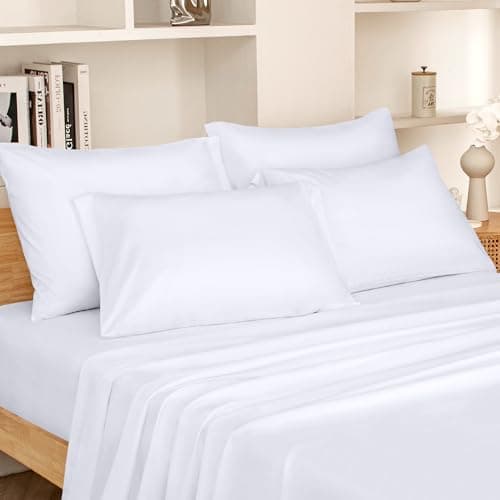 HOMEIDEAS 6-Piece Brushed Microfiber Sheet Set The sensible default. Six pieces instead of four, a brushed finish that is soft from the first night, and a listing that states the fiber and the deep pocket rather than hiding behind a mood word. Best for: Most people | Most people | |
| 2 | 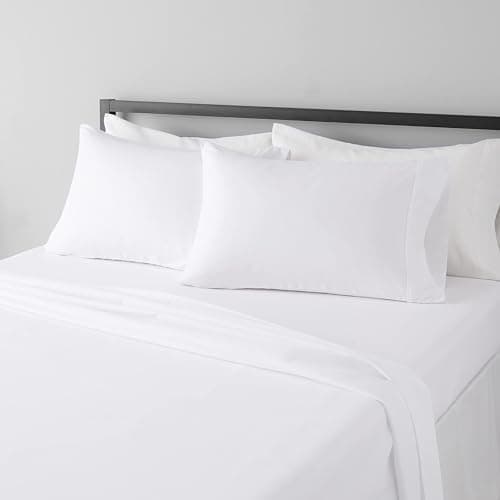 Amazon Basics Lightweight Microfiber Sheet Set The floor of the market, and honest about it. It costs less than a takeaway, it states its pocket depth in the title, and for a spare bed that is genuinely the whole argument. Best for: The lowest sensible price | The lowest sensible price | $17.04 · View on Amazon Price as of October 18, 2026. #ad — we earn a commission. |
| 3 | 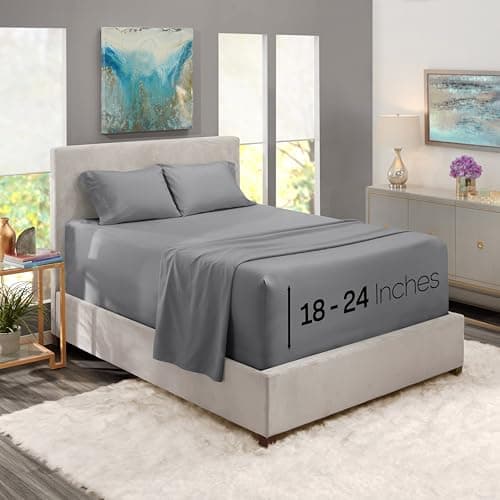 Nestl Extra Deep Pocket Microfiber Sheet Set The one to buy if your fitted sheet keeps popping off. It publishes an 18-to-24-inch pocket range, which is a real number for a real problem rather than the vague "deep pocket" everyone else prints. Best for: Tall mattresses and toppers | Tall mattresses and toppers | |
| 4 | 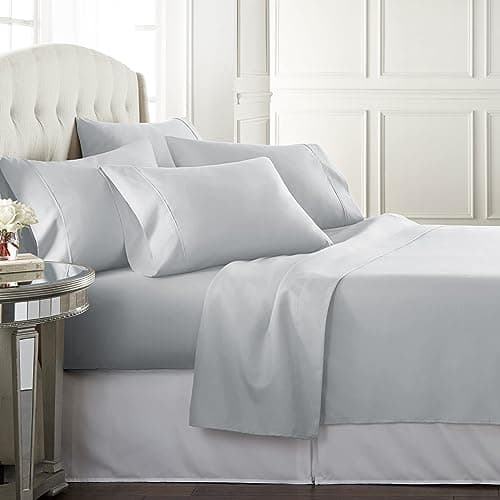 Danjor Linens 6-Piece Brushed Microfiber Sheet Set Six pieces with four pillowcases, which is the most practical configuration on this page for a room other people sleep in. Buy it for the pillowcases and the price, and ignore every word the listing says about heat. Best for: Guest rooms and spare pillowcases | Guest rooms and spare pillowcases | $39.99 · View on Amazon Price as of October 18, 2026. #ad — we earn a commission. |
| 5 | 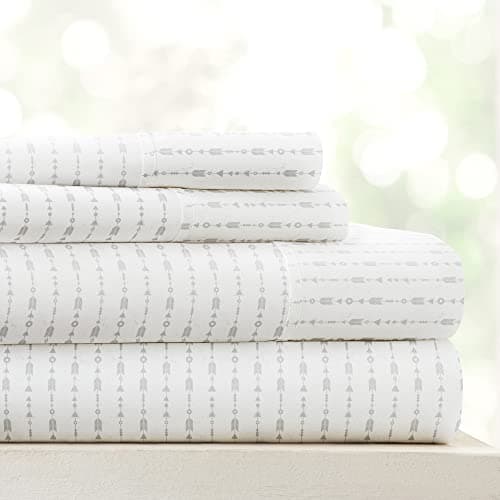 Linen Market Patterned Microfiber Sheet Set The pick for anyone who wants a pattern, or who would rather their synthetic sheets came with a chemical-safety certification attached. Both of those are things polyester genuinely does well. Best for: Prints, and a certification you can check | Prints, and a certification you can check | |
| 6 | 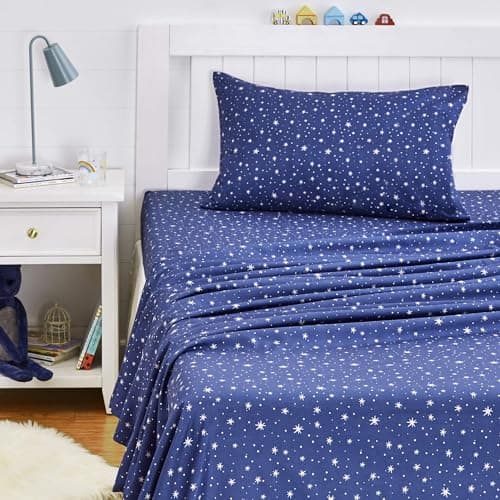 Amazon Basics Kid's Microfiber 3-Piece Sheet Set The one context where microfiber is not a compromise but the correct answer. Cheap, printed, and built to survive a wash cycle every week without anyone caring how it ages. Best for: Kids' beds and bunks | Kids' beds and bunks |
What microfiber actually is
Microfiber is not a fiber name in the way cotton and linen are. It is a description of fineness. A microfiber is any synthetic filament spun finer than roughly one denier - on the order of a hundred times thinner than a human hair - and in bedding, that filament is essentially always polyester. Sleep Foundation describes microfiber sheets in exactly those terms: a type of polyester with fine, tightly woven fibers that may also be brushed, which is what gives the fabric its soft, velvety feel.
That single fact explains the entire product. Polyester is a plastic, so it is cheap to make, which is why microfiber is the least expensive genuinely soft sheet on the shelf. Plastic does not crease the way a natural fiber does, which is why microfiber comes out of a dryer looking like a made bed. Spun very fine and woven very tight, then brushed to raise a nap, it feels smooth and soft on the first night with none of the break-in a crisp cotton asks for. And plastic does not absorb water, which is why it traps heat and leaves your sweat where it landed. Everything good and everything bad about these sheets comes from the same place. Our microfiber vs cotton sheets guide works through that trade in full; this page is about which sets are worth owning once you have accepted it.
The number on the box is not a thread count
Look at any microfiber listing and you will find a big number attached to it: 1500, 1800, occasionally something sillier. Two of the sets on this page carry one. It is worth being precise about what that number is, because it is the most effective piece of misdirection in the entire bedding aisle: it is not a thread count, and nobody counted anything to arrive at it.
Thread count is a convention for cotton, where you can meaningfully count the threads crossing one square inch. Microfiber filaments are finer than a single denier, which makes the same count both impractical to take and useless as a quality signal - packing a vast number of near-invisible threads into an inch tells you nothing about how the sheet feels, breathes or lasts. So "1800" on a polyester set is a series name borrowed from the cotton convention because shoppers recognize the shape of it. Our thread count guide takes the number apart on cotton, where it at least means something; on microfiber there is nothing to take apart.
The measure that is used for synthetic fabric is weight - grams per square meter, or GSM. Sleep Foundation puts good microfiber sheets in the 90 to 120 GSM range, and notes that some materials use weight rather than thread count to describe density. That is a real, checkable spec, and here is the honest problem with this whole category: almost no Amazon microfiber listing publishes it. Not one of the six sets below states a GSM. We have not tested these fabrics on a scale and we are not going to pretend otherwise, so rather than invent a number, this page buys on the specs sellers do state - the stated fiber, the stated pocket depth, the piece count, and any certification you can independently verify. When a listing will not tell you what the fabric weighs, those are the only facts on the table.
Heat is the one thing microfiber cannot fix
This is the part of the page worth reading even if you buy nothing. Microfiber sleeps warm. Sleep Foundation states it without hedging: microfiber is not as breathable as cotton, and sleepers prone to overheating should consider a different material. The mechanism is simple - polyester absorbs almost no moisture, and a very tight weave of very fine filaments leaves very little room for air to move. Your body heat stays put and your sweat stays on your skin instead of moving off into the cloth. It is the same fiber family as fleece, and it behaves like it.
Which means the word cooling on a microfiber listing deserves the flattest possible response. Two of the sets below use it - one is literally titled for hot sleepers - and it is the least defensible claim in the category. A surface finish that feels cool to a hand in a shop is spent within minutes of a warm body lying on it, and no finish changes what polyester does with moisture. If you overheat at night, the answer is not a better microfiber; it is a different fiber. Go and read our best cooling sheets roundup, or buy a crisp cotton percale, which is the cheap, boring, genuinely effective fix. A hot sleeper buying microfiber to save thirty dollars is the most common and most avoidable mistake in bedding.
Where microfiber is genuinely the right answer
None of that makes it a bad product. It makes it a specific one. There are rooms where microfiber is not a compromise at all but the correct purchase, and they have a shape in common: beds where cost, laundry resilience and speed matter more than breathability.
A guest room qualifies, because the bed is used a dozen nights a year and wants a spare set of pillowcases more than it wants long-staple cotton. A child's bed qualifies emphatically - it gets stripped and washed constantly, polyester survives repeated washing better than cheap cotton, it dries fast, and it holds a printed pattern through wash after wash where cotton fades. A rental, a first apartment, a camper, a college room, a bed you are furnishing on a deadline: all reasonable. And so is anyone who genuinely sleeps cold, for whom the heat retention that ruins these sheets for a warm sleeper is the actual feature being bought. If you want the same money spent across other fibers instead, our best budget sheets roundup sorts the bottom of the market by what each cheap fiber costs you.
Pocket depth: the spec that decides whether you keep them
The most common one-star sheet review has nothing to do with fabric. It is a fitted sheet that will not stay on the mattress. Beds have grown - 12, 14, 16 inches is now normal, and a topper adds several more - while the cheapest sheets are still cut to older assumptions. A sheet that pings off a corner at 3am is not a bargain, it is a return.
So do the boring thing before you order. Measure the side of your mattress from the top surface down to where it meets the frame, with any topper on, then add an inch so the sheet reaches underneath rather than just touching the edge. Buy only sets that state a pocket depth at or above that figure. "Deep pocket" on its own is not a standardized term and is worth very little; a stated number is worth a lot, which is why the Amazon Basics set's 14 inches and the Nestl set's 18-to-24-inch range are treated as features here rather than fine print. It cuts both ways, too - a pocket cut for 24 inches bags and slides on a 10-inch mattress just as badly as a shallow one pops off a tall one. Our guide to what deep pocket sheets actually are covers the measuring properly.
Pilling, and the laundry rules that actually matter
Microfiber's other real weakness is pilling. Fine surface fibers work loose, ball up, and give the sheet that fuzzy, slightly grubby look - and a brushed set, which is most of them, has a raised nap that gives those fibers more to work loose from. Cotton pills too, but cotton pills can be shaved off and the fabric underneath is fine. Once polyester pills, that is the permanent state of the sheet. That asymmetry - why a strong fiber keeps its pills and a weaker one sheds them - is the whole mechanism, and why sheets pill walks through it fabric by fabric.
The prevention is not fussy, just deliberate, and it is mostly about heat. Polyester is a plastic; hot water and a hot dryer are what roughen and degrade its surface. Wash cool or warm, never hot. Skip fabric softener entirely - it coats synthetic fibers and does nothing useful for them. Keep sheets away from towels and zippers in the drum, because abrasion is the other half of the problem. Dry on low and take them out promptly, which polyester rewards by needing no ironing at all. Do that and a decent microfiber set stays smooth for its useful life; wash it hot with the bath towels and it will fuzz inside a few months. Our how to wash sheets guide has the full routine for every fiber.
Who should buy microfiber, and who should spend a little more
The whole page in two sentences. Buy microfiber if you want a soft, cheap, wrinkle-free sheet with no break-in for a guest room, a kid's bed, a rental or a camper, or if you sleep cold and want a warm bed - and any of the six sets above is a sound way to get it, with the HOMEIDEAS six-piece as the sensible default, the Amazon Basics set as the floor, the Nestl for a tall mattress and the Amazon Basics kids' set for a bunk. Buy cotton instead if you sleep hot, if this is the bed you are in every night, or if you want a sheet that will still be good in five years.
And be honest about which of those you are, because the gap in money is smaller than the gap in outcome. A cotton percale costs a little more than a brushed polyester set and solves the one problem microfiber cannot. If you are not sure which fiber you want at all, start with how to choose bed sheets and work forward from the room rather than the price. As always, nothing here was lab-tested - the picks come from reading what the listings actually state, refusing the claims they cannot support, and knowing how the fiber behaves, which is exactly the method described on how we review.
The picks, in full
1. Best for Most people
HOMEIDEAS 6-Piece Brushed Microfiber Sheet Set
The sensible default. Six pieces instead of four, a brushed finish that is soft from the first night, and a listing that states the fiber and the deep pocket rather than hiding behind a mood word.
Key specs
- Brushed microfiber (as listed)
- 6-piece set - includes extra pillowcases (as listed)
- Deep pocket (as listed)
- Wrinkle and fade free (as listed)
What's good
- The listing says brushed microfiber in plain words, which is more than most sets at this price manage - you know exactly what you are buying before you click
- Six pieces means two spare pillowcases, and pillowcases are the part of a set that wears, stains and goes in the wash first, so a spare pair is worth more than it sounds
- Brushing raises a soft nap on the surface, which is the whole reason microfiber feels pleasant immediately with no washing-in period
What's not
- The 1800 in the product name is marketing, not a thread count - microfiber threads are too fine to count meaningfully, and no GSM figure is published anywhere on the listing
- It is polyester, so it insulates and does not absorb sweat; in a warm room this is the sheet you will kick off at 2am
- The brushed nap is the surface most likely to pill, and once polyester pills there is no reversing it
Skip this one if
You sleep hot, or you want to know the actual fabric weight before buying. No set on this page publishes a GSM, and if breathability matters, buy a cotton percale instead.
2. Best for The lowest sensible price
Amazon Basics Lightweight Microfiber Sheet Set
The floor of the market, and honest about it. It costs less than a takeaway, it states its pocket depth in the title, and for a spare bed that is genuinely the whole argument.
Price as of October 18, 2026. #ad — we earn a commission.
Key specs
- Microfiber (as listed)
- 14-inch deep pockets (as listed)
- 4-piece set (as listed)
- Lightweight, wrinkle-resistant (as listed)
What's good
- It states a 14-inch pocket depth right in the title, which is the single most useful number on a sheet listing and the one most budget sellers leave out entirely
- At this price a set is close to disposable in the useful sense - you can put it on a guest bed, a camper or a student room and not care what happens to it
- Described as lightweight rather than plush, which is the more honest microfiber to own: a thinner polyester traps marginally less heat than a heavy brushed one
What's not
- Lightweight also means thin, and a thin polyester sheet feels slick and a bit papery rather than luxurious - you are feeling the price
- Polyester repels moisture rather than absorbing it, so sweat sits on your skin; this is the mechanism behind every complaint that cheap sheets sleep hot
- No fabric weight is published, so there is no way to tell where it sits in the 90-120 GSM range that a decent microfiber is supposed to occupy
Skip this one if
This is the bed you sleep in every night. The cotton sets on our best sheets on Amazon roundup cost very little more and handle moisture properly - buy this for the guest room and cotton for yourself.
3. Best for Tall mattresses and toppers
Nestl Extra Deep Pocket Microfiber Sheet Set
The one to buy if your fitted sheet keeps popping off. It publishes an 18-to-24-inch pocket range, which is a real number for a real problem rather than the vague "deep pocket" everyone else prints.
Key specs
- Microfiber (as listed)
- Extra deep pocket, 18-24 inches (as listed)
- 4-piece set (as listed)
- Wrinkle-free, easy care (as listed)
What's good
- An 18-to-24-inch stated range is unusually specific, and specificity is the thing worth paying for on a fitted sheet - most listings say "deep pocket" and leave you to find out
- That range covers a thick hybrid mattress with a topper on it, which is the exact combination that defeats a standard sheet
- Polyester's wrinkle resistance is real, so it goes on a tall bed looking made without ironing a sheet you can barely reach the corners of
What's not
- The listing markets it as cooling, and it is not - it is microfiber, and no finish changes what polyester does with moisture
- A pocket cut for 24 inches will bag and shift on a 10-inch mattress, so this is the wrong buy if your bed is thin
- As with every set here, no GSM is stated, so the fabric weight is unknown
Skip this one if
Your mattress is under about 14 inches with nothing on top of it. Deep-pocket sheets fail in the other direction on a thin bed - take the Amazon Basics 14-inch set instead.
4. Best for Guest rooms and spare pillowcases
Danjor Linens 6-Piece Brushed Microfiber Sheet Set
Six pieces with four pillowcases, which is the most practical configuration on this page for a room other people sleep in. Buy it for the pillowcases and the price, and ignore every word the listing says about heat.
Price as of October 18, 2026. #ad — we earn a commission.
Key specs
- Lightweight brushed microfiber (as listed)
- 6-piece set with 4 pillowcases (as listed)
- Deep pockets (as listed)
- Marketed as breathable and cooling (as listed)
What's good
- Four pillowcases in one set is genuinely useful in a guest room - you can strip and remake a bed between visitors without a laundry cycle in between
- Lightweight brushed microfiber is the better version of the fiber: soft on contact, but not the heavy quilted-feeling polyester that turns a bed into an oven
- Deep pockets and wrinkle resistance make it a low-effort set for a room you do not want to think about
What's not
- The listing is titled for hot sleepers and describes itself as cooling, and that is the least defensible claim in this whole category - polyester is an insulator that does not absorb sweat
- Buying a synthetic sheet for temperature is the single most common bedding mistake there is, and this listing is written to encourage exactly that
- It is the most expensive set on this page, and the extra is mostly the two additional pillowcases rather than a better fabric
Skip this one if
You are shopping for temperature. Take the marketing off this listing and it is a good, cheap, six-piece guest-room set - but if you actually overheat at night, our cooling sheets roundup is the honest destination.
5. Best for Prints, and a certification you can check
Linen Market Patterned Microfiber Sheet Set
The pick for anyone who wants a pattern, or who would rather their synthetic sheets came with a chemical-safety certification attached. Both of those are things polyester genuinely does well.
Key specs
- Microfiber (as listed)
- Oeko-TEX certified (as listed)
- 16-inch deep pocket (as listed)
- 4-piece patterned set (as listed)
What's good
- Oeko-TEX Standard 100 is a real, independently administered certification that a textile has been tested for harmful substances - it is the only third-party claim on this page you can actually go and verify
- Polyester takes print far better than cotton and holds the color through washing, so patterned microfiber genuinely outperforms patterned cotton at this price
- A stated 16-inch pocket sits in the useful middle: deep enough for a modern mattress, not so deep it bags on a normal one
What's not
- Oeko-TEX certifies that the fabric is free of tested harmful substances - it says nothing about durability, breathability or how the sheet sleeps, and it is often quoted as though it did
- It is still microfiber, so the heat trade is identical to everything else here regardless of the certificate
- A busy print is harder to live with for years than a solid, and this is not a set you will want to keep for years
Skip this one if
You want a plain, solid sheet or you are treating the certification as a quality mark. It is a safety test, not a performance one - if you want a sheet that breathes, none of these do.
6. Best for Kids' beds and bunks
Amazon Basics Kid's Microfiber 3-Piece Sheet Set
The one context where microfiber is not a compromise but the correct answer. Cheap, printed, and built to survive a wash cycle every week without anyone caring how it ages.
Key specs
- Microfiber (as listed)
- 3-piece twin set with pillowcase (as listed)
- Machine washable, easy wash (as listed)
- Printed designs (as listed)
What's good
- Children's beds get stripped and washed constantly, and polyester takes repeated washing better than cheap cotton does - the fiber's actual strength, put to its actual use
- It dries very fast, which matters more than anything else on this list at 11pm on a school night
- Prints are the point on a kid's bed, and polyester holds a printed color through wash after wash where cotton fades
What's not
- Children run hot and kick their covers off, and microfiber traps heat - in a warm bedroom this can make a restless sleeper more restless
- Three pieces on a twin means a fitted sheet, a flat sheet and one pillowcase, so there is no spare when one goes in the wash
- The prints date quickly, and a child who loved the design at six will not at nine
Skip this one if
The bedroom runs warm, or your child is a hot, restless sleeper. That is a real problem this fiber makes worse - a cheap cotton percale is the better buy for a warm kid's room.
Common questions
What are microfiber sheets actually made of?
Polyester, almost always. Microfiber is not a fiber name the way cotton or linen is - it is a description of fineness. A microfiber is any synthetic filament finer than roughly one denier, which is on the order of a hundred times thinner than a human hair, and in bedding that filament is essentially always polyester. That is why microfiber behaves the way it does: it is plastic, spun extremely fine and woven very tight. Sleep Foundation describes it plainly as a type of polyester with fine, tightly woven fibers that may also be brushed for a soft, velvety feel. Everything good about microfiber - the price, the immediate softness, the wrinkle resistance - and everything bad about it - the heat, the pilling, the way it repels rather than absorbs moisture - comes from that one fact.
Are microfiber sheets hot to sleep on?
Yes, warmer than cotton, and it is structural rather than a defect in any particular set. Polyester is a plastic filament that absorbs very little moisture, and microfiber is woven very tightly, so there is little room for air to move and nowhere for your sweat to go. Sleep Foundation puts it directly: microfiber is not as breathable as cotton, and sleepers prone to overheating should consider other materials. If you run cold, that warmth is exactly what you are buying and microfiber is a genuinely cozy sheet. If you overheat at night, no microfiber set fixes it - not a lightweight one, not a brushed one, and certainly not one with the word cooling in the title. Buy a cotton percale, linen, or a set from a dedicated cooling roundup instead.
What does 1800 thread count mean on microfiber sheets?
Effectively nothing. Microfiber filaments are finer than one denier, which makes counting threads per inch both impractical and meaningless as a quality signal - you can pack an enormous number of near-invisible threads into an inch and it tells you nothing about how the sheet feels or lasts. Numbers like 1800 and 1500 are marketing series names borrowed from the cotton thread-count convention because shoppers recognize them, not measurements anyone took. The measure that is actually used for synthetic fabric is weight: grams per square meter, or GSM, and Sleep Foundation puts good microfiber sheets in the 90 to 120 GSM range. The catch, and the honest thing to say about this whole category, is that almost no Amazon microfiber listing publishes its GSM - so on this page we buy on the specs that are stated instead: fiber, pocket depth, piece count and certification.
Do microfiber sheets pill, and how do I stop it?
They can, and the laundry rules are simple. Pilling happens when fine surface fibers work loose and ball up, and a brushed microfiber has a raised nap that gives them something to work loose from. Wash on a cool or warm cycle rather than hot - polyester is a plastic and high heat is what degrades and roughens the surface. Skip the fabric softener entirely, because it coats synthetic fibers without doing anything useful for them. Wash sheets separately from towels, zippers and anything abrasive. Dry on low heat, and take them out promptly. Do that and a decent microfiber set stays smooth for its useful life; wash it hot with the towels and it will fuzz within a few months. Unlike cotton, once polyester pills there is no restoring it.
Are microfiber sheets worth buying at all?
For the right room, yes, and for the wrong one, no. Microfiber is the cheapest genuinely soft sheet you can buy, it is soft immediately with no break-in, it resists wrinkles and shrinking, it dries fast, and it takes prints well. That is a real and honest proposition for a guest room, a child's bed, a rental, a camper, a college room, or anyone who sleeps cold and likes a warm bed. Where it is not worth buying is the bed you sleep in every night if you run at all warm - the fiber that makes it cheap is the fiber that traps your body heat and leaves your sweat on your skin. Microfiber is not a bad sheet. It is a sheet with one specific weakness, and the only mistake that really costs you is buying it in spite of that weakness rather than around it.
What pocket depth do I need?
Measure before you buy - it is the single step that prevents most sheet returns. Take a tape measure to the side of your mattress, from the top surface down to where it meets the frame, and include any mattress topper or pad you sleep on. Add an inch or so, because a fitted sheet needs to reach under the mattress rather than just touch the edge. Then buy only sets whose listing states a pocket depth at or above that number. Deep pocket is not a standardized term, so a stated figure like the 14 inches on the Amazon Basics set or the 18-to-24-inch range on the Nestl set is worth far more than the phrase alone. It cuts both ways too: a sheet cut for 24 inches will bag and slide around on a 10-inch mattress just as badly as a shallow one pings off a tall one.
Do you make money from these links?
Yes. We earn an Amazon commission if you buy through the links on this page, and that is what pays for the site. We take no free products, we sell no placement, and no brand sees a page before it publishes. The commission is effectively identical across every set here, so there is nothing on this page we earn more by steering you toward - which is why the cheapest pick is genuinely presented as the cheapest, why every card names who should skip it, and why a page about microfiber sheets spends as much time telling hot sleepers to go buy cotton instead.
Sources
Where the facts on this page come from. We cite other people's testing because we don't do our own — here's what that means.
- Sleep Foundation - best material for bed sheets (microfiber is polyester; 90-120 GSM)
- Sleep Foundation - microfiber vs. cotton sheets (heat, durability, who it suits)
- ScienceDirect - microfibers are fibers finer than roughly one denier
- OEKO-TEX - what the Standard 100 certification covers
- FTC - Endorsement guides (why this disclosure exists)
Read next
- Microfiber vs Cotton SheetsMicrofiber is cheap, brushed-soft polyester that traps heat; cotton is the pricier natural fiber that breathes. How they compare on price, feel, temperature, pilling and care, and which wins for budget and for hot sleepers.
- The Best Budget SheetsSix genuinely cheap sheet sets worth owning, split by fiber - microfiber, cotton and bamboo/rayon - with the honest trade-off of each stated plainly and a note on who should spend a little more.
- The Best Cooling Sheets for Hot SleepersSix sheet sets that actually breathe, chosen on fiber and weave rather than marketing — plus who should skip each one.
- The Best Percale SheetsFive percale sheet sets - the crisp, cool, matte cotton weave hot sleepers want - spanning budget organic to a cooling finish, with honest notes on wrinkling and fit.
- The Best Sheets on AmazonSix Amazon sheet sets worth buying, plus how to read a listing: why thread count lies, what Egyptian cotton isn't, and the sizing spec that causes most returns.
- Thread Count: What It Really MeansThread count is real up to roughly 400-600. Above that, it is mostly a counting trick — and fiber and weave matter more than the number ever did.
- How to Choose Bed SheetsFiber is the biggest decision — cotton, linen, bamboo, microfiber or Tencel — then weave (percale vs sateen), then fit and care. Thread count matters least.
- What Are Deep-Pocket Sheets?Deep-pocket sheets have deeper side walls for thick mattresses. Standard fits up to ~13-14 in, deep pocket ~15-17 in, extra deep beyond that — the pocket must clear your mattress plus any topper.
- How to Wash Bed Sheets (by Fabric)A wash-and-dry method for every kind of sheet — cotton and percale, sateen, linen, bamboo viscose, flannel and microfiber — plus how often to wash, how to handle new sheets, and why sheets pill and how to slow it down.