Can You Put an Adjustable Bed in a Bed Frame?
Usually yes. Most panel and platform frames will take an adjustable base once the slats or the box spring come out, and the base then stands inside the frame on its own legs. The exceptions are real though - storage drawers, a built-in deck you cannot remove, and a frame whose inside measurement is simply too small - so this is a measuring job before it is a shopping job.
We earn a commission if you buy through our links. It doesn't affect our picks — and we never take free products. How this site is funded.
The short answer
Usually yes. For most people the job is: take the mattress off, lift out the box spring or unscrew the slats, stand the adjustable base on the floor inside the frame on its own legs, put the mattress back on top. The frame stops being structural and becomes furniture around the base - a headboard, a footboard and a visual border.
Retailer guidance says the same thing in the same words. "All you need to do is remove the slats and place the adjustable base on its own legs inside the frame." That is the whole procedure, and it typically takes a screwdriver or a socket wrench and twenty minutes with a second person.
The reason this page exists is the usually. There are frames that genuinely will not take a base, and there are frames that take one badly - the mattress ends up sunk below the rails, or standing proud of them, or the headboard sits six inches from your pillows at a 40-degree incline. All of that is predictable from four measurements, and none of it is predictable from a product listing. So measure before you buy.
The two kinds of base, and why the difference matters here
Adjustable bases split into two types for this specific job, and the words used on the listings are not always clear about which one you are looking at.
- Standard (non-zero-clearance). The base stands on legs. The mechanism - motors, arms, hinges - sits under the deck and needs open air below it to move. Inside a frame, that means the slats and the box spring must come out so the legs can reach the floor.
- Zero clearance. Built to sit flat on an existing surface. One maker defines it as a base "designed to sit flat inside another bed frame or platform bed without needing open space underneath it". On a well-supported slatted frame or a platform deck, a zero-clearance base can often go straight on top of what is already there.
Most bases sold on Amazon are the standard legged kind, including all three picks further down this page. That is fine - legged bases go inside frames every day - it just means the slats come out rather than staying put. If your frame is a platform bed with a solid non-removable deck, zero clearance is the category to go looking for, and it is worth searching for the phrase specifically rather than hoping.
The four measurements to take first
Do these with a tape measure before you open a single product page. They take five minutes and they are the difference between a twenty-minute swap and a return shipment.
- Inside width, rail to rail. Measure between the inner faces of the side rails, not the outside of the frame. A queen base deck is roughly the width of a queen mattress, so if your inside measurement is significantly tighter than that, the base will not drop in. Measure at the head, the middle and the foot - frames are not always square.
- Inside length, headboard to footboard. Same idea. Footboards are the usual problem: a base deck that is a fraction long for the opening cannot be forced, and the articulating sections need the deck to sit flat.
- Rail height from the floor. The top edge of the side rail. This is the number you will compare everything else against.
- Your target mattress-top height. Sit on the edge of your bed now and notice whether it feels right. Base leg height plus base deck thickness plus mattress thickness has to land near that number, or the bed becomes a perch or a pit.
Then one subtraction. Rail height minus the base deck height tells you how much of the mattress sits below the rail line. If that number is large, the rail will catch the back of your legs when you sit down, and the mattress side can rub the rail as the base articulates. If it is negative - the deck sits above the rails - the frame is purely decorative, which is perfectly fine and is how a lot of people run this setup deliberately.
The frames that will not work
Three genuine dealbreakers, and it is better to know now:
- Storage beds with drawers underneath. This is the clearest no. The guidance is explicit that bases "require some clearance below for the legs and mechanism to function properly, and storage drawers will usually obstruct this space." There is nowhere for the legs to stand and nowhere for the mechanism to travel.
- A solid, fixed deck you cannot remove. Some platform beds have a permanently fastened plywood or slatted deck. A standard legged base cannot stand on the floor through it, and the deck is usually too high to simply sit a legged base on top of without the mattress ending up absurdly tall. This is the case where a zero-clearance base is the answer.
- A frame too small inside.Rare but real, and particularly common with antique and imported frames whose "queen" predates or ignores the modern US dimension. Bed frame sizes has the standard numbers to check yours against.
One soft warning as well: a frame with weak joints or widely spaced support is not a good host even when a base technically fits. A base plus a mattress plus two sleepers is a lot of weight moving on hinges, and a frame that already flexes will flex more. If the base is standing on its own legs the frame is not carrying the load - but it is still getting knocked by the mattress edge every time the head rises.
The spec almost no listing gives you
Here is the honest frustration of this category: leg height is the number that decides the whole job, and almost nobody publishes it. Of the three bases below, exactly one states that its legs are height-adjustable, and even that listing does not say what the available heights are. None publishes deck dimensions or a required clearance.
So the practical approach is: take your four measurements, favor a base whose legs are stated to be adjustable or removable, and then ask the seller directly through the listing's question section or the brand's support line before you order. That last step is not optional on this job, and it is the main argument for buying from a brand that answers the phone. We would rather tell you to ask a question than print a dimension we cannot verify.
What changes once the base is in
Four things will be different, and none of them are faults:
- The headboard stops touching your pillows. A base head section pivots forward as it rises, so you travel toward the foot of the bed. At a high incline there will be a visible gap behind the pillows. Wall-hugging bases reduce this; they cost more.
- The box spring is gone for good. The base is the foundation. Nothing goes between it and the mattress, and nothing goes underneath it. Do you need a box spring and foundation vs box spring cover why those two words get confused in the first place.
- Your fitted sheets may stop staying on. Articulating the mattress increases the span the sheet has to cover, so a marginal-fitting sheet pops a corner. That is a pocket depth problem - sheets for adjustable beds is the fix.
- Your mattress has to be able to bend. Foam, latex and most hybrids are fine. A traditional innerspring with a rigid border rod may crease permanently or void its warranty. Mattresses for adjustable beds covers which constructions take it.
When not to bother with the frame at all
Worth saying plainly, because it is the cheapest answer: most adjustable bases are complete beds on their own. They have an upholstered deck, their own legs and no need for a frame around them. If the frame you own is not something you love, the simplest version of this project is to sell or store it and let the base stand on its own.
Keep the frame if the headboard is the point - a real wood or upholstered headboard is the thing a bare base most obviously lacks. One middle path is worth knowing about: many headboards can be wall-mounted or bracket-mounted to the base itself, which gets you the look without asking the frame to host the mechanism. And if you have not committed to an adjustable base yet, what an adjustable bed actually is is the page to read first, with our full base roundup for the wider set of options and how to choose a bed frame if the frame is the part you are rethinking.
Three bases, and the caveat that applies to all of them
These are the bases below, and the caveat is the same on each one: no listing in this category publishes enough dimensional detail to confirm it fits your frame. Take your measurements, then confirm leg height and deck dimensions with the seller before ordering. We are recommending these on function and on how much each listing is willing to commit to - not on a fit we cannot verify for your bed.
Quick picks
| # | Product | Best for | Price |
|---|---|---|---|
| 1 | 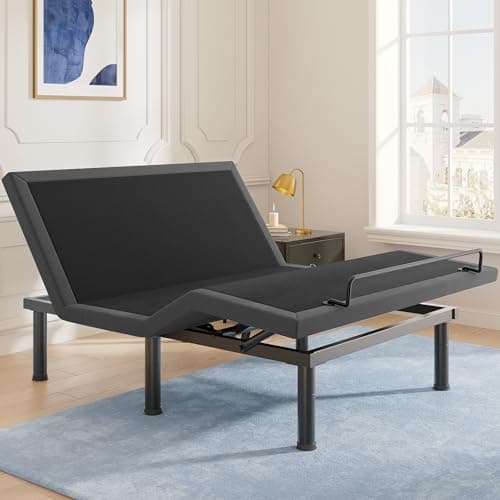 Tami T450 Adjustable Bed Frame, Queen The only pick whose listing states height-adjustable legs, which is the one spec that decides whether a base can be set to match your frame's rail height. Best for: Fitting inside an existing frame | Fitting inside an existing frame | $335.99 · View on Amazon Price as of October 17, 2026. #ad — we earn a commission. |
| 2 | 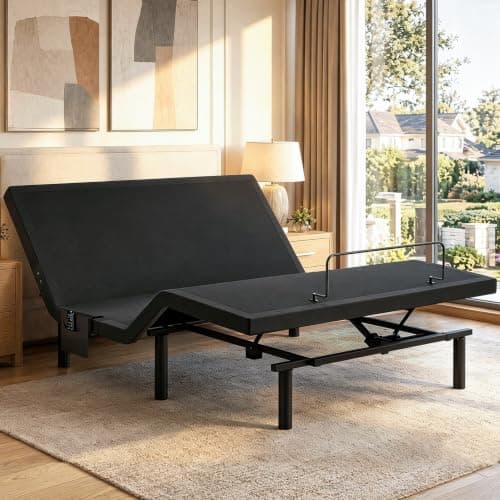 Marsail Adjustable Bed Base, Queen Head and foot incline, a zero gravity preset and USB charging at the bottom of the price band. The sensible buy if the frame is doing the looking-good part. Best for: The lowest price with full function | The lowest price with full function | Check price on Amazon → #ad — we earn a commission. |
| 3 | 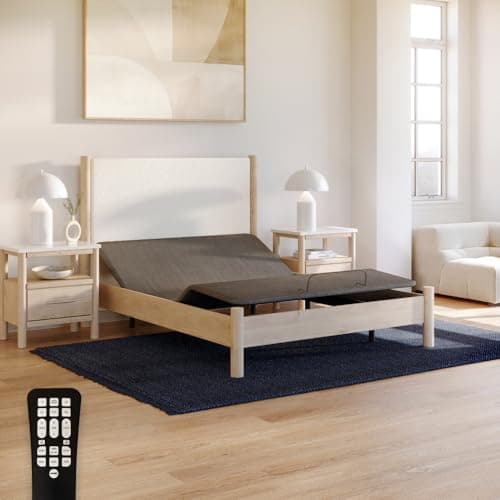 Nectar Classic Adjustable Base, Queen The simplest pick here and the one with a real customer service department behind it. Buy it when you want to ask a human whether it fits before you order. Best for: A brand with a support line to call | A brand with a support line to call | $509.15 · View on Amazon Price as of October 17, 2026. #ad — we earn a commission. |
The picks, in full
1. Best for Fitting inside an existing frame
Tami T450 Adjustable Bed Frame, Queen
The only pick whose listing states height-adjustable legs, which is the one spec that decides whether a base can be set to match your frame's rail height.
Price as of October 17, 2026. #ad — we earn a commission.
Key specs
- Head and foot incline (as listed)
- 3 height-adjustable legs (as listed)
- Zero gravity preset (as listed)
- Nightlight (as listed)
- Quiet motor (as listed)
- Queen
What's good
- Height-adjustable legs are the feature that matters for this specific job - set them low and the base sits deeper inside the frame; set them high and the mattress clears a tall side rail rather than being swallowed by it
- Head and foot incline plus a zero gravity preset is the full function set, so going in a frame does not mean giving up the features you bought a base for
- The listing calls out easy assembly and a quiet motor, both of which matter more inside a frame, where you have less room to work and the frame itself can amplify motor noise
What's not
- The listing states three height-adjustable legs but does not publish the actual heights in inches, so you still cannot confirm the match before buying - measure your rail and ask the seller
- No deck dimensions or clearance figures are given, which is the same gap every base listing has and the reason this page is a measuring guide first
- A nightlight and a zero gravity preset are nice, not structural; do not let feature lists pull you away from the fit question
Skip this one if
Your frame has storage drawers or a fixed deck you cannot remove. No base solves that, adjustable legs or not - the mechanism needs open space underneath. Use the base outside the frame instead.
2. Best for The lowest price with full function
Marsail Adjustable Bed Base, Queen
Head and foot incline, a zero gravity preset and USB charging at the bottom of the price band. The sensible buy if the frame is doing the looking-good part.
#ad — we earn a commission.
Key specs
- Head and foot incline (as listed)
- Zero gravity position (as listed)
- LED under-bed light (as listed)
- USB charging station (as listed)
- Easy assembly (as listed)
- Queen
What's good
- It is the cheapest full-function base here, and when a base is going inside an existing frame you are buying mechanism rather than appearance - the upholstery and the finish are hidden
- USB charging on the base itself is genuinely useful once a base is inside a frame, because the frame often blocks the nightstand outlet you used to reach
- The same incline set and zero gravity preset as bases costing considerably more
What's not
- The listing says nothing about leg height or whether the legs can be removed, which for this job is the spec you most need - treat fit as unverified until the seller confirms it
- An under-bed LED is largely wasted inside a frame, where the rails block the light it is there to cast
- No deck dimensions published, so you cannot check it against your inside rail measurement from the listing alone
Skip this one if
Your frame's inside measurement is tight. With no published deck dimensions and no stated leg height, this is the hardest pick here to verify against a narrow frame - buy the base with adjustable legs instead.
3. Best for A brand with a support line to call
Nectar Classic Adjustable Base, Queen
The simplest pick here and the one with a real customer service department behind it. Buy it when you want to ask a human whether it fits before you order.
Price as of October 17, 2026. #ad — we earn a commission.
Key specs
- Head and foot incline (as listed)
- Queen (as listed)
What's good
- Fit questions on this job are answered by the base maker, not by a spec sheet - and an established brand with a support line is worth real money when the question is whether this model clears your rails
- A simple head-and-foot base with no massage motors or lighting has fewer things to fail and less bulk to fit inside a frame
- Nectar bases are sold alongside Nectar mattresses, so compatibility between the two is at least a question the brand has already answered
What's not
- The listing is the sparsest here - head and foot incline and a size, with no leg height, no deck dimensions and no clearance figure
- No zero gravity preset, no USB, no lighting; you are paying for the name and the support rather than for features
- Stock on this listing has been limited, so check availability before planning a weekend around the swap
Skip this one if
You want the most function per dollar. This is the plainest base on the page. The Marsail does more for less, as long as you can get the fit confirmed another way.
Common questions
Can an adjustable base go inside any bed frame?
Not any, but most. A standard panel bed - headboard, footboard and side rails with slats or a box spring sitting on a ledge - will usually take one: the slats or box spring come out and the base stands inside the frame on its own legs. A platform bed often works too. What does not work is a frame with storage drawers underneath, a frame with a solid fixed deck you cannot remove, or a frame whose inside measurement is smaller than the base's deck. Retailer guidance is consistent on the drawer case in particular - adjustable bases "require some clearance below for the legs and mechanism to function properly, and storage drawers will usually obstruct this space."
What does "zero clearance" mean on an adjustable base?
It means the base is built to sit flat on something rather than needing open space beneath it. One maker defines a zero-clearance base as one "designed to sit flat inside another bed frame or platform bed without needing open space underneath it." A non-zero-clearance base is the normal kind: it stands on legs and the mechanism needs room below to move. The practical consequence is which part of your frame has to go. With a zero-clearance base on a slatted panel bed, you can often leave the slats in place and set the base on them. With a normal base, the slats come out and the base's legs carry the weight directly onto the floor inside the frame.
Do I have to remove the slats?
For a standard legged base, yes. The base carries its own weight on its own legs and the mechanism needs the space the slats occupy; leaving them in means the base sits higher than the frame was designed for and the motor arms can foul on them. The retailer guidance is blunt about it: "all you need to do is remove the slats and place the adjustable base on its own legs inside the frame." Keep the slats somewhere, because they go back if you ever sell the frame or revert to a regular mattress setup. The one exception is a zero-clearance base on a well-supported slatted frame, where the slats can be the deck - and in that case the slats need to be close enough together to carry the load rather than letting the base flex between them.
Will the mattress sit too high once the base is inside the frame?
That is the most common surprise, and it goes in whichever direction your frame's rails run. If the side rails are tall, the base sits down inside them and the mattress top can end up level with or below the rail edge - which looks fine but means the rail catches your legs when you sit on the side of the bed, and the mattress can rub as the base articulates. If the rails are low, the base plus mattress stands well above them and the frame reads as a decorative border rather than a bed frame. Neither is a fault; both are a measurement. Add the base's leg height, the base deck thickness and the mattress thickness, then compare that total to your rail height before you order.
Does the headboard still work?
It stays where it is, and that is the catch. A bed frame's headboard is fixed, but an adjustable base's head section pivots forward as it rises - so the pillow and your shoulders travel toward the foot of the bed and away from the headboard. On a frame, that opens a visible gap behind the pillows at higher inclines, and anything stored on a headboard shelf is now out of reach. Nothing breaks; it just looks and feels different from an adjustable bed with its own upholstered headboard. If you want the headboard to stay in contact, you need a base with a wall-hugging mechanism, and those are a specific and more expensive category.
Can I keep using my box spring?
No, and this is the one firm rule on the page. An adjustable base replaces the box spring entirely - it is the foundation. Stacking a base on a box spring, or a box spring on a base, is both unnecessary height and a support surface that cannot bend where the base needs to. Take the box spring out and store or dispose of it. If you are unsure whether what you have is a box spring or a foundation, our box spring guide covers the difference, and the short version is that neither one goes under an adjustable base.
Does my mattress work on an adjustable base?
Memory foam, latex and most hybrids bend fine. Traditional innerspring mattresses with a rigid perimeter wire often do not - they can bend once or twice and then stay creased, or the border rod can deform. Check the mattress maker's own guidance before assuming, because articulating a mattress that is not rated for it can void the warranty. Thickness matters too: a very thick mattress resists bending, so the base reaches its stated incline angle while the mattress does not quite follow. Our page on mattresses for adjustable beds covers which constructions take the articulation well.
What about the sheets?
They come off. A fitted sheet that just barely reaches around a flat mattress will pop a corner the first time the head section rises, because articulating the mattress effectively increases the distance the sheet has to span. The fix is pocket depth rather than a different sheet type - measure the mattress and buy the pocket inches to match, with some margin. Our sheets for adjustable beds page covers the depth and the corner-retention features that actually hold.
Sources
Where the facts on this page come from. We cite other people's testing because we don't do our own — here's what that means.
Read next
- What Is an Adjustable Bed?What an adjustable bed base actually is, how the head and foot articulation works, the features worth knowing, which mattresses survive the fold, and the honest downsides — cost, weight, and motor noise.
- The Best Adjustable Bed Bases (For Mattresses That Can Bend)Six adjustable bed bases chosen on the one rule that matters - your mattress has to bend on it - plus motor noise, weight capacity and which features are worth paying for. Honest cons on every pick.
- The Best Mattresses for Adjustable BedsSix mattresses that flex on an adjustable base without cracking or gapping — all-foam beds and one flexible thin-coil hybrid — plus the height and construction rules that decide compatibility, and who each is wrong for.
- The Best Sheets for Adjustable BedsAn articulating base is a sheet-removal machine. Five sheets chosen on the three specs that keep one on - all-around elastic, corner straps and pocket depth - with split-king sizing explained honestly.
- Do You Need a Box Spring?A plain-English answer on box springs: what they were built for, why most modern mattresses don't want one, and the slat-spacing rule that decides whether your base voids the warranty.
- Foundation vs. Box Spring: What's the Difference?Box spring vs. foundation, compared honestly: one flexes and was built for innerspring beds, the other stays rigid for foam and hybrids. How to match the base to your mattress, plus the height, noise, and warranty differences.
- How to Choose a Bed FrameA step-by-step framework for choosing a bed frame — type, mattress support, height, size, and durability — with clear 'choose this if' guidance and no product hype.
- Bed Frame Sizes: Match the Frame to Your MattressBed frames are sized to your mattress, so buy the frame to match the bed. Here is every size, how much larger the frame sits than the mattress, and the walking clearance to leave around it.
- What Is a Split King?A split king is two Twin XL mattresses forming a King footprint in two independent halves. Why couples choose it for adjustable beds and split firmness, the sheet challenge, and who should skip it.