The Best Blankets
A blanket has no fill to hide behind: it is one layer of fabric, so what it is made of and how it is woven decide whether it warms you, cooks you, or does nothing at all. Six worth buying, split by the only two questions that matter.
We earn a commission if you buy through our links. It doesn't affect our picks — and we never take free products. How this site is funded.
Quick picks
| # | Product | Best for | Price |
|---|---|---|---|
| 1 | 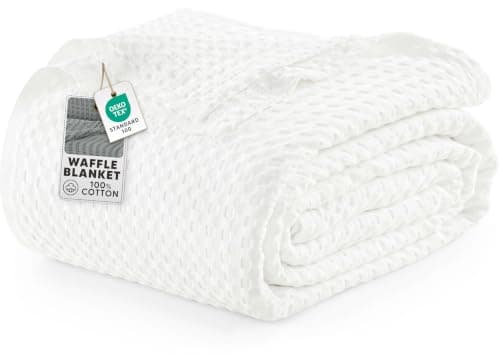 Utopia Bedding 100% Cotton Waffle Blanket Cotton in the one weave that traps a little air without sealing it in — the blanket that works on the most beds in the most months of the year. Best for: Most people | Most people | |
| 2 | 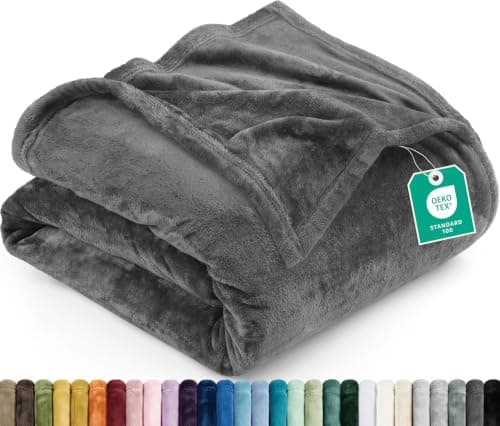 Utopia Bedding Ultra Soft Fleece Bed Blanket The blanket you buy for a guest bed, a couch, or a first apartment. It is warm, it costs almost nothing, and it is honest about being polyester. Best for: The cheapest thing that works | The cheapest thing that works | |
| 3 | Bedsure GentleSoft Sherpa Fleece Blanket Two-faced construction — flat fleece on one side, thick sherpa pile on the other — which is the most warmth per dollar available in a blanket with no wires in it. Best for: A genuinely cold bedroom | A genuinely cold bedroom | Check price on Amazon → #ad — we earn a commission. |
| 4 | 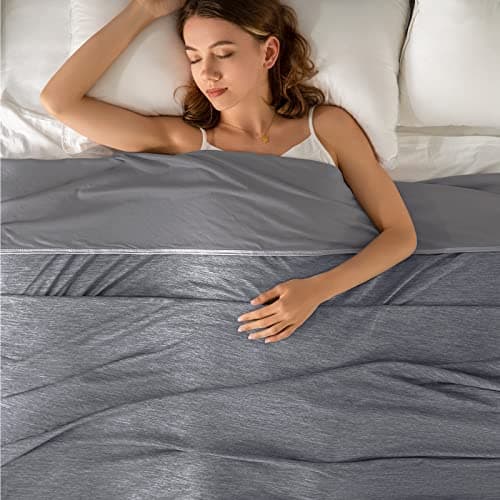 Topcee Cooling Blanket A thin, smooth summer blanket for people who want something over them but nothing warm. The cool-to-touch effect is real, brief, and worth understanding before you buy. Best for: Hot sleepers and summer | Hot sleepers and summer | |
| 5 | 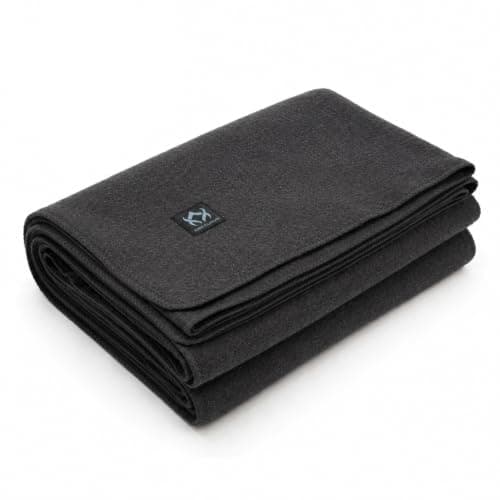 Arcturus Tahoe Wool Bed Blanket The one material that gets you comforter-grade warmth without the trapped-moisture trade, and the only pick here that would still work if it got damp. Best for: Warmth that still breathes | Warmth that still breathes | $74.99 · View on Amazon Price as of October 18, 2026. #ad — we earn a commission. |
| 6 | 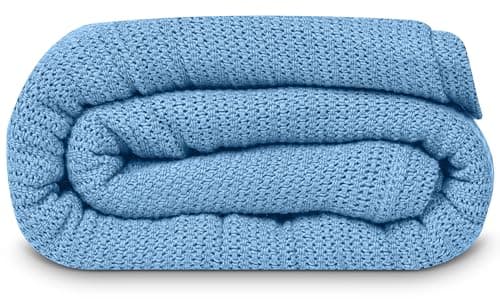 Linteum 100% Cotton Open-Cell Leno Weave Blanket The open-weave hospital-style cotton blanket: almost all airflow, a little warmth, and the best thing to put between you and a comforter that runs too hot. Best for: Layering, and hot rooms | Layering, and hot rooms | $32.99 · View on Amazon Price as of October 18, 2026. #ad — we earn a commission. |
A blanket is the least complicated thing in the bed and the item people most often buy wrong. There is no fill to argue about, no fill power, no thread count worth quoting — it is one layer of fabric. That simplicity is the whole point: with nothing inside it, a blanket's behavior is decided entirely by what the fabric is made of and how the threads are arranged. Get those two right and you have the layer you reach for every night. Get them wrong and you have a warm blanket that makes you sweat, or a beautiful one that does nothing.
We have not slept under any of these. What follows reasons from what each material physically does, quotes each listing for what it commits to, and attributes the material claims to the people who do test this sort of thing. Here is what that means in full.
A blanket is not a comforter, a quilt, or a duvet
This is worth settling first, because half the frustration in this category comes from buying one thing while expecting another. A blanket is a single layer of woven or knitted fabric with nothing inside it. A comforter is a shell stitched around fill — down, feather, wool or polyester — which traps far more air and is therefore in a completely different warmth class. A duvet is that same filled insert designed to live inside a washable cover. A quilt is the near-miss: three layers, with a thin sheet of batting stitched between two pieces of fabric, which makes it warmer than a blanket and much cooler than a comforter.
The practical consequence is about expectations. A blanket will not keep you warm through a cold winter night on its own unless it is a deliberately heavy one, and nobody should buy a blanket hoping it replaces a proper comforter. What a blanket does better than any filled layer is adjust. It goes on top of the comforter in January, replaces it entirely in July, and comes off the bed in thirty seconds when the room turns. That flexibility is the reason to own one, and it is why the best blanket for you depends more on your bedroom than on your budget.
What we judged them on
Five things, in this order. None of them is a score, because we have not measured anything.
1. Fiber, first and above everything. Cotton, wool and synthetics behave differently in ways no amount of construction can override. This is the decision; the rest are refinements.
2. Weave, second. The same cotton can be woven into a flat sheet, a waffle, or an open grid, and the three produce noticeably different amounts of warmth and airflow. Two of the six picks here are cotton, and they are on the page precisely because their weaves put them at opposite ends of the range.
3. Whether it fits a bed. An enormous share of what gets sold as a blanket is a throw — sofa-sized, one-person, and useless on a double. Every pick here is listed at a real bed size.
4. Whether you can live with washing it. The blanket is the layer that touches skin, pets, spilled tea and everything else, so a blanket that needs professional care is a blanket that stops getting used.
5. What the listing actually commits to.We take material and size from the seller's own listing and mark it "as listed". Where a listing is vague — and one of the picks here is vague about its wool content — we say so in the cons instead of filling the gap with a number.
Fiber decides warmth. Weave decides whether you cook.
Cotton is the sensible default and the one most people should buy. Sleep Foundation credits it with breathability, moisture wicking and comfort at an affordable price, while being honest that it is not as warm as other fabrics on its own. That is the trade in a sentence: cotton lets air and moisture through, so it warms you moderately and never bakes you.
Fleece — which means polyester, whatever the listing calls it — is the opposite trade. It is warm immediately and it is cheap, and Sleep Foundation describes it as one of the cuddliest materials available with a thick pile and a velvety touch, while noting plainly that it has poor airflow. A fleece blanket does not just hold your heat in; it holds your moisture in with it. For a cold guest room that is exactly right. For a hot sleeper it is the reason they wake up damp and blame the mattress.
Wool is the one material that refuses the trade-off. It is credited with deep warmth and moisture-wicking at the same time, which is why it survives in bedding despite costing several times what synthetics do. Its real drawbacks are the price, a long dry time if it gets wet, and a texture some people find scratchy against bare skin. If you have ever wanted comforter-level warmth without the greenhouse effect, wool is the answer and it always has been.
Then weave, which is where two cotton blankets stop being the same product. A waffle weave forms small pockets across the surface, and those pockets hold still air — Sleep Foundation notes waffle blankets are warmer than they appear for exactly that reason. An open leno weave, the hospital-blanket construction, twists the warp threads around the weft to hold an open grid you can see light through: minimal warmth, maximum airflow, and the best thing to put under a comforter that runs hot. Same fiber, opposite jobs.
The spec nobody publishes: weight
Here is a gap worth naming rather than papering over. The one number that would tell you how warm a blanket is — fabric weight, usually given in grams per square meter — appears on none of the listings on this page. Sheets have thread count, duvets have fill power, comforters sold in Europe have a tog rating. Blankets have a photograph and an adjective.
We are not going to invent the number, so here is how to read around its absence. Fiber gets you most of the way: for the same apparent thickness, a synthetic pile is warmer than a flat weave, and wool is warmer than cotton. After that, the honest proxies are the listed dimensions and the shipping weight, if the seller gives one — a queen blanket that weighs a couple of pounds is a summer layer, and one that weighs five or six is a winter one. Everything else on a blanket listing is a word chosen by a marketing team: "cozy", "plush" and "lightweight" are not measurements, and no two brands mean the same thing by them.
The "cooling blanket" question, answered honestly
Cooling blankets sell on a sensation that is genuinely real and widely misunderstood. A smooth, dense fabric conducts heat away from your skin faster than a fuzzy one, so it feels cold the instant you touch it. That is a true property of the fabric. What it is not is refrigeration: once the blanket reaches your body temperature, the sensation is over, and nothing about the fabric keeps removing heat after that.
What actually keeps you cool for the remaining seven hours is airflow and moisture handling. Sleep Foundation's cooling guidance puts natural and plant-derived fibers first for precisely this reason — cotton, linen and bamboo-derived viscose promote airflow through the fibers and absorb perspiration so it can evaporate — and names flannel, fleece and wool as the ones that trap heat. So a cooling blanket is worth buying as a thin summer layer, and the cotton leno weave on this page does the same job from the other direction.
And before you buy either: if you are overheating every night, the blanket is rarely the largest contributor. Sheets sit against you for more hours and cost less to replace, which is why we point hot sleepers at cooling sheets first and at the night-sweats guide before anything on this page.
Two thin blankets beat one thick one
The most useful thing about blankets is the one people skip: they stack, and a stack is adjustable in a way a single heavy layer never is. Two moderate blankets over the same bed give you three settings — one, the other, or both — and each of those steps is small enough to actually match a shoulder season. One thick blanket gives you two settings, on and off, and the gap between them is the reason people wake up at 3 a.m. either shivering or throwing everything onto the floor.
It matters more when you share a bed. Two sleepers rarely want the same amount of warmth, and layering lets one side pull an extra blanket up without changing anything for the other — the cheapest fix available for a temperature argument, and one we make the same case for in sharing a bed without wrecking each other's sleep. If you are buying two, buy them at different weights: the cotton leno weave under the cotton waffle covers a genuinely wide range of nights for less than one premium comforter.
Buy the bed size, not the throw
Blanket sizing is looser than sheet sizing and the labels are less policed, so check inches rather than trusting the word on the front. A queen blanket is commonly around 90 by 90 inches, which covers the mattress with enough overhang to tuck at the foot without much drape down the sides. Anything longer is a bonus: the wool pick here is listed at 90 by 96, and those six inches are the difference between a blanket you can tuck and one that pulls out every time you turn over.
The trap is the throw. Throws are typically closer to 50 by 60 inches — sofa-sized, single-person — and a large share of "best blanket" shopping ends in one arriving that cannot cover a double bed. If the listing gives a size in the 50-by-60 range, it is furniture, not bedding. Our bed sheet size guide has the standard mattress dimensions to measure against.
What kills a blanket is the dryer
Almost every blanket that dies young dies of heat. A hot dryer melts and mats the pile on a synthetic fleece — that is why a fleece blanket goes from soft to faintly crunchy after a year — and a hot wash felts wool permanently, shrinking it into a stiff board that no amount of stretching recovers. Cotton is the forgiving one, and even cotton fades and weakens faster on high heat than it needs to.
The rule that covers all of them: wash cool, dry low or air dry, and give a queen blanket a machine big enough that it can actually move. A blanket crammed into a small drum comes out with detergent still in the fibers, which is its own kind of ruin. The full method, by material, is in how to wash a blanket.
The cotton waffle blanket above gets its warmth from structure rather than weight: a honeycomb grid holding pockets of still air. What waffle weave is, and where it belongs covers that - including the honest answer about waffle sheets.
Who should buy which
If you want one blanket and want to stop thinking about it — the cotton waffle. It is warm enough for most rooms, breathable enough for most sleepers, and it washes like a towel.
If it is for a guest bed, a sofa, a kid or a dog — the fleece. It is the cheapest thing here, it is warm the moment it goes on, and nobody will be upset when it wears out.
If your bedroom is genuinely cold — the sherpa. It is the most warmth per dollar available without wiring, though if the bed itself is cold when you get into it, an electric blanket solves a problem that no number of layers will.
If you sleep hot but cannot sleep uncovered — the cooling blanket in summer, or the cotton leno weave if you would rather the airflow came from a natural fiber and lasted all night rather than the first ten minutes.
If you want the good one — the wool. It is the only pick here that gets real warmth and real breathability at the same time, and the only one likely to outlive the bed it is on. It also costs the most, needs the most care, and will itch some people. That is the whole trade, stated plainly, which is all any of these pages is trying to do.
One note on the fleece picks: a fleece blanket over the top of the bed is the right place for polyester, and a fleece sheet is not — flannel vs fleece sheets explains why the same fabric behaves so differently depending on which layer it occupies.
The picks, in full
1. Best for Most people
Utopia Bedding 100% Cotton Waffle Blanket
Cotton in the one weave that traps a little air without sealing it in — the blanket that works on the most beds in the most months of the year.
Key specs
- 100% cotton
- Waffle weave
- Queen, 90" x 90"
- White (as listed)
What's good
- Cotton breathes, so this warms you by slowing heat loss rather than by wrapping you in a material that cannot pass air. That is the difference between waking up warm and waking up damp
- The waffle structure is doing real work: Sleep Foundation describes waffle-weave blankets as warmer than they look because the pocketed surface traps air. You get a layer of insulation without a layer of plastic
- A cotton blanket takes a normal wash without ceremony, which matters more than it sounds — the blanket is the layer that touches everything
What's not
- It is a middle answer on warmth. In a genuinely cold bedroom this is a layer under something else, not the whole answer
- Cotton wrinkles, and a waffle weave shows every crease it has ever had. It will not look like the product photo after the first wash
- Loose-weave cotton catches on rings, watch clasps and cats. A pulled thread on a waffle is more visible than on a flat weave
Skip this one if
Your bedroom runs cold in winter and this is the only thing going on the bed. Cotton's honest limit is that it is not very warm on its own — the sherpa below is the one you want, and it costs about the same.
2. Best for The cheapest thing that works
Utopia Bedding Ultra Soft Fleece Bed Blanket
The blanket you buy for a guest bed, a couch, or a first apartment. It is warm, it costs almost nothing, and it is honest about being polyester.
Key specs
- Fleece (as listed)
- Queen, 90" x 90"
- Grey (as listed)
What's good
- The cheapest pick on this page by a distance, and it still does the main job — fleece is warm immediately, which is exactly what you want on a spare bed nobody has heated all day
- Light for its warmth, so it does not press down on you the way a heavy woven blanket does
- It dries fast and survives being washed constantly, which is why it is the right blanket for kids, dogs and sofas
What's not
- Fleece is a synthetic pile, and Sleep Foundation is blunt that fleece has poor airflow. Warm and breathable are different things, and this is the first without the second
- It pills. Every fleece blanket eventually goes bobbly at the contact points, and the cheap ones get there faster
- Static in a dry winter room, and it clings to hair and lint like a magnet
Skip this one if
You sleep hot or you sweat at night. A fleece blanket over a hot sleeper is the single most common reason people wake up clammy — buy the cooling pick or the cotton leno weave instead.
3. Best for A genuinely cold bedroom
Bedsure GentleSoft Sherpa Fleece Blanket
Two-faced construction — flat fleece on one side, thick sherpa pile on the other — which is the most warmth per dollar available in a blanket with no wires in it.
#ad — we earn a commission.
Key specs
- Sherpa-backed fleece (as listed)
- Non-heated (as listed)
- Queen, 90" x 90"
- Grey (as listed)
What's good
- The sherpa face is a deep synthetic pile that holds a lot of still air against you. In a cold room this is doing the job an electric blanket does, without a cord, a controller or a fire risk to think about
- Reversible in a useful way rather than a decorative one: fleece side down in the shoulder seasons, sherpa side down when it drops
- Listed explicitly as non-heated, which is worth noting because a lot of sherpa listings sit next to heated ones and get bought by mistake
What's not
- It is hot, and it is not subtle about it. There is no version of this blanket that suits a warm room
- Bulky. A queen sherpa is a real load in a domestic washing machine, and a slow one to dry properly
- The pile flattens where you lie on it, and it does not fully recover
Skip this one if
Your bedroom is normal-temperature and you just want a layer for the evenings. This is a cold-room blanket; in a heated room it is the thing you kick off at 2 a.m.
4. Best for Hot sleepers and summer
Topcee Cooling Blanket
A thin, smooth summer blanket for people who want something over them but nothing warm. The cool-to-touch effect is real, brief, and worth understanding before you buy.
Key specs
- Cooling blanket (as listed)
- Queen, 90" x 90"
- Sold as a summer blanket (as listed)
What's good
- Solves a specific problem well: a lot of people cannot sleep without something covering them, and in July every other blanket on this page is too much. This is the minimum viable layer
- The smooth face genuinely feels cool when you first get in, because a dense flat fabric pulls heat away from your skin faster than a fuzzy one does
- Thin and light, so it packs down and washes easily
What's not
- The cool-to-touch feeling fades once the fabric reaches your body temperature. That is physics, not a defect, and no blanket avoids it
- It is a synthetic face fabric, so it is smooth rather than breathable in the way cotton or linen are. Sleep Foundation's cooling guidance puts natural fibers — cotton, linen, bamboo-derived viscose — first for airflow, and treats them as the more reliable route for hot sleepers
- Almost no warmth. In a cold room this is a sheet with extra steps
Skip this one if
What you actually have is a hot mattress or hot sheets. A cooling blanket cannot fix heat coming up at you from below — change the sheets first, and read the cooling section on this page before spending anything.
5. Best for Warmth that still breathes
Arcturus Tahoe Wool Bed Blanket
The one material that gets you comforter-grade warmth without the trapped-moisture trade, and the only pick here that would still work if it got damp.
Price as of October 18, 2026. #ad — we earn a commission.
Key specs
- Wool (as listed)
- Queen, 90" x 96"
- Washable (as listed)
- Charcoal gray (as listed)
What's good
- Wool is the outlier on the temperature-versus-airflow trade: Sleep Foundation credits it with deep warmth and moisture-wicking at the same time, which is the combination fleece cannot offer at any price
- It handles a damp room and a sweaty sleeper better than any synthetic here, because wool moves moisture through the fiber instead of holding it against you
- Longevity. A wool blanket is the only thing on this page you might still own in twenty years, and the extra length — 96 inches rather than 90 — is the difference between tucking it in and not
What's not
- The most expensive pick here by a wide margin, and Sleep Foundation names both of wool's real drawbacks: the price, and a long dry time if it does get wet
- Wool can feel scratchy against bare skin. Whether it bothers you is personal and you cannot find out from a listing
- The listing calls it a wool bed blanket but does not state a blend percentage in the title — if you specifically need a stated 100% virgin wool, Arcturus's heavier Bighorn line puts that in the title and costs substantially more
Skip this one if
You are buying a blanket you will wash weekly, or you have found wool itchy before. Neither problem gets better with this one, and the cotton waffle at the top of the page is the low-maintenance answer.
6. Best for Layering, and hot rooms
Linteum 100% Cotton Open-Cell Leno Weave Blanket
The open-weave hospital-style cotton blanket: almost all airflow, a little warmth, and the best thing to put between you and a comforter that runs too hot.
Price as of October 18, 2026. #ad — we earn a commission.
Key specs
- 100% cotton
- Open-cell leno weave (as listed)
- Queen, 90" x 90"
- Blue (as listed)
What's good
- A leno weave twists the warp threads around the weft, which holds an open, stable grid rather than a solid sheet of fabric. The practical result is a blanket you can see light through and still feel a difference from
- The layering blanket. Sleep on it alone in summer, add it under a comforter in winter, and it changes the bed's warmth in a way you can adjust nightly — which is what people are actually looking for when they buy a second blanket
- Cotton, so the airflow argument comes with the wash tolerance to match
What's not
- On its own, in winter, it is not enough. This is a component, not a solution
- Open weaves snag. Fingers, toenails and jewelry all find the holes eventually, and a pull shows
- The texture is institutional — it looks like what hospitals use, because it is what hospitals use. Some people like that; nobody calls it plush
Skip this one if
You want one blanket that does everything. This one is deliberately specialized toward airflow, and the cotton waffle is the better single-blanket buy for most beds.
Common questions
What is the difference between a blanket and a comforter?
Construction, and it decides everything else. A blanket is a single layer of fabric — woven or knitted, with nothing inside it — so its warmth comes entirely from the fiber it is made of and how tightly it is woven. A comforter is a filled unit: a fabric shell stitched around down, feathers, wool or polyester fill, which traps far more air and is therefore far warmer. A quilt sits between them, with a thin layer of batting stitched between two sheets of fabric. In practice: a blanket is the layer you add, remove, or use alone in summer; a comforter is the layer you sleep under all winter. Buying a blanket expecting comforter warmth is the single most common disappointment in this category.
What blanket material is warmest?
For a given thickness, a deep synthetic pile like sherpa or a dense wool will be the warmest, and cotton the least warm. But warmth alone is the wrong target. Sleep Foundation describes fleece as one of the cuddliest materials available with a thick pile and velvety touch, while noting it has poor airflow — so it is warm in a way that traps your own moisture with you. Wool is the material that gets both: it is credited with deep warmth and moisture-wicking at the same time, at the cost of a high price and a long dry time if it gets wet. If your room is genuinely cold, sherpa is the cheap answer and wool is the good one.
Do cooling blankets actually work?
Partly, and it is worth knowing which part. The cool-to-touch sensation is real: a smooth, dense fabric conducts heat away from your skin faster than a fuzzy one, so it feels cold the moment you get in. That effect is temporary by nature — once the fabric warms to your body temperature the sensation stops, and no fabric can keep pulling heat away indefinitely without somewhere to put it. What keeps you cool for the rest of the night is airflow and moisture handling, which is why Sleep Foundation's cooling guidance puts natural and plant-derived fibers — cotton, linen, bamboo-derived viscose — first, and singles out flannel, fleece and wool as the ones that trap heat. Buy a cooling blanket for the thin summer layer it is, not as air conditioning.
What size blanket do I need for a queen bed?
Buy the blanket sold for your mattress size and check the inches, because blanket sizing is looser than sheet sizing. A queen blanket is commonly around 90 by 90 inches, which covers the mattress with enough overhang to tuck at the foot but not much to drape down the sides. Some run longer — the wool pick on this page is 90 by 96 — and that extra six inches is what lets you tuck it properly under the mattress at the foot of the bed. The mistake to avoid is buying a throw: throws are typically closer to 50 by 60 inches, they are sized for a sofa and one person, and they will not cover a double bed no matter how good the fabric is.
Can you wash a blanket in a normal machine?
Cotton and fleece blankets, generally yes — the constraint is drum size rather than the fabric. A queen blanket needs room to move to get clean, and a crammed machine leaves detergent in the fibers. Wool is the exception and needs care: check the label, wash cool and gentle or hand wash unless the maker states machine washable, and never put wool in a hot dryer, where it felts and shrinks permanently. Heat is what kills blankets generally — a hot dryer melts and mats synthetic fleece pile, which is why a fleece blanket goes from soft to crunchy after a year of careless drying. Low heat, or air dry.
Should I get a blanket or an electric blanket?
It depends on whether the problem is the room or the bed. A plain blanket adds insulation — it slows down the heat you are already producing, which works well if your body is warm enough to heat the space under it. An electric blanket adds heat, which is the right answer when you get into a genuinely cold bed and cannot warm it yourself, or when one person in the bed runs much colder than the other. If a sherpa blanket is not solving it, more layers usually will not either, and that is the point to look at a heated one instead of buying a fourth blanket.
Do you make money from these links?
Yes. We earn an Amazon commission if you buy through the links on this page, and that is what pays for the site. We take no free products, we sell no placement, and no brand sees a page before it publishes. The commission is a percentage, so the expensive picks pay us more than the cheap ones — which is worth saying on a page where the top recommendation for most people is a mid-priced cotton blanket, the guest-room recommendation is the cheapest thing here, and the cooling section spends a paragraph telling hot sleepers to change their sheets before buying anything at all.
Sources
Where the facts on this page come from. We cite other people's testing because we don't do our own — here's what that means.
- Sleep Foundation — best blankets (material characteristics: wool warmth and moisture-wicking, cotton breathability, fleece airflow, waffle weave trapped air)
- Sleep Foundation — best cooling blanket (which fibers move air, and which trap heat)
- The Woolmark Company — wool fiber and thermoregulation
- FTC — Endorsement guides (why the disclosure at the top exists)
Read next
- The Best Quilts and CoverletsSix lightweight quilts worth buying, the quilt-versus-comforter difference most buyers get backwards, and why 100% cotton beats a cheaper microfiber coverlet.
- The Best ComfortersSix comforters worth buying, the comforter-versus-duvet decision most buyers get backwards, and why all-season weight is usually the wrong compromise.
- The Best Electric Blankets, Throws and Heated Mattress PadsSix honest electric-blanket, throw and heated-mattress-pad picks - chosen by shape and safety features, not lab scores - with a plain-English safety checklist for heated bedding.
- The Best Weighted BlanketsSix weighted blankets worth buying, judged on weight, fill, breathability and whether you can actually wash them - with no health claims attached.
- How to Wash a Blanket or ThrowA material-by-material wash method for everyday blankets and throws — fleece and microfiber, cotton and knits, wool and cashmere, acrylic, and faux fur or chunky knit — plus the softener mistake that kills fleece, the drum-size problem with big throws, and how often to actually wash one.
- TOG Ratings: What the Warmth Number Really MeansA TOG rating measures a duvet's warmth — higher means warmer — and nothing about its quality or fill amount. Here's how to pick a TOG by season and by whether you sleep hot or cold, plus why US comforters often skip the number entirely.