The Best Organic Mattresses
"Organic" is not a regulated word on a finished mattress, which is why so many beds wear it without earning it. Here are six that carry a real certificate, one that costs a tenth as much, and the two acronyms that tell you which is which.
We earn a commission if you buy through our links. It doesn't affect our picks — and we never take free products. How this site is funded.
Quick picks
| # | Product | Best for | Price |
|---|---|---|---|
| 1 | 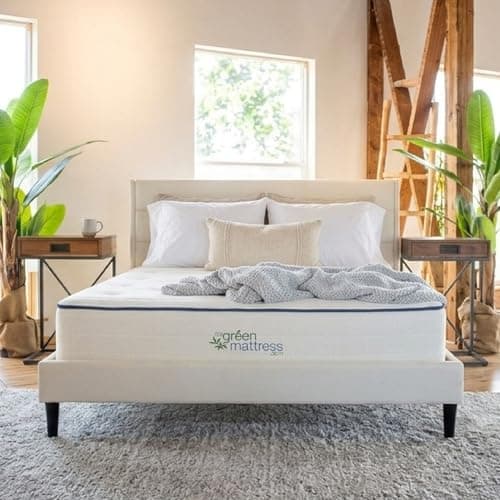 My Green Mattress Kiwi Organic, Queen The most complete certification story you can buy on Amazon, on a hand-tufted hybrid that doesn't need glue to hold itself together. Best for: Most people | Most people | Check price on Amazon → #ad — we earn a commission. |
| 2 | 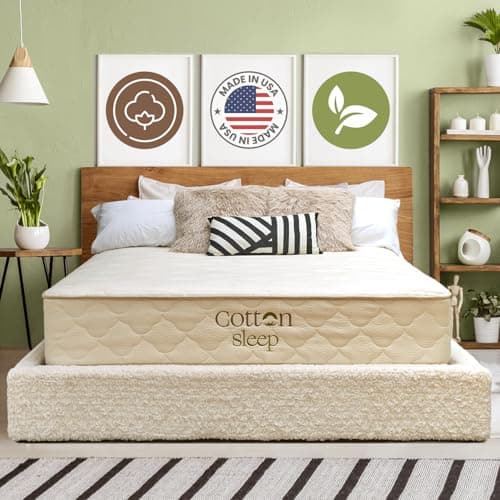 COTTON SLEEP 11" Organic Mattress, Queen Names both standards and the fiberglass question in the title, at meaningfully less than the established organic brands charge. Best for: The full certificate set for less | The full certificate set for less | $997.00 · View on Amazon Price as of October 18, 2026. #ad — we earn a commission. |
| 3 | 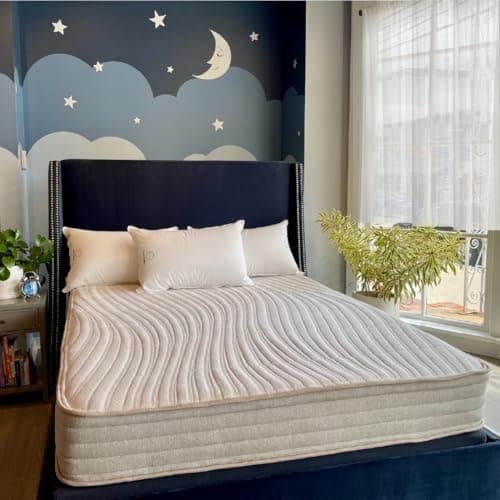 Ethical Mattress Co 10" Toxin-Free Hybrid, Queen The cheapest way onto natural cotton, wool and latex here — as long as you understand it makes a materials claim, not a full certification claim. Best for: Natural materials on the smallest budget | Natural materials on the smallest budget | $998.00 · View on Amazon Price as of October 18, 2026. #ad — we earn a commission. |
| 4 | 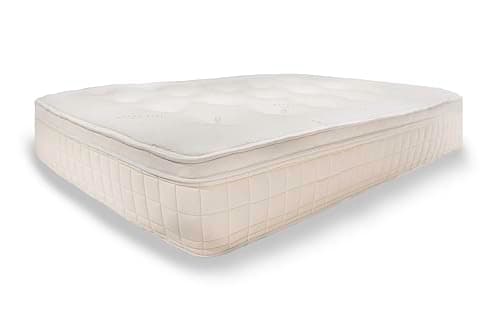 Naturepedic Pillow Top Organic, Queen The most thoroughly certified manufacturer in the category, and the only pick here that gets to soft without reaching for polyurethane. Best for: A soft surface without foam | A soft surface without foam | $2,999.00 · View on Amazon Price as of October 18, 2026. #ad — we earn a commission. |
| 5 | 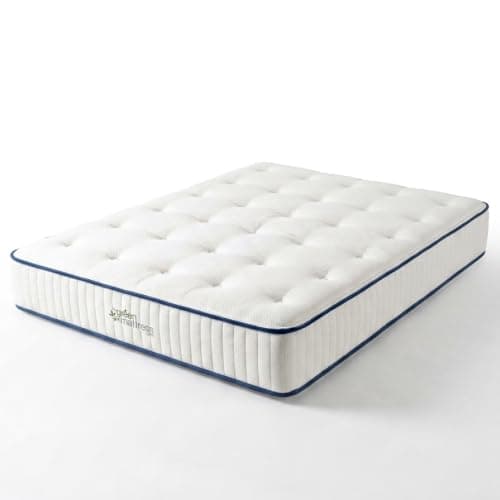 My Green Mattress Pure Eco Organic Kids, Twin The same two certifications as the Kiwi in an 8-inch profile, which is the height a bunk frame will actually accept. Best for: Kids, bunks and trundles | Kids, bunks and trundles | $739.00 · View on Amazon Price as of October 18, 2026. #ad — we earn a commission. |
| 6 | 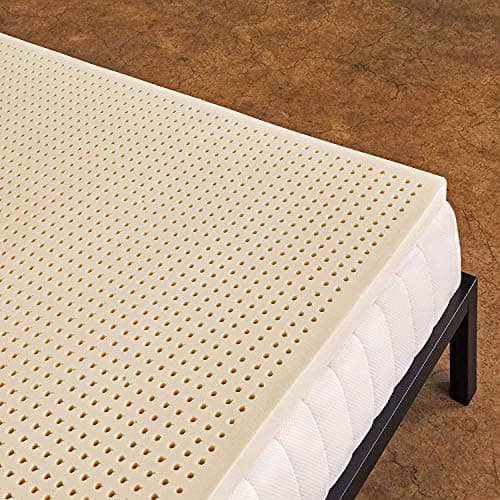 Pure Green Natural Latex Topper, 3" Medium, Queen GOLS certified organic latex for around a fifth of the cheapest bed here — the honest answer for most people who type "organic mattress" into a search box. Best for: Not buying a mattress at all | Not buying a mattress at all | $299.00 · View on Amazon Price as of October 18, 2026. #ad — we earn a commission. |
Two acronyms, and everything else is decoration
There is no legal definition of an organic mattress. There is no seal a finished bed can earn, no regulator checking the word on the box, and nothing stopping a manufacturer printing Organic across a listing for a gel foam hybrid containing no organic material whatsoever. Several currently do exactly that, and their listings sit alongside the genuine articles in the same search results at a similar price.
So the entire skill in this category is learning to read past the adjective. Two acronyms do that job, and once you know them the field collapses from hundreds of listings to a couple of dozen.
- GOTS — the Global Organic Textile Standard. It covers the fibers: the cover, the quilting, the wool. Its top label grade requires at least 95% certified organic fiber, with a second grade, "made with organic", covering 70% to 95%. It audits the processing chain as well as the crop, which is why a manufacturer can hold certification for its whole facility rather than per batch.
- GOLS — the Global Organic Latex Standard, administered by Control Union. It covers latex foam tapped from plantations certified organic under a recognized program such as the USDA National Organic Program, and requires the foam to be at least 95% certified organic raw material by weight.
That is the whole vocabulary. Eco, green, natural, toxin-free, clean, chemical-free and non-toxic certify nothing and are defined by nobody. Neither is CertiPUR-US, which comes up constantly in these searches and is a polyurethane foam program — a useful thing, and the opposite of an organic claim, since it exists to test the foam that a certified organic bed is not allowed to contain.
Why the word is unregulated in the first place
The USDA National Organic Program certifies agricultural products. Cotton is an agricultural product. Rubber is an agricultural product. An assembled mattress — fiber, latex, tempered steel, thread — is not, so it sits outside the program entirely and no finished bed can carry a USDA organic seal.
That leaves "organic" on a mattress as an ordinary advertising claim, judged under the Federal Trade Commission's general substantiation rules: the seller needs a reasonable basis for it and there is no seal that automatically provides one. The FTC has enforced this, and its first case challenging an organic product claim was — fittingly — a mattress company. In 2017 it settled with Moonlight Slumber over baby mattresses advertised as organic when, the agency alleged, very little of the mattress was organic material. The same complaint covered a "natural latex core" the FTC said was synthetic, and a "Green Safety Shield" certification that turned out to be the company's own invention.
That last detail is the one worth carrying into your own shopping. A badge on a listing proves nothing by itself; a badge belonging to a standard someone else audits proves quite a lot. When a listing shows you a seal you have never heard of, the useful question is not what it looks like but who issues it.
What I actually looked for
Four criteria, applied in this order, and the first one eliminates most of the category on its own.
- Does the listing name a standard?Not a vibe — an acronym, GOTS or GOLS, attached to a stated material. Every pick above names at least one. Where a listing says "organic cotton" without naming who certified it, I have said so in the cons rather than rounding it up.
- What is the fire barrier? Every mattress sold in the US has to meet federal flammability standards, and something has to do that job. Cheap foam beds often use a fiberglass barrier. Certified organic beds use wool, which is naturally flame resistant. This is why wool appears in nearly every mattress on this page and it is doing real work, not decorating the spec sheet.
- What holds the layers together?Adhesive is the quiet exception in a lot of "natural" beds, and it is also where a fiber mattress tends to fail first. Hand-tufting — buttons pulled through the whole mattress under tension — is the traditional answer and the more durable one. My top pick states hand-tufting in the listing itself, which is the only one here that does.
- Is there a support core, or just a stack of latex? Latex is dense and heavy. Over pocket coils it breathes and stays responsive; in a solid slab it is a warm, expensive block. Every full mattress on this page is a hybrid, and that is not a coincidence. If the latex itself is what you are shopping for rather than the certification around it, our best latex mattress picks cover the all-latex slabs too, and what you give up by choosing one.
What I did not do is score them. We have no lab and have not slept on any of these, so a number out of ten would be a measurement nobody took — here is exactly how we work, including what we refuse to claim.
The price floor is real, and it is not a markup
Certified organic mattresses start around four figures for a queen and go up steeply from there, and it is worth understanding that this is mostly cost rather than margin. Organic latex is tapped, certified, shipped and audited; polyurethane foam is poured. Wool costs many times what a synthetic fire barrier costs. Certification itself is an annual expense with an auditor attached. A bed built this way cannot reach the price of a mass-market foam mattress, and any listing claiming it has is telling you something about itself.
The practical consequence: the cheapest genuinely certified queen on this page still costs several times what a good conventional bed-in-a-box costs. If the certification is not specifically why you are here, that is a lot of money for a difference you have not asked for, and our general picks will serve you better. I would rather say that than sell you the more expensive bed.
The brands that are not on this page
Three of the names most people associate with organic mattresses are missing here, and the reason is the same in each case: you cannot buy the mattress on Amazon. Avocado sells protectors and pillows there but not its beds. Saatva and Birch are direct-only. Sleep On Latex, whose certified topper is my last pick, sells a full Pure Green organic mattress on its own site and not through Amazon.
We link where we can be paid, and we tell you where we cannot. If you want an Avocado or a Saatva, buy it from the brand — those are legitimate certified beds and their absence here is an artifact of our monetization, not a judgment on the product. A roundup that quietly omits the best options because they do not pay is the thing we are trying not to be.
The cheapest honest way into this category
Most people who search for an organic mattress do not want a certificate framed on the wall. They want to sleep on better materials, and they have an existing mattress that is fine. For them the answer is not a $1,500 bed — it is a GOLS certified latex topper for a few hundred, which is the same certified material as the comfort layer in the expensive beds, bought on its own.
The limit of that trick is worth stating clearly, because nobody selling toppers says it: a topper changes feel, not support. If your mattress is too firm, this genuinely fixes it. If it sags, you will sag more comfortably for a few months and then buy the mattress anyway. The same logic runs through all of our topper picks, and it is the single most useful sentence in that category.
What organic does not buy you
A certified bed is not a more comfortable bed. Certification says something about provenance and about what went into the materials; it says nothing about whether the mattress suits your body, your weight or the way you sleep. A GOTS cover on a mattress that is too firm for a side sleeper is a well-documented mistake. Work out what firmness you need first, then find the certified bed that matches it — that order round, never the reverse. And if the certificate is the point of the purchase, the layer your skin actually touches all night is the sheet, where the same two GOTS grades apply and far fewer listings name one — our organic sheet picks rank sets on exactly that, for a fraction of what a certified bed costs.
We are also not going to tell you what an organic mattress does for your health, your allergies or your indoor air. Those are medical and toxicological questions, this site has no medical advisor, and the certifications above are honest about their own scope: GOTS and GOLS certify fiber and latex content and processing conduct. Emissions programs like GREENGUARD Gold test what a product releases into the air. Neither is a health outcome, and anyone converting one into the other is doing it for a reason.
What I'd buy
For most people who want this properly: the Kiwi. It names both standards, the manufacturer publishes its certificate numbers, and hand-tufting instead of adhesive is the detail that suggests the rest of the build was thought about. If it is out of budget, the Cotton Sleep claims the same two certifications for meaningfully less, with the trade-off that you are trusting a young brand's word rather than a published certificate.
For a child's room, the 8-inch Pure Eco — mostly because the height is right for a bunk frame, and the certification comes along with it. If durability per dollar matters more than the certificate, our kids' mattress picks cost a fraction of it and last.
And for the largest group of people reading this — the ones with a perfectly good mattress and a preference for better materials — buy the GOLS certified topper, keep the bed you have, and spend the four figures you just saved on something else entirely.
The picks, in full
1. Best for Most people
My Green Mattress Kiwi Organic, Queen
The most complete certification story you can buy on Amazon, on a hand-tufted hybrid that doesn't need glue to hold itself together.
#ad — we earn a commission.
Key specs
- Hybrid: pocket coils under organic latex
- GOTS certified cotton and wool (as listed)
- GOLS certified latex (as listed)
- 7-zone pocket coil support (as listed)
- Hand-tufted tight top (as listed)
- Medium firm (as listed)
- Queen
What's good
- The listing names both standards by their initials — GOTS for the cotton and wool, GOLS for the latex — which is the difference between a certified bed and a bed that likes the word. My Green Mattress publishes its GOTS and GOLS certificate numbers on its own site, so the claim is checkable rather than assertable
- Hand-tufting means the layers are held together by buttons pulled through the mattress rather than by adhesive. That matters here for a practical reason as much as a chemical one: glue lines are where a natural-fiber bed delaminates first
- A coil core rather than a foam one, which is what you want in a latex bed. Latex is dense and heavy, and putting it over springs is the only way to keep air moving through the thing
What's not
- It is expensive against a conventional foam mattress of similar height, and the premium is paid entirely for materials and certification — not for a better night's sleep. If you don't specifically want certified fibers, you are buying nothing you asked for
- Latex over coils is a bouncy, responsive surface with very little of the slow sink most people now expect from a mattress. Some sleepers love it immediately and some find it unfamiliar for a fortnight
- The brand's 365-night trial and 20-year warranty are terms on its own store. An Amazon purchase runs on Amazon's return window instead, which is much shorter — check both before you decide where to buy
Skip this one if
You want the softness of a plush memory-foam bed. Latex simply does not do that, and no amount of it will — buy a foam mattress and accept it isn't organic.
2. Best for The full certificate set for less
COTTON SLEEP 11" Organic Mattress, Queen
Names both standards and the fiberglass question in the title, at meaningfully less than the established organic brands charge.
Price as of October 18, 2026. #ad — we earn a commission.
Key specs
- 11" hybrid
- GOTS cotton and wool (as listed)
- GOLS natural latex (as listed)
- Pocket coil support core (as listed)
- Fiberglass free, no polyfoam (as listed)
- Made in USA (as listed)
- Medium
- Queen
What's good
- The title does the work most listings avoid: it names GOTS, names GOLS, and states fiberglass free and no polyfoam. Each of those is a specific, falsifiable claim rather than a mood
- Wool is the reason a bed like this can skip chemical flame retardants — it is naturally flame resistant and is how certified organic mattresses meet the federal flammability rules. Getting wool in the quilt is doing a job, not just adding a nice word
- Cheaper than the established organic names by a wide margin while claiming the same two certifications, which is the whole argument for it
What's not
- Cotton Sleep is a new, largely Amazon-native brand with a short trading history. The certifications are named in the listing but I could not find published certificate numbers the way My Green Mattress and Naturepedic publish theirs — the claim is stated, not documented
- The listing has appeared with different descriptive wording over time, including phrasing about foam that sits awkwardly next to "no polyfoam". Read the current listing yourself before ordering rather than trusting a screenshot of it
- A short warranty and a young company are the same risk twice. A 10-year guarantee is only worth what the company behind it is worth in year eight
Skip this one if
You are buying certification specifically because you want it audited and traceable. Pay the premium for a brand that publishes its certificate numbers — that is precisely what the extra money buys.
3. Best for Natural materials on the smallest budget
Ethical Mattress Co 10" Toxin-Free Hybrid, Queen
The cheapest way onto natural cotton, wool and latex here — as long as you understand it makes a materials claim, not a full certification claim.
Price as of October 18, 2026. #ad — we earn a commission.
Key specs
- 10" hybrid
- Organic cotton, wool and latex (as listed)
- Pocketed coil support core (as listed)
- No fiberglass, no polyfoams (as listed)
- Made in USA (as listed)
- Queen
What's good
- The lowest entry price on this page for a bed built from the same four things the expensive ones are built from — cotton, wool, latex and steel. Nothing here is trying to be clever
- States plainly that there is no fiberglass and no polyurethane foam. Those are the two ingredients people are usually trying to avoid when they start searching for an organic mattress, and naming them is more useful than another adjective
- The company has its own storefront and site rather than existing only as an Amazon listing, which is more than several of the cheaper natural-mattress brands can say
What's not
- The Amazon title says "organic cotton, wool, latex" but does not name GOTS or GOLS for the finished bed the way the two picks above do. "Toxin-free" is not a certification and has no agreed definition at all — treat it as marketing, because that is what it is
- At 10 inches with a comfort layer this thin, it is a firmer, plainer sleeping surface than the price-comparable foam beds people cross-shop it against. That is a fair trade for the materials, not a free one
- Small manufacturer, small run. Sizes go in and out of stock, and the model naming between its own site and its Amazon listings does not always line up cleanly
Skip this one if
The certificate is the point of the purchase for you. This is a natural-materials mattress at a good price, and it is not a substitute for a GOTS and GOLS bed — buy the Cotton Sleep instead.
4. Best for A soft surface without foam
Naturepedic Pillow Top Organic, Queen
The most thoroughly certified manufacturer in the category, and the only pick here that gets to soft without reaching for polyurethane.
Price as of October 18, 2026. #ad — we earn a commission.
Key specs
- Hybrid: encased coils under natural latex (as listed)
- Pillow top
- Naturally cooling and breathable (as listed)
- Queen
What's good
- Naturepedic's certification set is the deepest on this page — GOTS and GOLS, plus GREENGUARD Gold and MADE SAFE, with its manufacturing facility itself GOTS certified rather than just the products passing through it. That is an audited supply chain, not a badge on a box
- Softness in an organic bed is genuinely hard. Most of the category's plushness comes from polyurethane, which certified beds cannot use, so a pillow top built from extra latex and organic fiber is a real engineering answer to a real constraint
- The company publishes what its certifications cover, one by one. Almost nobody in this category does that, and it is the single most useful page any organic mattress brand hosts
What's not
- The price is roughly triple the mid-range picks above. Some of that is the pillow top and some is the certification depth, and you should be honest with yourself about which one you are buying
- The Amazon listing shows a 2-3 week dispatch rather than shipping now. That is normal for a made-to-order mattress and it is still a fortnight of sleeping on your old bed after you have paid
- Buying here does not get you Naturepedic's own trial terms. Its direct store sells with a sleep trial and a long warranty; Amazon's return window is a different, shorter thing. On a mattress at this price that difference is worth more than any discount
Skip this one if
Your budget has any ceiling at all. The Kiwi carries the same two organic standards for a fraction of the money — this is the pick for someone who wants the pillow top and the audit trail and can absorb what they cost.
5. Best for Kids, bunks and trundles
My Green Mattress Pure Eco Organic Kids, Twin
The same two certifications as the Kiwi in an 8-inch profile, which is the height a bunk frame will actually accept.
Price as of October 18, 2026. #ad — we earn a commission.
Key specs
- 8" hybrid
- Pocket coil core with GOLS organic latex (as listed)
- GOTS cotton and wool (as listed)
- Medium firm (as listed)
- Low profile for bunk bed and trundle (as listed)
- Twin
What's good
- Eight inches is a frame decision before it is a comfort one. Bunk beds are designed around a maximum mattress height so the guard rail still stands proud of the sleeping surface, and a thick mattress quietly lowers that rail
- Carries GOTS and GOLS in the listing, from the same manufacturer as my top pick. Certification on a child's bed is the case where people care most and where the cheap end of the market is least specific
- Thin is right for a light sleeper anyway. A child does not weigh enough to compress a deep comfort layer, so a low-profile bed is the better bed as well as the one that fits
What's not
- It costs several times what a conventional twin costs, and a child will outgrow the frame long before the mattress wears out. That is a real argument against it and I am not going to pretend otherwise
- Latex is heavy. An 8-inch twin latex hybrid is markedly harder to wrestle onto a top bunk than the foam twin it replaces
- No removable, washable cover is stated. For a kid's bed that matters more than most specs — budget for a waterproof protector on top of the purchase price
Skip this one if
You want the most durable twin per dollar rather than the certified one. Our cheaper picks in the kids roundup last well and cost a fraction of this.
6. Best for Not buying a mattress at all
Pure Green Natural Latex Topper, 3" Medium, Queen
GOLS certified organic latex for around a fifth of the cheapest bed here — the honest answer for most people who type "organic mattress" into a search box.
Price as of October 18, 2026. #ad — we earn a commission.
Key specs
- 3" solid natural latex
- GOLS certified organic (as listed)
- Medium firmness
- Queen
What's good
- It is the same certified material as the latex layer in the expensive beds above, sold on its own. If what you actually want is to sleep on organic latex rather than to own an organic mattress, this delivers exactly that and nothing else
- Sleep On Latex has sourced from certified organic estates since 2019 and its toppers carry GOLS; the covered versions add GOTS organic cotton. For a company this size that is an unusually specific, dated, checkable claim
- Latex is the most durable comfort material in common use. A topper like this can outlast the mattress it is sitting on, which makes it portable across your next bed
What's not
- A topper changes feel. It does not change support. If your mattress sags, this will let you sag more comfortably for a while and then you will buy the mattress anyway
- Your existing mattress is still underneath it, still made of whatever it is made of. This is a surface change, not a materials swap, and anyone buying for what is in the bed rather than what is on it should know that plainly
- Solid 3-inch latex is heavy and it does not come vacuum-packed the way foam does. Getting it onto the bed is a two-person job and it needs a few days flat to relax
Skip this one if
Your mattress is worn out or unsupportive. No topper fixes a failed support core — that is a new mattress, and putting $300 on top of a dead bed is $300 gone.
Common questions
What does GOTS certified actually mean on a mattress?
GOTS is the Global Organic Textile Standard, and it applies to the textile parts of the bed — the cover, the quilting, the wool. It has two label grades: "organic" requires at least 95% certified organic fibers, and "made with organic" covers products between 70% and 95%. GOTS also audits the processing chain rather than only the raw crop, which is why a manufacturer can hold certification for its whole facility. What it does not do is certify springs, glue or a finished hybrid mattress as a single object, so "GOTS certified cotton" and "GOTS certified mattress" are different sentences and you should read which one a listing is making.
What is GOLS, and is natural latex the same as organic latex?
GOLS is the Global Organic Latex Standard, administered by Control Union, and it covers latex foam made from rubber tapped on plantations certified organic under a recognized program such as the USDA National Organic Program or the EU equivalent. To be labeled GOLS the foam must be at least 95% certified organic raw material by weight. Natural latex and organic latex are not the same thing: natural means it came from a rubber tree rather than a petrochemical plant, and organic means the plantation and the processing were certified. Plenty of honest, good natural latex is not GOLS certified — but if a listing says natural where you expected organic, that is the distinction it is drawing.
Can a whole mattress be certified USDA Organic?
No. The USDA National Organic Program certifies agricultural products, so the cotton crop and the rubber can be certified, but the assembled mattress is not an agricultural product and cannot carry the USDA organic seal. Any listing implying otherwise is telling you something that cannot be true. This is exactly why GOTS and GOLS exist and why they are the two acronyms worth looking for — they certify materials and the processing chain, and a mattress built entirely from certified materials is the closest thing to a certified organic mattress that the standards allow anyone to sell you.
Is "organic mattress" a regulated phrase?
Not on the finished product, which is the root of the whole problem. Because the assembled mattress falls outside the USDA program, an "organic" claim on it is judged under the Federal Trade Commission's general substantiation rules — the seller needs a reasonable basis for the claim, and there is no seal that automatically proves one. The FTC has acted on this: in 2017 it settled with the mattress maker Moonlight Slumber over advertising baby mattresses as organic when, the agency alleged, very little of the mattress was organic material, alongside a "natural latex core" that was synthetic and a safety badge the company had invented for itself. That case was the FTC's first challenging "organic" product claims, and it was a mattress company.
Do organic mattresses contain fiberglass?
Generally no, and the reason is structural rather than a promise. Every mattress sold in the US must meet federal flammability standards, and manufacturers need a fire barrier to do it. Inexpensive foam beds often use fiberglass for that barrier; certified organic beds use wool, which is naturally flame resistant and is one of the practical reasons wool appears in nearly every mattress on this page. Two of the picks here state fiberglass free or no fiberglass in the listing itself. The general rule holds either way: if a cover is not explicitly sold as removable, do not remove it.
Is an organic mattress worth the money?
Honestly, it depends entirely on why you want one, and the reason has to be materials. An organic mattress is not a more comfortable mattress — you can buy a bed you like better for less, and many people do. What the premium buys is a documented answer to what is in the thing you spend a third of your life on, and for some buyers that is worth several hundred dollars and for others it is not. We are not going to tell you it will do anything for your health, because that is a medical question and there is no medical advisor on this site. If the certification is not the point of the purchase for you, buy a conventional mattress and spend the difference on a better pillow.
Sources
Where the facts on this page come from. We cite other people's testing because we don't do our own — here's what that means.
- GOTS — label grades and organic fiber thresholds
- Control Union — Global Organic Latex Standard (GOLS) certification program
- FTC — Illinois firm barred from making misleading baby mattress claims (Moonlight Slumber, 2017)
- USDA Agricultural Marketing Service — organic textiles and labeling
- My Green Mattress — Kiwi certifications, materials and warranty terms
- Naturepedic — what each of its certifications covers
- Sleep On Latex — Pure Green latex sourcing and certification
Read next
- What Is a Latex Mattress?Latex is a durable, buoyant rubber foam that sleeps cool and pushes back rather than hugging you. What natural, blended and synthetic mean - and its honest limits.
- The Best Latex MattressesSix genuine latex mattresses — all-latex and latex hybrid — judged on how much latex is actually in them, what the maker will put in writing, and who each one is wrong for.
- Latex vs Memory FoamTwo comfort materials, not two constructions: memory foam's slow hug versus latex's springy push-back, and which one actually fits how you sleep.
- The Best MattressesSix mattresses worth buying, from a budget hybrid to a deep-foam premium bed — with a plain note on who each one is wrong for.
- The Best Mattresses for KidsSix twin mattresses for children, judged on durability and cleanability — with an honest note on who each one is wrong for.
- The Best Mattresses in a BoxHow the boxed-mattress format really works — compression, off-gassing, expansion — plus six picks and who each one is wrong for.
- Mattress Firmness: The 1-10 Scale, HonestlyWhat the 1-10 firmness scale actually means, why one brand's 6 is another's 7, and how your bodyweight changes the answer.
- The Best Mattress ToppersSix mattress toppers worth buying, and the simple test that tells you whether a topper will fix your bed or waste your money.
- The Best Organic SheetsSix organic sheet sets ranked on the standard each listing names - GOTS grade, certificate number, OEKO-TEX - plus weave, pocket and elastic, with honest cons on every pick and a plain account of what "organic" does not buy you.