The Best Latex Mattresses
Latex is the one mattress material that gets you bounce, airflow and a twenty-year lifespan in the same bed — and it is also the word most often printed on mattresses that barely contain any. Six that do, and how to tell the difference before you spend.
We earn a commission if you buy through our links. It doesn't affect our picks — and we never take free products. How this site is funded.
Quick picks
| # | Product | Best for | Price |
|---|---|---|---|
| 1 | 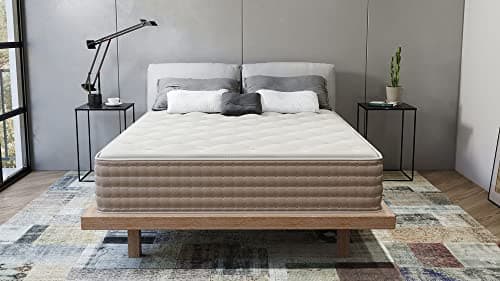 Eco Terra Natural Latex Luxury Hybrid, Medium Firm, Queen The cheapest bed here that is unambiguously a latex mattress, and the only one whose maker publishes an ILD number for each firmness instead of a mood word. Best for: Most people | Most people | $999.00 · View on Amazon Price as of October 18, 2026. #ad — we earn a commission. |
| 2 | 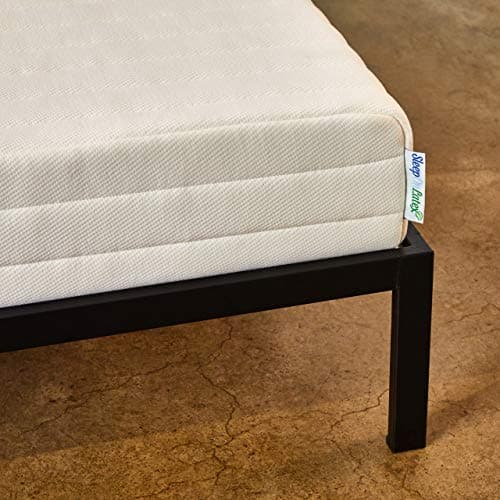 Pure Green Organic Latex Mattress, Medium, Queen Eight inches of solid organic latex, a wool-quilted cotton cover, and no foam, no coils and no marketing layer anywhere in the build. The most certified thing on this page by a distance. Best for: An all-latex bed with nothing else in it | An all-latex bed with nothing else in it | $1,299.00 · View on Amazon Price as of October 18, 2026. #ad — we earn a commission. |
| 3 | 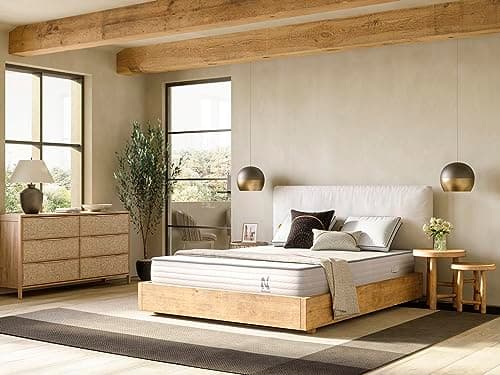 Nolah 11" Natural, Queen Talalay latex over zoned coils — the softest, airiest version of the material, in the one construction that lets a shoulder sink without the hips following it. Best for: Side sleepers who still want latex | Side sleepers who still want latex | $1,469.30 · View on Amazon Price as of October 18, 2026. #ad — we earn a commission. |
| 4 | 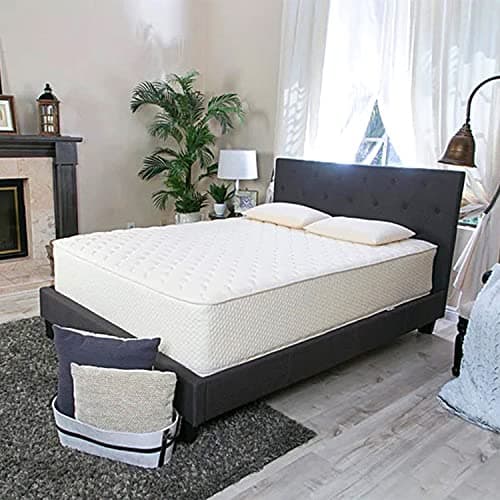 Latex for Less 2-Sided Natural Latex Mattress 9", Split Queen Two firmnesses in one mattress: a firm side and a medium side, separated by the latex core itself. Flip it if you guessed wrong, instead of shipping a hundred pounds of rubber back. Best for: Not knowing which firmness you want | Not knowing which firmness you want | $1,574.00 · View on Amazon Price as of October 18, 2026. #ad — we earn a commission. |
| 5 | 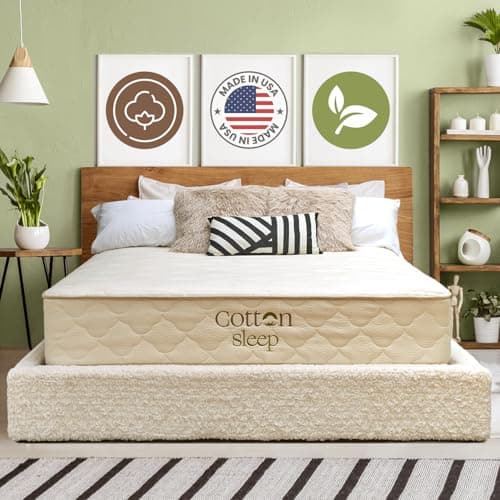 COTTON SLEEP 11" Organic Latex Hybrid, Medium, Queen The bed that passes this page's own listing test outright: it names GOLS on the latex and GOTS on the cotton and wool, and it says in the title that there is no polyfoam in it. Best for: Both certificates on one listing | Both certificates on one listing | $997.00 · View on Amazon Price as of October 18, 2026. #ad — we earn a commission. |
| 6 | 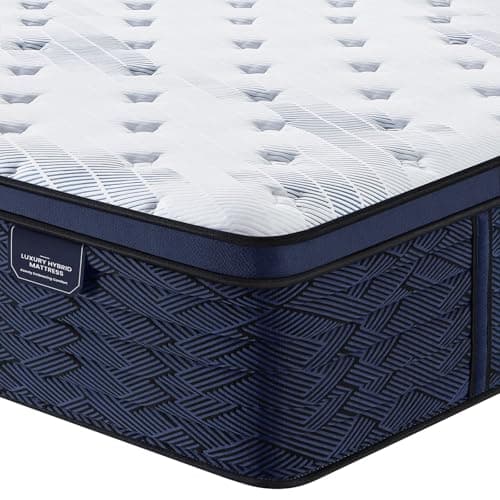 Coolvie 14" Luxury Euro Top Hybrid with Cooling Latex, Queen The cheapest thing on this page by a wide margin, and the clearest example of what the word latex means at this price: a latex-enhanced foam blend in the Euro top, not a latex mattress. Best for: The smallest budget, with your eyes open | The smallest budget, with your eyes open |
Latex is the only mattress material with a genuinely different argument behind it. Memory foam sells contouring, hybrids sell airflow, and both are variations on petrochemical foam over steel. Latex is sap from a rubber tree, foamed and baked into a slab that pushes back instead of sinking, breathes because it is full of holes, and — on the numbers the industry publishes — outlives every other mattress material by a decade or more. It is also, by a distance, the word most often printed on beds that contain almost none of it.
So this page has two jobs. The first is the usual one: six latex mattresses worth buying, split by construction and by who they suit. The second is the one that actually saves you money, which is teaching you to read a latex listing well enough that you never accidentally pay a latex price for a foam bed with a marketing adjective on the box.
We have not slept on any of these. There is no lab here and no pressure-mapping rig, so what follows reasons from the material physics, quotes each maker for exactly what it will commit to in writing, and attributes the process claims to the people who do measure this. Here is what that means in full.
The word "latex" is doing a lot of work
Sleep Foundation puts the core problem plainly: latex mattresses can be made from natural latex, synthetic latex, or a mix of both, and 100% natural latex is generally considered the highest quality but can be expensive. Synthetic latex is a petrochemical foam engineered to imitate the natural material. It is cheaper to make and it does not last as long, and on a mattress listing it is described using the same five letters.
Below that there is a third tier, which is where most cheap "latex" mattresses live: beds where latex is not a layer at all but an additive in a foam blend. The industry word for it is latex-enhanced, and it appears in exactly that form on the cheapest pick on this page. It is not a lie. It is also not a latex mattress, and the gap between those two facts is where an entire price tier of this category makes its money.
The test that cuts through all of it takes fifteen seconds. Look at the listing and ask whether it states, in writing: how thick the latex layer is, what kind of latex it is, and what certifies it. A bed that answers all three will say something like "3 inches of GOLS-certified natural Dunlop latex". A bed that answers none of them will say "with cooling latex". Every pick on this page is labeled with which of those it does.
GOLS is the certificate that matters
There is one acronym worth memorizing here, and it is not the one on most boxes. GOLS, the Global Organic Latex Standard, applies to the latex itself: it requires the foam to be made overwhelmingly from certified organic natural rubber and audits the chain that supplies it. GOTS, which you will see far more often, covers the cotton and the wool wrapped around the latex — useful, but it says nothing about what you are actually lying on. CertiPUR-US is a standard for flexible polyurethane foam, so seeing it on a latex listing tells you there is polyfoam somewhere in the build.
That distinction is the whole reason this page and our organic mattress picks are separate: that page is about the certificates, across cotton, wool and latex alike. This one is about the material, and the certificate is just the evidence.
Dunlop and Talalay: the same sap, two ovens
Every latex mattress made is one of two processes, and the difference is two extra manufacturing steps. In the Dunlop process, as NapLab describes it, the foamed sap is poured into a mold, cured in a vulcanizing oven, then washed and heat-dried. In the Talalay process the mold is only partially filled, then vacuum-sealed so the foam expands to fill the space, then freeze-dried before it is vulcanized and washed.
Those two steps change the material. NapLab characterizes Dunlop as denser, firmer and responsive, and warmer for that density; and Talalay as lighter, plusher, more breathable and noticeably more consistent from one part of a sheet to another — the better choice, in their framing, for hot sleepers. The durability figures follow the density: NapLab puts average Dunlop life at 20 to 25 years and Talalay at 10 to 15 or longer. Talalay costs more to produce.
Which is why a well-built latex bed often contains both — Dunlop underneath doing the support, Talalay on top doing the comfort. If a listing names neither process, that is information too. Several of the makers on this page publish density or ILD figures but will not name the process, and we have flagged each of them in the cons rather than filling the gap with a guess.
What we judged them on
Five things, in this order. None of them is a score, because we have not measured anything.
1. How much of the bed is actually latex. This is the first filter and it eliminates most of the category. Three inches of stated latex over a coil core is a latex hybrid. Eight inches of solid latex is a latex mattress. An unspecified quantity of latex-enhanced foam in a Euro top is neither, and we say so on the pick where that applies.
2. What the maker will put in writing. Density, ILD, certificate numbers, layer thicknesses. In a category where the material can be quietly substituted, a maker who publishes numbers you can check is worth more than one with better photography. Two picks here publish firmness numbers; that is why they rank where they do.
3. All-latex or latex hybrid. Not better or worse — a genuine fork, covered in the next section. We wanted both routes represented rather than pretending one wins.
4. What happens if you choose the wrong firmness. On latex this is the highest-stakes decision you make, and you make it blind. Trial length, who pays for pickup, and whether the bed can be flipped to a different feel all count for more here than on a foam mattress you would not mind replacing.
5. The logistics. Latex is dense, which is the source of both its virtues and its one practical problem. A queen all-latex slab is a serious object. That belongs in a buying decision.
All-latex or latex hybrid?
An all-latex mattress is a stack of latex layers in a cover, with no foam and no springs. Nothing in it ages on a different schedule from anything else, which is most of why these beds last: there is no polyfoam transition layer to collapse in year six and take the support with it. They are also the firmest, most uniform-feeling beds in the category, and the heaviest.
A latex hybrid puts a latex comfort layer — usually two to three inches — over a pocket-coil core. You lose the single-material argument and gain three things: real airflow through the coil layer, proper edge support, and a substantially lower price, because steel coils cost a fraction of what the equivalent depth of latex does. Most people buying their first latex bed should buy a hybrid, which is why the top pick here is one. Our hybrid mattress guide explains what the coil core changes in general terms.
The one case for going all-latex is durability as the actual objective — you are buying a bed you intend to keep for twenty years, you want no polyurethane in the house, and you are content with a firm, buoyant, unmistakably distinct feel. If that is the brief, buy the solid slab and accept that it takes two people to carry.
Firmness is the whole decision, and ILD is the only honest number
On a foam mattress, firmness is a feeling produced by four or five layers interacting. On an all-latex bed there is essentially one variable, and it has a unit: ILD, indentation load deflection, the force needed to compress the foam by a set amount. Higher is firmer. It is the closest thing this industry has to an objective firmness figure, and almost nobody publishes it.
Two makers here do. Eco Terra states ILD 24-26 for its medium and 29-31 for its medium-firm, so you can see exactly how far apart the two options are before choosing. Latex for Less publishes densities instead — 75 for the firm side, 55 for the medium — which tells you a similar story. Every other bed on this page gives you a word.
The reason it matters so much is that latex does not break in the way foam does. A memory foam bed that feels slightly too firm in week one is often fine by week eight. Dense latex is much closer to what it will always be from the first night, and it is heavy enough that returning it is a logistical event rather than a click. Which is exactly why the two-sided pick on this page exists: flipping the mattress over is a cheaper way to change your mind than shipping it back. If you are unsure where you sit on the scale at all, start with our firmness guide and the sleeping position guide before you spend anything.
Read the trial terms on the listing, not the brand's website
This is the most expensive mistake available on this page. Several of these brands advertise generous sleep trials — 90 nights, 100 nights, 120 nights, a lifetime warranty — and those are the terms for buying direct from the brand. They do not automatically travel with a marketplace order.
A few listings do state it in the title itself, which is a commitment on the listing you are buying from. Most say nothing, and their generous trial lives only on the maker's own site — including the COTTON SLEEP pick above, whose title names its certificates but not its trial. Before you order a four-figure mattress, read the returns terms on the actual listing, and if the trial is the reason you picked that bed, consider buying it from the brand instead. Being buyer-first means saying that even though the link that pays us is the other one.
If you cannot spend four figures, buy a topper instead
Real latex is expensive and there is no honest way around it. Five of the six beds here are four-figure purchases, and the one that is not comes with a note explaining that it is not really a latex mattress. If that puts the whole category out of reach, the good news is that the part of latex you can actually feel — the bounce, the immediate rebound, the cool, non-sinking surface — lives in the top few inches, and you can buy those separately.
A three-inch natural latex topper on a mattress that is still structurally sound gets you most of the surface feel for a fraction of the price, and it is the single best value route into this material. It will not fix a sagging bed and it will not give you the twenty-year lifespan, because the mattress underneath still governs both. But if what you want is to sleep on latex, this is how to do it for a few hundred dollars rather than a few thousand. Our mattress topper picks cover the options, and the topper-versus-new-mattress question is worth reading first, because sometimes the answer is that you do need the new bed.
Latex is heavy, and nobody mentions it
Density is what makes latex durable, and density has a weight. An all-latex queen is a genuinely awkward object: it does not compress into a box and re-expand the way a foam bed-in-a-box does, it is a two-person lift up a staircase, and rotating it is a job you schedule rather than one you do on a whim.
Two practical consequences. First, check your frame. A slatted base with wide gaps under a hundred-plus pounds of solid rubber is asking for a sag that the warranty will blame on the base, and most latex warranties require adequate support — our bed frame guide covers what adequate means. Second, protect it from day one. Latex cannot be washed, a stain voids most mattress warranties outright, and a bed with a two-decade lifespan has two decades of spills ahead of it. A protector is a trivial expense against that.
Who should buy which
If you want one latex bed and want to stop thinking about it — the Eco Terra. It is the cheapest genuinely latex mattress here, the maker publishes the firmness numbers, and a coil core is the right first latex bed for most people.
If the point is no foam, no synthetics, and a certificate for everything — the Pure Green. Eight inches of GOLS-certified organic latex with the paperwork published, and nothing else in the build.
If you sleep on your side and found latex too hard before — the Nolah. Talalay is the softer, airier process, and putting it over zoned coils is the construction that lets a shoulder in without dropping the hips.
If the firmness choice is what is stopping you ordering — the two-sided Latex for Less. Firm on one face, medium on the other, and the fix for guessing wrong is turning it over rather than shipping it back.
If the certificates are the reason you are here — the COTTON SLEEP. It names GOLS on the latex and GOTS on the cotton and wool and rules out polyfoam in its own title, which is the whole listing test on this page passed in one line. You just cannot go and lie on one first.
If the budget is a few hundred dollars— buy the topper, not the Coolvie. The Coolvie is a decent cheap hybrid and we have listed it honestly, but it is on this page as an illustration of what "latex" means at that price, not as a way into the material. For that, read what a latex mattress actually is and then how it compares to memory foam, and decide whether you want the material or just something that is not sagging.
The picks, in full
1. Best for Most people
Eco Terra Natural Latex Luxury Hybrid, Medium Firm, Queen
The cheapest bed here that is unambiguously a latex mattress, and the only one whose maker publishes an ILD number for each firmness instead of a mood word.
Price as of October 18, 2026. #ad — we earn a commission.
Key specs
- Natural latex hybrid (as listed)
- 11" total height (manufacturer figure)
- 3" single-origin 100% natural latex comfort layer (manufacturer figure)
- ILD 29-31, medium-firm (manufacturer figure)
- Fabric-encased coils, 15-gauge center / 16-gauge edge (manufacturer figure)
- GOTS organic cotton cover over organic wool (manufacturer figure)
- 90-night trial, 15-year warranty (manufacturer figure)
What's good
- Eco Terra publishes the number that actually decides whether you will like the bed: ILD 24-26 for the medium, 29-31 for this medium-firm. Almost nobody in this category will commit to that in writing, and it is the difference between choosing a firmness and guessing at one
- The latex spec is unusually specific — "one seamless 3-inch 100% Natural latex layer", single-origin, described by the maker as never a blend or synthetic. Compare that to the picks further down this page that say only "latex"
- A coil core under the latex means airflow and edge support you do not get from a solid slab, and it is why this comes in well under the all-latex beds here without cutting the latex layer down to a token
- The legal content label is published too: natural latex 73%, wool 21%, organic cotton 6%. A material breakdown you can check is worth more than a certification logo you cannot
What's not
- Eco Terra's own product page does not name the process — Dunlop or Talalay — anywhere. Sleep Junkie's review describes it as Talalay; we are repeating that rather than confirming it, because the maker will not say
- Three inches of latex is a comfort layer, not a latex bed. The support underneath is steel, which is the trade that makes the price work but also means the coils, not the rubber, decide how it holds you up
- Medium-firm at ILD 29-31 is genuinely firm for a strict side sleeper. The medium version exists for a reason and is a separate listing
- The 90-night trial and 15-year warranty are Eco Terra's direct terms. The Amazon listing states neither, so read the returns terms on the listing you actually buy from
Skip this one if
You are a dedicated side sleeper who wants to sink in. This is the responsive, floats-on-top feel, and a medium-firm version of it — the Nolah below has more give at the shoulder, and a memory foam bed would suit you better than any latex on this page.
2. Best for An all-latex bed with nothing else in it
Pure Green Organic Latex Mattress, Medium, Queen
Eight inches of solid organic latex, a wool-quilted cotton cover, and no foam, no coils and no marketing layer anywhere in the build. The most certified thing on this page by a distance.
Price as of October 18, 2026. #ad — we earn a commission.
Key specs
- 8" solid organic latex foam (manufacturer figure)
- GOLS certified organic latex, CU 868773 (manufacturer figure)
- GOTS certified organic cotton and wool, OTCO-OT-034423 (manufacturer figure)
- Oeko-Tex Standard 100 and Greenguard Gold certified (manufacturer figure)
- Fair For Life fair trade latex (manufacturer figure)
- Medium or Firm (as listed)
- 100-day returns, 10-year warranty (manufacturer figure)
What's good
- The certification stack is the real product here: GOLS on the latex, GOTS on the cotton and wool, Oeko-Tex Standard 100, Greenguard Gold and Fair For Life, each with a certificate number published on the maker's own page. That is the paperwork the word organic is supposed to mean and usually does not
- No polyurethane foam anywhere in it, so there is no layer in the bed that softens on a different schedule than the rest. A single-material bed ages as one thing, which is most of why latex outlasts foam
- Sleep Foundation's review of it describes an organic Dunlop comfort layer over a Dunlop core — the denser of the two latex processes, and the one associated with the longest service life
- Free returns within 100 days of delivery, stated by the maker as no questions asked with free pickup. On a bed this heavy, who collects it matters as much as whether you can send it back
What's not
- Eight inches is shallow by current standards, and it will look thin on a tall frame next to the 14-inch beds everyone else is selling. Latex is dense enough that this is not a support problem, but it is a real appearance one
- Two firmnesses, medium or firm, and no zoning. If neither suits your body you have run out of options within the model
- A 10-year warranty is short for a material whose whole argument is a two-decade lifespan. The bed will very likely outlive the cover it comes with
- It is extremely heavy. Solid latex in a queen is a two-person lift, and it does not compress and re-expand the way a foam bed-in-a-box does
Skip this one if
You want a bed you can move by yourself, or you want bounce at the edge to sit on while you put your shoes on. All-latex slabs are heavy and their perimeter is the same material as the middle — a hybrid handles both problems better.
3. Best for Side sleepers who still want latex
Nolah 11" Natural, Queen
Talalay latex over zoned coils — the softest, airiest version of the material, in the one construction that lets a shoulder sink without the hips following it.
Price as of October 18, 2026. #ad — we earn a commission.
Key specs
- 11" latex hybrid (as listed)
- 2" Talalay latex comfort layer over a 1" Talalay transition layer (manufacturer figure)
- 8" zoned, individually wrapped coil unit with reinforced edges (manufacturer figure)
- Organic wool fire barrier, GOTS organic cotton cover (manufacturer figure)
- GOTS, Oeko-Tex 100 Class 1, eco-INSTITUT, Rainforest Alliance (manufacturer figure)
- 120-night trial, lifetime warranty (manufacturer figure)
What's good
- Talalay is the process that produces the lighter, plusher, more uniform latex — NapLab describes it as lightweight, breathable and responsive with a more consistent feel, and the better of the two for hot sleepers. This is the pick for anyone who tried latex once, found it hard, and wrote the material off
- Three inches of latex in two densities over a zoned coil unit is a genuine construction rather than a thin comfort cap. The zoning is aimed at the hips, which is where a side sleeper's alignment usually goes wrong
- The certification list is broad and includes eco-INSTITUT on the latex and Rainforest Alliance on the rubber sourcing, which is a supply-chain claim rather than an emissions one
- A lifetime warranty on the mattress is the longest commitment anyone on this page makes, and on a material that plausibly lasts that long it is not an empty gesture
What's not
- Talalay latex is very commonly sold as a natural-and-synthetic blend rather than pure natural latex, and Nolah's listing title does not settle it. If a fully natural core is the point of the purchase, ask before you buy
- The 120-night trial and the lifetime warranty are Nolah's own direct-purchase terms. The Amazon listing title states neither, so do not assume they travel with an Amazon order
- It is a premium price for a bed whose latex content is three inches. You are also paying for the coil unit, the wool and the cover
- Softer latex means less of the plank-like support that the firm all-latex crowd buys the material for. This is latex tuned toward comfort, and firm sleepers will find it yielding
Skip this one if
You sleep on your stomach, or you are buying for lower back pain that gets worse on soft beds. A plush Talalay top over zoned coils is the wrong direction for either — the firm side of the two-sided pick below, or the medium-firm Eco Terra, is where to look instead.
4. Best for Not knowing which firmness you want
Latex for Less 2-Sided Natural Latex Mattress 9", Split Queen
Two firmnesses in one mattress: a firm side and a medium side, separated by the latex core itself. Flip it if you guessed wrong, instead of shipping a hundred pounds of rubber back.
Price as of October 18, 2026. #ad — we earn a commission.
Key specs
- 9" two-sided, flippable (manufacturer figure)
- 6" firm latex at 75 density plus 3" medium latex at 55 density (manufacturer figure)
- ½" organic wool under the cover on each side (manufacturer figure)
- GOLS certified organic latex; GOTS organic cotton and wool (manufacturer figure)
- eco-INSTITUT certified latex (manufacturer figure)
- 120-night home trial, 20-year warranty (manufacturer figure)
- This listing is the Split Queen — two halves (as listed)
What's good
- The two-sided build solves the single biggest risk in buying latex online, which is that firmness is the whole decision and you are making it from a photograph. Wrong side up is a five-minute fix rather than a return
- The density figures are published for both sides — 75 for the firm core, 55 for the medium layer — which is more than most makers will put in writing, and it tells you the firm side is genuinely firm rather than nominally so
- A 20-year warranty, the longest fixed term here, on a build that is latex, organic cotton and wool with no foam layer to fail early
- Wool on both faces rather than one, which is what makes flipping it practical: you are not sleeping on the underside of anything
What's not
- The queen listing is the Split Queen — it arrives as two halves, so there is a seam down the middle of the bed. That is an advantage on an adjustable base and an annoyance on a normal frame
- Flipping a nine-inch all-latex queen is a genuine two-person job. The feature is real, but you will not be doing it casually
- It ships in six to seven days rather than immediately, which is normal for a made-to-order bed and still worth knowing before you order
- Like most of this category, the maker does not state whether the latex is Dunlop or Talalay — the density figures tell you more than the missing process name would
Skip this one if
You want a single-piece queen mattress. This particular listing is the split version, and a center seam is not something you stop noticing — buy the Pure Green or the Eco Terra instead.
5. Best for Both certificates on one listing
COTTON SLEEP 11" Organic Latex Hybrid, Medium, Queen
The bed that passes this page's own listing test outright: it names GOLS on the latex and GOTS on the cotton and wool, and it says in the title that there is no polyfoam in it.
Price as of October 18, 2026. #ad — we earn a commission.
Key specs
- 11" latex hybrid with a pocket-coil core (as listed)
- GOLS natural latex (as listed)
- GOTS cotton and wool (as listed)
- "No polyfoam", non-toxic, fiberglass free (as listed)
- Made in USA (as listed)
- Medium, queen
What's good
- It states both certificates that matter in this category on the listing itself — GOLS for the latex, GOTS for the cotton and wool — which is the exact pair this page tells you to look for and which most listings quietly omit
- The title says "No Polyfoam" outright. On a page whose central warning is that "latex" often means a polyurethane blend with some rubber in it, a seller ruling polyfoam out in writing is the most useful sentence on the listing
- A latex comfort layer over a pocket-coil core is the construction most people should buy first: cooler and cheaper than an all-latex stack, and light enough that two people can actually get it up a staircase
What's not
- COTTON SLEEP is not a name you will have heard of, and it is not sold in showrooms — so unlike the bed that used to hold this slot, you cannot go and lie on one before you commit
- Neither the trial length nor the warranty term appears in the listing title, which are the two numbers that most de-risk a four-figure mattress you cannot test
- The listing does not state how thick the latex comfort layer is, or whether the latex is Dunlop or Talalay — so it clears the certification bar this page sets while leaving the construction detail vaguer than the Pure Green above
Skip this one if
You want an all-latex bed with no springs in it at all. This is a hybrid by design, and the coil core is most of why it costs less than the Pure Green — if a single-material bed is the brief, buy that one instead.
6. Best for The smallest budget, with your eyes open
Coolvie 14" Luxury Euro Top Hybrid with Cooling Latex, Queen
The cheapest thing on this page by a wide margin, and the clearest example of what the word latex means at this price: a latex-enhanced foam blend in the Euro top, not a latex mattress.
Key specs
- 14" Euro-top hybrid (as listed)
- "Latex-enhanced" and gel foam comfort layers (as listed)
- 5-zone pocket springs (as listed)
- Latex type, origin, percentage and layer thickness: not stated (as listed)
What's good
- It is a competent budget hybrid at a fraction of what everything else here costs, and a decent pocket-coil bed under a thick Euro top is a real upgrade over a slab of cheap memory foam
- Five-zone pocket springs and a genuine Euro top at this price is a lot of construction for the money, whatever the comfort layer is made of
- The latex-enhanced foam does add some of the snap-back that makes latex easy to move around on. You get a hint of the behavior without the material
- Fast, ordinary Amazon fulfillment, which no four-figure latex bed on this page offers
What's not
- The listing never says how much latex is in it, what kind, where it came from, or how thick the layer is. "Latex-enhanced" describes a foam blend; it is not a claim that any part of this bed is latex foam
- None of latex's actual advantages survive the dilution. The two-decade lifespan, the density and the natural-material argument all belong to beds made mostly of the stuff
- No GOLS, no GOTS, no published density or ILD. There is nothing here you can verify against a certificate number
- Unbranded-tier support. If it sags in year four you are dealing with a marketplace seller, not a national warranty network
Skip this one if
You came to this page because you specifically want a latex mattress. This is not one, and we would rather say so than take the sale — if the budget is the constraint, put a real latex topper on the bed you own instead and read the section on that below.
The cheap stuff worth having
One thing worth buying alongside a latex bed, for the reason the section above gives: latex cannot be washed, and a stain is the fastest way to void a twenty-year warranty on a bed that might otherwise have lasted that long.
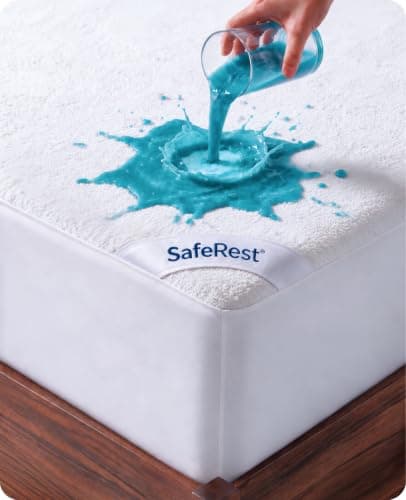
SafeRest Waterproof Mattress Protector
The cheapest insurance a bed can carry: it keeps sweat and spills out of foam you can never wash, and keeps off the single stain that voids a lot of mattress warranties.
Skip it if You already sleep on a protector you get on with. This is the top pick from our protector roundup, not a second layer to stack on the first.
$39.99 · View on AmazonPrice as of October 18, 2026. #ad — we earn a commission.
Common questions
What is a latex mattress?
A mattress whose comfort layers, support core, or both are made from latex foam rather than polyurethane or memory foam. The raw material is sap tapped from rubber trees, which is whipped, poured into a mold and vulcanized into a solid open-cell foam. The practical difference from memory foam is that latex pushes back: it returns to shape immediately instead of holding an impression, so you float on it rather than sink into it, and you do not have to fight the bed to change position. Latex mattresses come in two forms. An all-latex bed is a solid stack of latex layers with a fabric cover and nothing else. A latex hybrid puts a latex comfort layer over a pocket-coil support core, which is cheaper, lighter, and airier at the cost of no longer being a single-material bed.
What is the difference between Dunlop and Talalay latex?
Two manufacturing processes for the same sap, and the difference is two extra steps. In the Dunlop process, described by NapLab, the latex is poured into a mold, cured in a vulcanizing oven, washed and dried. In the Talalay process the mold is only partially filled, then vacuum-sealed so the foam expands to fill it, then freeze-dried before it is vulcanized and washed. Those two extra steps are what produce the difference you feel. NapLab characterizes Dunlop as denser, firmer and responsive, and Talalay as lighter, plusher, more breathable and more consistent from one part of the sheet to another, with Dunlop the better choice for a support core and Talalay the better one for a comfort layer and for hot sleepers. NapLab puts an average Dunlop lifespan at 20 to 25 years and Talalay at 10 to 15 or longer, and Talalay costs more to make.
Is a latex mattress better than memory foam?
It is better at some specific things and worse at others, which is the honest version. Latex is more durable, sleeps cooler because the open-cell structure and pinholes let air move, is far more responsive so changing position is easier, and is made from a plant material rather than a petrochemical one. Memory foam contours more closely, absorbs a partner's movement better, and costs a great deal less. If you sleep hot, share a bed with someone who does not move much, or want a mattress you will still be using in fifteen years, latex is the better buy. If you sleep alone next to a restless partner, want the hugged feeling, or have a budget under a few hundred dollars, memory foam is. We compare them properly in our latex versus memory foam guide.
How long does a latex mattress last?
Longer than anything else in the category, which is the entire economic argument for spending this much. NapLab puts the average lifespan of Dunlop latex at 20 to 25 years and Talalay at 10 to 15 years or longer, against the 6 to 8 years that is typical for a foam or hybrid mattress. Two things qualify that. First, the number applies to the latex, not to the cover, the wool quilting or the coils in a hybrid, all of which wear on their own schedule. Second, a warranty is not a lifespan estimate: several of the beds on this page carry 10-year warranties on material that plausibly outlasts them by a decade. Buy latex because you want the years, not because the paperwork promises them.
Does 100% natural latex actually matter?
It matters more than most single specifications on a mattress listing, because latex is one of the few materials where the marketing word and the material can diverge completely. Sleep Foundation notes that latex mattresses can be made from natural latex, synthetic latex, or a mix of the two, and that 100% natural latex is generally considered the highest quality but can be expensive. Synthetic latex is a petrochemical product engineered to behave like the natural one; it is cheaper and it does not last as long. The certification that settles it is GOLS, the Global Organic Latex Standard, which applies to the latex itself — as opposed to GOTS, which covers the cotton and wool around it. If a listing claims latex without naming a percentage, a process or a certificate, assume it is a blend and price it accordingly.
Can you sleep on latex if you have a latex allergy?
This is a medical question and we are not qualified to answer it — ask an allergist, not a mattress site. What we can tell you is what the material is. Latex allergy is a reaction to proteins present in natural rubber latex, and the vulcanizing and washing steps in mattress manufacture are intended to remove residual proteins, which is why finished latex foam is generally not treated the same way as thin dipped products like gloves or balloons. That is a general statement about the process, not clearance for any individual. If you have a diagnosed natural rubber latex allergy, talk to your doctor before buying any latex bedding, and note that every mattress on this page also has a fabric cover between you and the foam.
What happened to the Serta Perfect Sleeper Pro Dublin?
It is no longer buyable on Amazon. We checked the listing on August 31, 2026 and it returns "Currently unavailable", as do the Hampton and Edinburgh models from the same Perfect Sleeper Pro latex range; only the Kensington was still showing stock, and only a single unit of it. That bed used to hold the mainstream-brand slot on this page precisely because you could walk into a showroom and lie on it, so we have not tried to pretend another mattress fills that role. The slot now goes to the COTTON SLEEP organic latex hybrid, which earns its place on a different and more measurable basis: it names GOLS on the latex and GOTS on the cotton and wool in the listing title and states that it contains no polyfoam. If lying on a bed before buying it is what you actually need, that is a good reason to shop a Serta or Beautyrest dealer directly rather than a marketplace, and we would rather say so than sell you a link.
Do you make money from these links?
Yes. We earn an Amazon commission when someone buys through the links on this page, and that is what funds the site. We take no free products, we sell no placement, and no brand sees a page before it publishes. Commission is a percentage of the sale, so on a page whose picks span a four-fold price range, the expensive ones pay us several times what the cheapest one does. Which is worth stating plainly here, because our top recommendation is the second-cheapest bed on the page, we tell budget readers to buy a topper instead of a mattress, and the cheapest pick comes with a note saying it is not really a latex mattress at all.
Sources
Where the facts on this page come from. We cite other people's testing because we don't do our own — here's what that means.
- NapLab — Dunlop vs Talalay latex (manufacturing processes, density, breathability, average lifespans)
- Sleep Foundation — best latex mattresses (natural vs synthetic vs blended latex)
- Sleep On Latex — Pure Green Organic Latex Mattress specifications and certificates
- Eco Terra — hybrid latex mattress specifications and ILD figures
- Latex for Less — 2-sided natural latex mattress layer densities and certifications
- Global Organic Latex Standard (GOLS) — what the certification covers
- FTC — Endorsement guides (why the disclosure at the top of this page exists)
Read next
- What Is a Latex Mattress?Latex is a durable, buoyant rubber foam that sleeps cool and pushes back rather than hugging you. What natural, blended and synthetic mean - and its honest limits.
- Latex vs Memory FoamTwo comfort materials, not two constructions: memory foam's slow hug versus latex's springy push-back, and which one actually fits how you sleep.
- The Best Organic MattressesSix organic mattresses whose listings name an actual standard - GOTS or GOLS - plus how to spot the ones using the word as decoration.
- The Best Hybrid MattressesSix hybrid mattresses judged on what makes a coil core worth it over all-foam — airflow, edge support, responsiveness — with honest cons and a skip-this-one note on every pick.
- The Best Latex PillowsFive latex pillows - responsive, cool and durable, the anti-memory-foam - spanning a value Talalay, an adjustable contour and a certified-organic option, with honest cons.
- The Best Mattress ToppersSix mattress toppers worth buying, and the simple test that tells you whether a topper will fix your bed or waste your money.