The Best Latex Pillows
If memory foam feels like sinking into wet sand, latex is the opposite: it pushes back, holds your head up, and sleeps cool. Five latex pillows sorted by feel and loft - and an honest note on the weight, the smell and the one allergy that rules it out entirely.
We earn a commission if you buy through our links. It doesn't affect our picks — and we never take free products. How this site is funded.
Quick picks
| # | Product | Best for | Price |
|---|---|---|---|
| 1 | 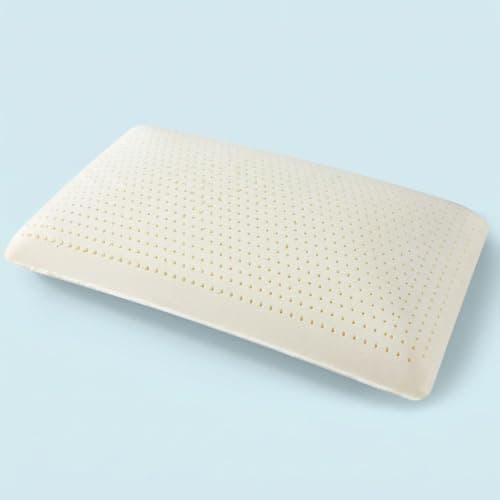 Bouhmoy Talalay Natural Latex Pillow The straightforward one: a solid slab of Talalay latex with a washable cover. Springy, cool, and the cleanest introduction to what a latex pillow feels like. Best for: Most people who want latex | Most people who want latex | $77.99 · View on Amazon Price as of September 12, 2026. #ad — we earn a commission. |
| 2 | 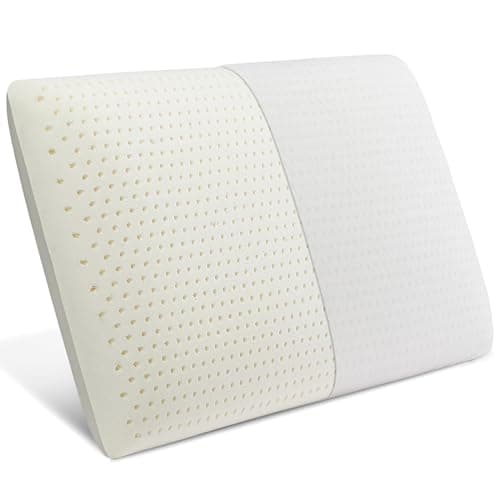 DOHPAOOK Talalay Latex Pillow The cheapest honest way into real Talalay latex. Same basic idea as the Bouhmoy - a natural latex core with a washable cover - for less money. Best for: The value entry point | The value entry point | $58.99 · View on Amazon Price as of September 12, 2026. #ad — we earn a commission. |
| 3 | 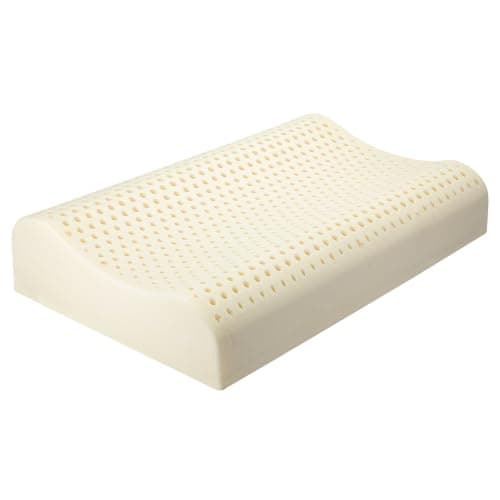 TALATEX Adjustable Latex Pillow The problem-solver. An ergonomic latex pillow you can adjust, so you are not gambling on a fixed loft being right for your shoulder width and position. Best for: Dialing in the height | Dialing in the height | |
| 4 | 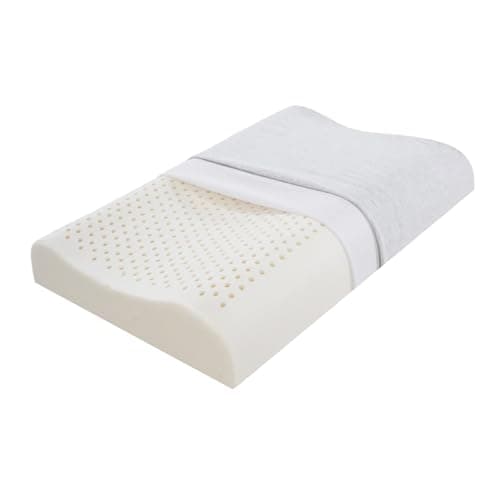 Low-Profile Contour Latex Pillow The thin one. A low-profile latex contour for the people a tall pillow wrecks - stomach sleepers and back sleepers who need their head kept low, not propped. Best for: Back and stomach sleepers | Back and stomach sleepers | $49.90 · View on Amazon Price as of September 12, 2026. #ad — we earn a commission. |
| 5 | 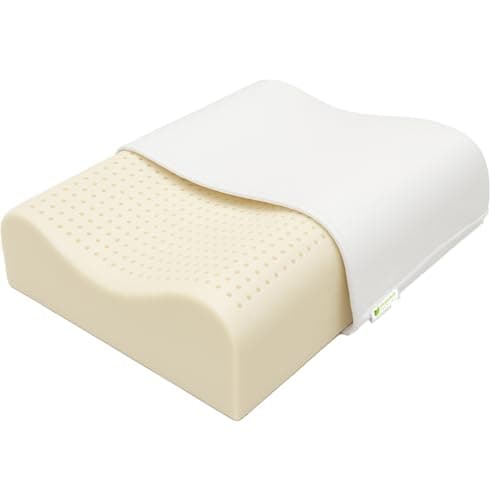 Organic Textiles GOLS Latex Pillow The one where the natural claims are actually documented. GOLS-certified organic latex under a GOTS-certified organic cotton cover - the premium pick for buyers who want the certifications, not just the marketing. Best for: Certified organic materials | Certified organic materials | $115.95 · View on Amazon Price as of September 12, 2026. #ad — we earn a commission. |
The one-line case for latex
Most pillow shopping is a search for the least-wrong compromise: down goes flat, polyester clumps, memory foam runs hot and swallows your head. Latex is the fill that sidesteps most of those complaints at once. It is springy rather than sinking, cool rather than insulating, and durable rather than disposable. If you have ever pressed your hand into a memory foam pillow, watched the dent stay, and thought "I don't want my head to do that all night," you are the exact person latex was made for - it pushes back and holds your head up on the surface instead.
That feel is not for everyone, which is why this page is sorted by it, and why every pick has a clear "skip this if." But before the picks, it is worth understanding what the word "latex" is actually hiding on a listing, because it hides more than most fill names do.
Natural, synthetic, blended - read the label
"Latex" on a pillow can mean three quite different things. Natural latex is made from the sap of the rubber tree - the genuine article, the most durable and the most breathable, and what every pick on this page is. Synthetic latex is a petroleum-based imitation that mimics the feel more cheaply and less durably. Blended latexmixes the two. A cheap listing that just says "latex pillow" with no percentage is often blended or synthetic, so if natural materials are your reason for shopping latex, look for the words "100% natural" - or, better, a certification. Our latex mattress guide walks through the same labeling story on the larger scale, and the reasoning transfers directly to pillows.
The two processes matter too. Dunlop latex is denser and firmer; Talalay is lighter and springier. Neither is better in the abstract - it is a feel preference - but most pillows, and most of the ones here, are Talalay because that airy bounce is the signature people are paying for.
Loft is still the spec that decides comfort
Latex changes how a pillow feels, but it does not change the rule that governs every pillow: the right height (loft) depends on how you sleep, and getting it wrong is what leaves you with a stiff neck no matter how good the material is. The gap between your head and the mattress is tall on your side, medium on your back, and almost nothing on your front - so:
- Side sleepers need a taller, firmer loft to fill the shoulder-width gap and keep the neck level - a solid Talalay slab or the adjustable option.
- Back sleeperswant a medium loft, often a contour, that supports the neck's curve without shoving the head forward.
- Stomach sleepers need the lowest loft they can find, or the neck bends backward all night - which is exactly the gap the low-profile contour on this page fills.
This is why the adjustable pillow is such a safe buy sight-unseen: loft is the hardest thing to guess, and being able to tune it removes the biggest risk. If you already know your height, a fixed slab is simpler and often cheaper. Our pillows for neck pain page goes deeper on matching loft to the problem.
The cooling is real, but understand it
Latex's coolness is not a coating or a gel - it is the material and the construction. Latex simply does not soak up and store body heat the way memory foam does, and latex pillows are typically molded full of ventilation holes (the pin-core) so air moves through instead of being trapped against your head. That makes latex one of the genuinely cooler fills, and a strong pick for a hot sleeper who has given up on foam. Keep the expectation honest, though: it stays near room temperature rather than warming up under you - it does not actively chill you, and nothing does. If cooling is the whole reason you are shopping, it is worth seeing latex next to the other options on our best cooling pillows page.
The honest downsides: weight, smell, price - and one hard stop
Latex is excellent, not free. Three ordinary caveats and one that is absolute:
- It is heavy. A solid latex core is dense and weighty next to a fiber pillow, so casing it and flipping it is more of a lift. Not a dealbreaker, but you will notice.
- It can smell at first. Natural latex often arrives with a faint rubbery odor that is harmless and fades over a few days of airing. Unzip the cover and let it breathe before the first night.
- It costs more. Latex sits above basic polyester and most memory foam. You are paying for the feel and the durability - a good latex pillow outlasts several cheap ones, so the math often works out, but the up-front price is higher.
- The hard stop: latex allergy. Natural latex is a real allergen for a minority of people, and certified organic latex is still latex. If you have a latex allergy, do not buy any of these - choose memory foam, down, or a down alternative instead, and ask your doctor if you are unsure. This is the one line no feature or certification crosses.
With that said, for anyone without that allergy who wants a cool, springy, long-lasting pillow that holds the head up instead of swallowing it, latex is one of the best answers there is - and if you are weighing it directly against the alternative, our latex vs memory foam guide settles the feel question in full. None of these were tested in a lab; the picks come from reading the listings and knowing how the material behaves, which is the method on how we review.
The picks, in full
1. Best for Most people who want latex
Bouhmoy Talalay Natural Latex Pillow
The straightforward one: a solid slab of Talalay latex with a washable cover. Springy, cool, and the cleanest introduction to what a latex pillow feels like.
Price as of September 12, 2026. #ad — we earn a commission.
Key specs
- 100% natural Talalay latex (as listed)
- Ventilated (pin-core) construction
- Removable, washable cover (as listed)
- Solid one-piece core
What's good
- Talalay latex is the lighter, springier of the two latex processes, and this is a clean, undecorated example of it - it holds your head up and bounces back instead of slowly caving like memory foam
- The pin-core ventilation and the natural material make it genuinely cool to sleep on, which is latex's headline advantage over foam
- A removable, washable cover and a solid core that should outlast several cheap polyester pillows - latex is one of the most durable fills there is
What's not
- It is a solid latex core, so it is heavy and dense compared with a fiber pillow - lifting and re-casing it is more of a job
- One fixed loft and firmness; if it is not right for your position you cannot adjust it, unlike the shredded and adjustable options below
- Natural latex can carry a rubbery smell out of the packaging that needs a few days to air out - and it is not an option at all for anyone with a latex allergy (see below)
Skip this one if
You want to fine-tune the height. A solid core is take-it-or-leave-it on loft - if you are between sizes or unsure, the adjustable TALATEX below lets you dial it in.
2. Best for The value entry point
DOHPAOOK Talalay Latex Pillow
The cheapest honest way into real Talalay latex. Same basic idea as the Bouhmoy - a natural latex core with a washable cover - for less money.
Price as of September 12, 2026. #ad — we earn a commission.
Key specs
- 100% natural Talalay latex (as listed)
- Ventilated construction
- Removable, washable cover (as listed)
- Solid core
What's good
- It brings the price of a genuine natural-latex pillow down to the low end of the category, which is the main reason to pick it over the Bouhmoy
- You still get the core latex benefits - the responsive, cool, buoyant feel and the durability - at a friendlier entry price
- Removable, washable cover, as it should be
What's not
- It is a smaller, less-established brand than some, so consistency and long-term support are less certain
- Fixed loft and firmness, same as any solid core
- The same rubber-smell airing-out period and the same absolute latex-allergy exclusion apply
Skip this one if
You want the reassurance of a more established brand or a certification. This is the budget pick - step up to the Bouhmoy for the brand or the Organic Textiles for the certifications.
3. Best for Dialing in the height
TALATEX Adjustable Latex Pillow
The problem-solver. An ergonomic latex pillow you can adjust, so you are not gambling on a fixed loft being right for your shoulder width and position.
Key specs
- 100% natural latex (as listed)
- Adjustable / ergonomic contour (as listed)
- Removable, washable cover (as listed)
- Ventilated construction
What's good
- Loft is the single most important pillow spec and the hardest to guess, so an adjustable latex pillow removes the biggest risk in buying one sight-unseen
- The ergonomic contour is aimed at keeping the neck in line, which is the job people with a stiff morning neck are really shopping for
- Still latex underneath, so you keep the cool, responsive feel while gaining the ability to tune the height
What's not
- An adjustable/contour design is a more specific shape than a plain slab - if you dislike a contoured profile, a flat pillow will suit you better
- Adjustability adds a little complexity and usually a little cost over the simplest cores
- Same latex smell and the same allergy exclusion
Skip this one if
You already know your ideal loft and prefer a simple flat pillow. The adjustability is wasted on you - a solid Bouhmoy or DOHPAOOK is simpler and often cheaper.
4. Best for Back and stomach sleepers
Low-Profile Contour Latex Pillow
The thin one. A low-profile latex contour for the people a tall pillow wrecks - stomach sleepers and back sleepers who need their head kept low, not propped.
Price as of September 12, 2026. #ad — we earn a commission.
Key specs
- Natural latex (as listed)
- Low-profile contour (as listed)
- Removable cover (as listed)
- Great elasticity / support (as listed)
What's good
- Most latex pillows are built tall for side sleepers, so a genuinely low-profile one is a real find for stomach and back sleepers who need their neck kept flat, not lifted
- The latex elasticity gives gentle support without the height that bends a stomach sleeper's neck backward all night
- Cooler and more durable than the thin polyester pillows stomach sleepers usually end up settling for
What's not
- Too low for most side sleepers - the wide gap between a side sleeper's ear and the mattress needs a taller loft this cannot provide
- A contour shape is a commitment; it is designed for one profile and does not suit everyone
- Latex smell and latex-allergy caveats unchanged
Skip this one if
You sleep on your side. A low-profile pillow leaves your head dropping toward the mattress and kinks your neck - side sleepers want a taller loft, so buy the Bouhmoy or the adjustable TALATEX instead.
5. Best for Certified organic materials
Organic Textiles GOLS Latex Pillow
The one where the natural claims are actually documented. GOLS-certified organic latex under a GOTS-certified organic cotton cover - the premium pick for buyers who want the certifications, not just the marketing.
Price as of September 12, 2026. #ad — we earn a commission.
Key specs
- GOLS-certified organic latex (as listed)
- GOTS-certified organic cotton cover (as listed)
- Contour shape (as listed)
- Removable, washable cover
What's good
- The certifications are the whole point: GOLS for the latex and GOTS for the cotton cover are third-party standards, so "organic" here means something checkable rather than a word on the box
- For a buyer whose reason to choose latex is natural materials in the first place, this is the pillow that actually delivers on that reason
- The organic cotton cover is a nicer, more breathable face than the synthetic covers on the budget options
What's not
- It is the most expensive pillow on the page, and a good part of that premium is the certification and the cover rather than a better night's sleep than the plain Talalay
- A contour profile, so the same suits-one-shape caveat as the other contours
- Still natural latex, so the allergy exclusion applies in full - certified organic does not make latex safe for someone allergic to it
Skip this one if
The certifications are not a priority for you. You can get the same responsive, cool latex feel for much less from the Bouhmoy or DOHPAOOK - pay this premium only if documented organic materials are the reason you are here.
Common questions
What does a latex pillow feel like compared to memory foam?
Opposite, in one word. Memory foam slowly compresses under the weight and heat of your head and hugs it, so you sink in and the foam holds that impression until you move. Latex is springy and responsive: it pushes back, holds your head up on top of the surface rather than letting it sink, and returns to shape instantly when you shift. It also sleeps markedly cooler, because latex does not trap heat the way memory foam does and is usually built with ventilation holes. If you have always found memory foam too hot or too sinking, latex is the fill to try.
What is the difference between Dunlop and Talalay latex?
They are two ways of making the same rubber, and they feel different. Dunlop is the older, simpler process; it produces a denser, firmer, slightly heavier latex that is a touch firmer at the bottom than the top. Talalay adds extra steps that make a lighter, springier, more uniformly soft latex - the airier, bouncier feel most latex pillows advertise. Neither is better outright: Dunlop for a firmer, more supportive block, Talalay for a lighter, plusher, more consistent feel. Most of the pillows here are Talalay.
Are latex pillows good for hot sleepers?
Yes - it is one of latex's strongest cases. Latex does not insulate and store body heat the way memory foam does, and latex pillows are usually made with a pattern of ventilation holes (a pin-core) that lets air move through the pillow rather than trapping it against your head. The result is a pillow that stays closer to room temperature through the night instead of warming up under you. It is not refrigerated - no pillow is - but among common fills, latex is one of the better choices for someone who overheats.
Do latex pillows smell, and are they safe if I have a latex allergy?
Two separate issues. First, natural latex often has a mild rubbery smell fresh out of the packaging; it is not harmful and airs out over a few days if you unzip the cover and let it breathe. Second, and this one is important: if you have a latex allergy, do not buy a latex pillow. Natural latex is a genuine allergen for a minority of people, and no amount of organic certification changes that - certified organic latex is still latex. If you know or suspect you react to latex, choose a memory foam, down, or down-alternative pillow instead, and check with your doctor if you are unsure.
How long does a latex pillow last?
Longer than almost any other fill, which is a real part of the value. Latex is durable and resilient - a solid latex core resists the flattening and clumping that finishes off polyester and even some memory foam pillows within a year or two. Many latex pillows hold their shape and support for several years of nightly use. That longevity is why a higher up-front price can still be the cheaper choice over time, and it is worth remembering that all pillows should still be replaced eventually for hygiene reasons regardless of how well they hold their shape.
Sources
Where the facts on this page come from. We cite other people's testing because we don't do our own — here's what that means.
Read next
- What Is a Latex Mattress?Latex is a durable, buoyant rubber foam that sleeps cool and pushes back rather than hugging you. What natural, blended and synthetic mean - and its honest limits.
- Latex vs Memory FoamTwo comfort materials, not two constructions: memory foam's slow hug versus latex's springy push-back, and which one actually fits how you sleep.
- The Best Memory Foam Pillows, Adjustable vs ContourSix memory foam pillows split by the only distinction that matters — adjustable shredded fill you can dial versus a fixed contour you must match to your position — with honest cons and a skip note on every one.
- The Best Pillows for Neck PainSix pillows ranked by loft and support geometry — plus a straight answer about what a pillow can and cannot do for your neck.
- The Best Cooling PillowsSix cooling pillows that actually move air, an honest read on gel infusions, and a note on who each one is wrong for.
- The Best Pillows, Picked by How You SleepSix pillows picked by sleeping position and fill type — side, back, stomach, adjustable vs fixed — with honest cons and a skip note on every one.