The Best Humidifiers for a Bedroom
Buy the Levoit top-fill. A stated 25 decibels, 25 hours per fill and an opening wide enough to get your hand inside to clean it - which is the spec that decides whether you are still using it in March. Four more below for precise humidity control, a 60-hour tank, warm mist, and the cheapest one worth plugging in.
We earn a commission if you buy through our links. It doesn't affect our picks — and we never take free products. How this site is funded.
Quick picks
| # | Product | Best for | Price |
|---|---|---|---|
| 1 | 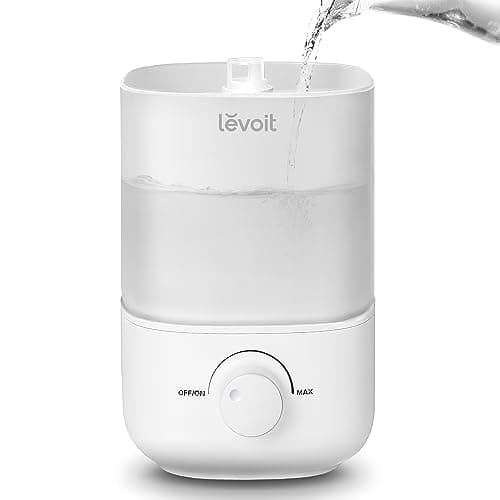 Levoit Top Fill Humidifier, 2.5 L Tank, 25 dB, 25 Hour Runtime The default, and it wins on the boring specs. A stated 25 decibels is quiet enough to sleep beside, 25 hours per fill covers a night with room to spare, and the top-fill design means you refill it from a jug without carrying a full tank to the sink and back. Levoit also states auto shut-off, which is what stops it running dry. Best for: Most bedrooms - quiet, a full night, easy to clean | Most bedrooms - quiet, a full night, easy to clean | |
| 2 | 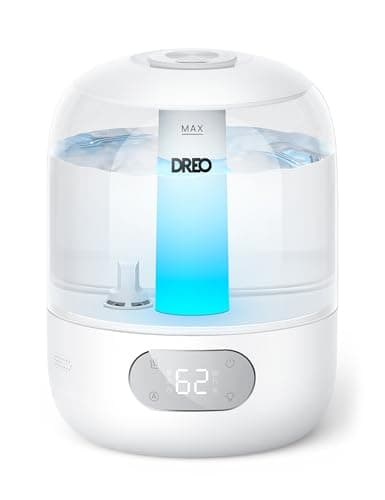 DREO 3 L Humidifier, 30 Hour Runtime, 26 dB, Precise Humidity Control The pick if you want the machine to manage the room rather than run flat out. DREO states precise humidity control, which means a built-in sensor and a target you set - so it cycles to hold roughly 40 to 50 percent instead of pumping mist until the tank is empty. That is the difference between humidifying a room and soaking it. Best for: Setting a target humidity and letting it hold it | Setting a target humidity and letting it hold it | |
| 3 | 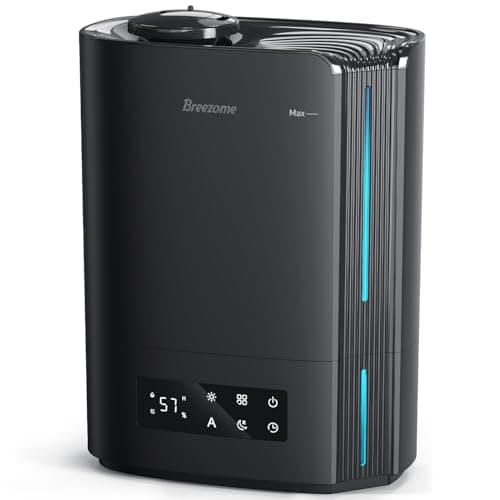 BREEZOME 6 L Humidifier, 60 Hour Runtime, 25 dB, Smart Humidistat The one that stops the refilling becoming a chore. Six litres and a stated 60 hours means two or three nights per fill in normal use, with a humidistat to hold a target rather than running continuously - and 25 decibels at that tank size is genuinely quiet. The trade is footprint: this is a piece of furniture, not a nightstand object. Best for: Large or very dry bedrooms, and refilling twice a week | Large or very dry bedrooms, and refilling twice a week | |
| 4 | 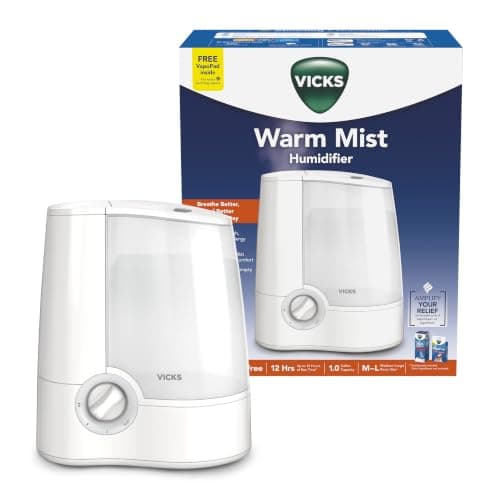 Vicks Warm Mist Humidifier, 1 Gallon Tank, Filter-Free The warm-mist alternative, and it solves two problems the ultrasonic units do not. Boiling the water before releasing it means no mineral dust on your furniture and no cool draught in an already cold bedroom - and for blocked sinuses a lot of people simply prefer warm mist. Vicks has sold this design for years and it is filter-free. Best for: Congestion, cold rooms, and no white mineral dust | Congestion, cold rooms, and no white mineral dust | $49.99 · View on Amazon Price as of October 18, 2026. #ad — we earn a commission. |
| 5 | 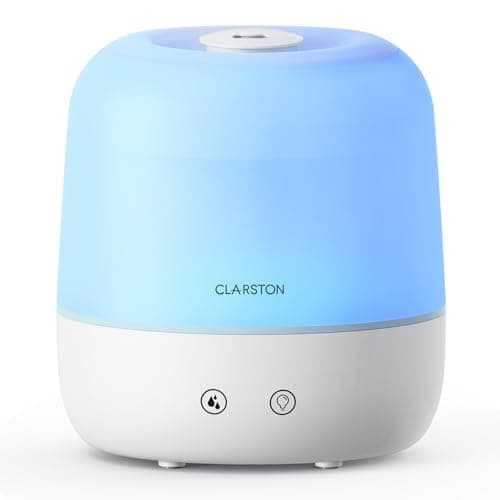 Clarston 2 L Cool Mist Humidifier, 24 dB, 25 Hour Runtime The budget pick that still publishes the right numbers. A stated 24 decibels is the quietest figure on this page, 25 hours covers the night, and it is top-fill and easy to clean - which is a better specification sheet than a lot of units at twice the price. Small tank, simple controls, no sensor. Best for: The cheapest one worth plugging in next to a bed | The cheapest one worth plugging in next to a bed | $24.99 · View on Amazon Price as of October 18, 2026. #ad — we earn a commission. |
Measure the room before you buy anything
A humidifier is the one bedroom purchase where you can check in advance whether you need it. Put a hygrometer — a few dollars — on the far side of the room from your bed and read it in the morning.
The target band is roughly 30 to 50 percent relative humidity, which is what the EPA recommends for indoor air. If you are at 20 percent on a winter morning, that is what the dry throat, the cough and the nosebleeds are about, and a humidifier fixes it directly. If you are already at 45, adding moisture does nothing useful and starts working against you: above about 50 percent, dust mites and mold both do better, which is the opposite of what anyone managing bedroom allergens wants.
The three specs that matter in a bedroom
- Noise, in stated decibels. This thing runs two feet from your head for eight hours. Mid-20s dB or lower is quiet enough to ignore; a listing that publishes no figure at all is telling you something. The same logic applies here as to anything else that hums in a bedroom.
- Runtime at the setting you will use. Published runtimes are measured at the lowest output. A 25-hour claim on a 2.5 litre tank can mean eight hours on medium. Work backwards from a full night.
- Whether you can clean it. The single most important spec, and the one no headline mentions. See below — this is what decides whether the humidifier is still in use in March.
Square-footage claims and mist-output figures are the specs listings lead with, and neither tells you much about a closed bedroom with the door shut. A humidistat is a genuinely useful fourth feature: it holds a target instead of running until the tank is dry, which is how people end up with condensation on the windows.
The cleaning problem is the whole product
A humidifier is a tank of standing water at room temperature with a device attached that turns it into an aerosol. If something is growing in the tank, the machine distributes it into the air you breathe all night — the EPA's guidance on home humidifiers is unusually direct about this.
The routine that keeps that from happening is simple and relentless: tip out whatever water is left in the morning instead of topping it up, wipe the tank dry, and once a week run white vinegar or the manufacturer's descaler through it to strip the mineral film that bacteria colonise. Everything about a unit's design either supports that routine or sabotages it. A wide top opening you can get a hand and a cloth into supports it. A narrow-necked tank with internal baffles does not, and that is the unit that ends up unused.
Hard water adds a second issue on ultrasonic units: the dissolved minerals leave the tank with the mist and settle as fine white dust on the nightstand, the floor and the bedding. Distilled water prevents it; so does a warm-mist unit, which boils the water and leaves the minerals behind.
How the five compare, from the listings
| Pick | Tank | Runtime | Noise | Type / control |
|---|---|---|---|---|
| Levoit | 2.5 L | 25 h | 25 dB | Cool mist, auto shut-off |
| DREO | 3 L | 30 h | 26 dB | Cool mist, humidity control |
| BREEZOME | 6 L | 60 h | 25 dB | Cool mist, humidistat |
| Vicks | 1 gal | Not stated | Not stated | Warm mist, filter free |
| Clarston | 2 L | 25 h | 24 dB | Cool mist, manual |
Four of the five publish a decibel figure and a runtime. The warm-mist pick publishes neither, and is on the list for what it does instead — no mineral dust, added warmth — rather than for its paperwork.
Where it sits in the room
Not on the nightstand pointing at your face, and not pushed against a wall or under a shelf. A humidifier needs a couple of feet of clearance so the mist disperses into the room air instead of settling on the nearest surface, and it should be off the floor if the floor is wood — mist that settles as water marks timber. Keep it away from electronics and away from the head of the bed; the point is to raise the humidity of the room, not to mist your pillow.
It also pairs badly with one thing worth mentioning: if your actual problem is night sweats rather than dry air, a humidifier makes it worse, and that has its own set of fixes.
About the prices on this page
We do not type prices into pages. Each button carries a figure read from the live listing by our own price check, stamped with the date it last ran. Humidifiers are discounted heavily and often, and the same seller lists several tank sizes behind near-identical titles — confirm the capacity of the model in your cart.
What we will not tell you
We have not run these five in a bedroom, we have no test lab, and we have not measured anybody's decibels or mist output. The ranking is built on what each listing publishes — tank volume, stated runtime, stated noise level, mist type, humidity control, fill design — and on the realities of the appliance: published runtimes are lowest-setting figures, ultrasonic units aerosolise minerals, warm mist units contain near-boiling water, and a tank you cannot reach into is a tank you will not clean. Our full method is here.
The picks, in full
1. Best for Most bedrooms - quiet, a full night, easy to clean
Levoit Top Fill Humidifier, 2.5 L Tank, 25 dB, 25 Hour Runtime
The default, and it wins on the boring specs. A stated 25 decibels is quiet enough to sleep beside, 25 hours per fill covers a night with room to spare, and the top-fill design means you refill it from a jug without carrying a full tank to the sink and back. Levoit also states auto shut-off, which is what stops it running dry.
Key specs
- 2.5 L tank (as listed)
- 25 dB (as listed)
- 25 hour runtime (as listed)
- Top fill, cool mist (as listed)
- Auto shut-off (as listed)
What's good
- Publishes both a decibel figure and a runtime, which is the pair of numbers a bedroom humidifier should be bought on and which most listings replace with mist-output claims
- Top-fill is the single biggest usability difference in this category: you pour water in from above instead of unseating the tank and inverting it over a sink
- Auto shut-off protects the unit and means you can run it without watching the level
What's not
- 2.5 litres is a modest tank; in a dry room on a high setting it will not reach the stated 25 hours, because that figure is the lowest setting
- An ultrasonic cool-mist unit using hard tap water throws fine white mineral dust onto nearby surfaces - distilled water prevents it, which is an ongoing cost
- Like every humidifier, it needs emptying and wiping every few days; nothing about the design removes that job
Skip this one if
Your bedroom is large and very dry. A 2.5 litre tank on a high setting is a refill every day, and the 6 litre pick below exists for that.
2. Best for Setting a target humidity and letting it hold it
DREO 3 L Humidifier, 30 Hour Runtime, 26 dB, Precise Humidity Control
The pick if you want the machine to manage the room rather than run flat out. DREO states precise humidity control, which means a built-in sensor and a target you set - so it cycles to hold roughly 40 to 50 percent instead of pumping mist until the tank is empty. That is the difference between humidifying a room and soaking it.
Key specs
- 3 L tank (as listed)
- 30 hour runtime (as listed)
- 26 dB (as listed)
- Precise humidity control (as listed)
- Night light, top fill (as listed)
What's good
- Humidity control with a sensor is the feature that prevents the real failure mode here - over-humidifying a closed bedroom and getting condensation on the windows
- 30 hours per fill is the longest runtime on this page outside the 6 litre unit, from a tank small enough to live on a nightstand
- Stated 26 dB and a night light, which together mean it can sit in the room you sleep in rather than the doorway
What's not
- Built-in humidity sensors on units at this price are approximate - treat the reading as a guide and keep a separate hygrometer if the number matters to you
- A night light is a liability in a bedroom; check it can be switched fully off rather than dimmed
- Same ultrasonic white-dust behaviour with hard water as every cool-mist unit here
Skip this one if
You want the simplest possible appliance. A sensor and a control panel are two more things that can go wrong on a device whose job is to evaporate water.
3. Best for Large or very dry bedrooms, and refilling twice a week
BREEZOME 6 L Humidifier, 60 Hour Runtime, 25 dB, Smart Humidistat
The one that stops the refilling becoming a chore. Six litres and a stated 60 hours means two or three nights per fill in normal use, with a humidistat to hold a target rather than running continuously - and 25 decibels at that tank size is genuinely quiet. The trade is footprint: this is a piece of furniture, not a nightstand object.
Key specs
- 6 L tank (as listed)
- 60 hour runtime (as listed)
- 25 dB (as listed)
- Smart humidistat control (as listed)
- Top fill, ultrasonic cool mist (as listed)
What's good
- Two to three nights per fill is the difference between a device you keep using and one that ends up in a cupboard - refill fatigue is why most humidifiers get abandoned
- A humidistat holding a target is the right way to run a humidifier in a closed room, and at 6 litres it would otherwise be easy to over-humidify
- Big tanks are usually loud; a stated 25 dB at this capacity is the notable spec here
What's not
- Large enough to be visible: this does not sit discreetly on a bedside table and it needs floor space away from furniture
- A bigger tank means more standing water between cleans, and standing water is where the real hygiene problem in humidifiers starts
- Six litres of water is heavy to carry even with top-fill; you will be filling it with a jug in stages
Skip this one if
Your bedroom is small or you have nowhere to put a floor unit. The 2.5 litre top-fill does the same job in a quarter of the space.
4. Best for Congestion, cold rooms, and no white mineral dust
Vicks Warm Mist Humidifier, 1 Gallon Tank, Filter-Free
The warm-mist alternative, and it solves two problems the ultrasonic units do not. Boiling the water before releasing it means no mineral dust on your furniture and no cool draught in an already cold bedroom - and for blocked sinuses a lot of people simply prefer warm mist. Vicks has sold this design for years and it is filter-free.
Price as of October 18, 2026. #ad — we earn a commission.
Key specs
- 1 gallon tank (as listed)
- Warm mist (as listed)
- Filter free (as listed)
- Auto shut-off (as listed)
- For medium to large rooms (as listed)
What's good
- Warm mist units boil the water, so the mineral content stays in the tank instead of being blown around the room as white dust
- No filter to buy, which removes the recurring cost and the forgotten-filter failure mode that ends a lot of evaporative humidifiers
- Warmth is a real comfort difference in a cold bedroom, where a cool-mist unit can feel like a draught
What's not
- It contains near-boiling water, which is a genuine burn risk - this is the wrong choice for a child's room or anywhere a pet can knock it over
- Heating water uses considerably more electricity than an ultrasonic unit does to move the same amount of moisture
- The listing states quiet operation but publishes no decibel figure, and warm mist units typically produce a low boiling and bubbling sound
Skip this one if
There are small children or pets in the room, or you want a decibel number before you buy. The cool-mist picks publish one and contain no hot water.
5. Best for The cheapest one worth plugging in next to a bed
Clarston 2 L Cool Mist Humidifier, 24 dB, 25 Hour Runtime
The budget pick that still publishes the right numbers. A stated 24 decibels is the quietest figure on this page, 25 hours covers the night, and it is top-fill and easy to clean - which is a better specification sheet than a lot of units at twice the price. Small tank, simple controls, no sensor.
Price as of October 18, 2026. #ad — we earn a commission.
Key specs
- 2 L tank (as listed)
- 24 dB quiet sleep (as listed)
- 25 hour runtime (as listed)
- Easy to top fill and clean (as listed)
- 360 degree nozzle, nightlight (as listed)
What's good
- The lowest stated decibel figure here, which on a bedroom appliance is the specification you live with every night
- Top-fill and listed as easy to clean, the two things that determine whether a cheap humidifier survives its first month
- Cheap enough that replacing it after a couple of years - which is realistic for any humidifier - costs very little
What's not
- A 2 litre tank is the smallest here, so in a dry room on anything but the lowest setting it is a daily refill
- No humidistat, so it runs until you turn it off - in a small closed bedroom that can push humidity higher than you want
- A newer seller with less trading history than Levoit or Vicks, on an appliance with a motor and a water tank
Skip this one if
You want the room held at a set humidity. Without a sensor you are managing the level yourself with a switch.
Common questions
What humidity should a bedroom be?
Between about 30 and 50 percent, and closer to 40 than 50 if you can manage it. The EPA recommends keeping indoor relative humidity in the 30 to 50 percent band, and the reason the top of that range matters as much as the bottom is that dust mites and mold both need humid air to thrive - above roughly 50 percent you are solving a dry-air problem by creating a damp-air one. The practical approach is a cheap hygrometer on the other side of the room from the humidifier, a target around 40 percent, and a unit with a humidistat if you do not want to manage it by hand. In winter, a cold bedroom with the window shut and the heating on is often well below 30 percent, which is what the dry throat and bloody nose are about.
Cool mist or warm mist for a bedroom?
Cool mist for most people, warm mist in a cold room or with a blocked nose - and the real difference is dust and safety, not comfort. An ultrasonic cool-mist unit vibrates water into a fine fog at room temperature: cheap to run, quiet, and if you use hard tap water it deposits the dissolved minerals around the room as fine white dust on your nightstand and bedding. A warm-mist unit boils the water first, which leaves the minerals in the tank, puts no dust in the air, and adds a little warmth - at the cost of using much more electricity and containing near-boiling water, which is why warm mist is the wrong choice for a child's room. If white dust is your problem, either switch to distilled water or switch to warm mist.
How often do you have to clean a humidifier?
Empty and dry it daily if you can, and descale it weekly - and this is the honest reason most humidifiers end up in a cupboard. A humidifier is a warm tank of standing water with a mist generator attached, which is an excellent environment for bacteria and mold, and a dirty humidifier aerosolises whatever is growing in it directly into the air you sleep in all night. The EPA's own guidance on home humidifiers is blunt about this. The routine: tip out any water left in the morning rather than topping it up, wipe the tank dry, and once a week run white vinegar or the manufacturer's descaler through it to remove the mineral film that bacteria colonise. Buy a unit with an opening wide enough to get your hand inside, because the one you cannot reach into is the one you will not clean.
What tank size do I need for a bedroom?
Enough to run the whole night on the setting you will actually use, which in practice means 2 to 3 litres minimum and more if your room is large or very dry. Be sceptical of runtime claims: a stated 25 or 30 hours is almost always measured on the lowest output setting, and on medium or high the same tank may empty in eight or ten hours. The sweet spot for most bedrooms is a 2.5 to 3 litre tank, which comfortably covers a night at low to medium output and fits on a surface. A 6 litre unit buys you two or three nights per fill, which matters more than you would think - refill fatigue is the main reason these devices get abandoned - but it needs floor space and it means more standing water between cleans.
How quiet does a bedroom humidifier need to be?
Look for a stated figure in the mid-20s of decibels or lower, and treat a listing with no decibel number as a warning. Twenty-five decibels is around the level of a quiet rural night or a whisper at a distance - audible if you listen for it, not enough to keep you awake. Ultrasonic cool-mist units are inherently quiet because the only moving parts are a small fan and a vibrating plate; evaporative units with a wick and a bigger fan are louder. Warm-mist units add a low bubbling as the water boils, which some people find soothing and others cannot sleep through. Four of the five picks above publish a decibel figure; the warm-mist pick does not, and that is noted in its entry.
Does a humidifier help you sleep?
It can, if dry air is what is waking you - and it does nothing if it is not. The genuine mechanisms are narrow and real: dry air dries out the mucous membranes in your nose and throat, which causes the dry cough, the sore throat and the blocked nose that interrupt sleep in winter, and it makes snoring worse by drying the airway. Adding moisture back to a 20-percent-humidity bedroom addresses all of that directly. What a humidifier is not is a general sleep aid - if your room is already at 40 percent, adding moisture does nothing for you and risks pushing you into the damp range where dust mites and mold do better. Measure before you buy.
Sources
Where the facts on this page come from. We cite other people's testing because we don't do our own — here's what that means.
Read next
- The Best White Noise MachinesSix white noise machines split by the only thing that matters - a mechanical fan versus a digital loop - across a bedside classic, a travel unit and budget all-rounders.
- The Best Blackout Curtains for SleepSix blackout curtains split by the one thing that matters - room-darkening versus a true liner-backed 100% blackout - across a value default, a shift-worker pick, a no-drill renter option and a budget pair.
- The Best Wake-Up LightsSix sunrise alarm clocks that wake you with a gradual dawn instead of a jolt - spanning a budget full-screen clock, a proven Philips, and a smart Hatch system.
- How to Stop Night Sweats (the Bedding-and-Temperature Side)The sleep-environment fixes for night sweats, from the sheets against your skin down to the mattress under you — breathable weaves, a bed that ventilates, a cooler pillow, a lighter comforter and a cooler room. Plus when soaked nights are a reason to see a doctor, not rearrange the bed.
- How to Get Rid of Dust Mites in Your BedYou cannot get rid of dust mites completely - but you can cut their numbers and allergen load. The habits that genuinely work, ranked, minus the hype.
- The Best Earplugs for SleepingSix earplugs judged for sleeping, where comfort against the pillow matters as much as the NRR on the box, from soft foam to moldable putty for side sleepers.
- The Best Cooling Sheets for Hot SleepersSix sheet sets that actually breathe, chosen on fiber and weave rather than marketing — plus who should skip each one.
- The Best Mattress EncasementsAn encasement is not a protector with a zipper - it is a sealed box around the whole mattress, and it is bought for containment rather than for spills. Five ranked on stated depth range, zipper design and what each one can honestly claim to stop.