The Best Cooling Bedding, Layer by Layer
Start with the California Design Den organic cotton percale sheets. Sheets are the layer touching you all night and the only one where a fabric change reliably works, so a hot sleeper who buys one thing should buy those. The budget pick is the Topcee cooling blanket at well under thirty dollars - the minimum viable cover for a July night. Everything else below is in the order we would spend the money.
We earn a commission if you buy through our links. It doesn't affect our picks — and we never take free products. How this site is funded.
Quick picks
| # | Product | Best for | Price |
|---|---|---|---|
| 1 | 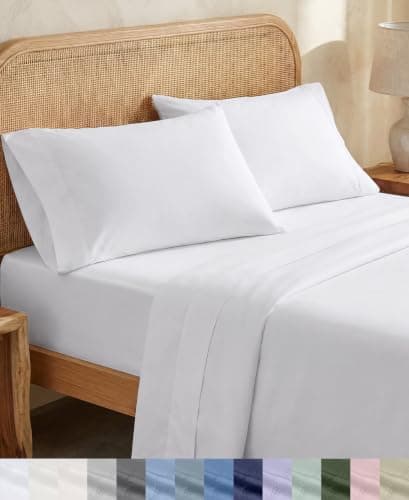 California Design Den Organic Cotton Percale Sheet Set The layer against your skin all night, and the only one where changing the fabric reliably changes the temperature. Percale-weave cotton is the answer, and this is the version we would buy without deliberating. Best for: Layer 1 - sheets, and the one thing to buy first | Layer 1 - sheets, and the one thing to buy first | $59.99 · View on Amazon Price as of November 17, 2026. #ad — we earn a commission. |
| 2 | 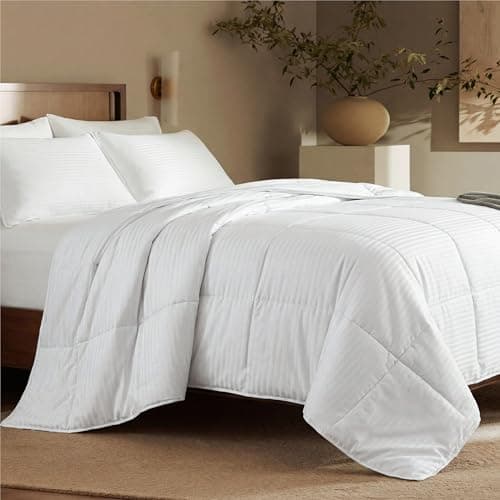 Bedsure Lightweight Quilted Cooling Duvet Insert The right answer to the comforter layer is less fill, not cooling fill. This is a genuinely lightweight summer insert with eight corner tabs, cheap enough that the honest limits of polyester are a fair trade. Best for: Layer 2 - the comforter, if you run a duvet cover | Layer 2 - the comforter, if you run a duvet cover | |
| 3 |  EGOHOME Cooling Gel Memory Foam Pillow Your head is the hottest contact point in the bed, and a reversible cooling cover is the honest version of a fix: a second cold surface to flip to, for not much money. Best for: Layer 3 - the pillow, where heat is most noticeable | Layer 3 - the pillow, where heat is most noticeable | $43.98 · View on Amazon Price as of November 17, 2026. #ad — we earn a commission. |
| 4 | 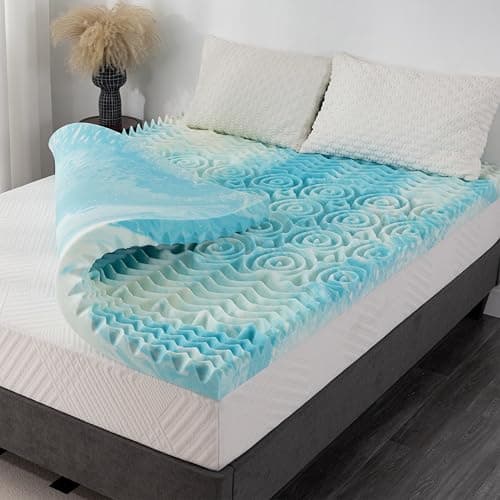 MLILY 3" Gel Memory Foam Egg Crate Topper, 5 Zones, Queen The most sensible version of a cooling topper: gel at the surface plus zoned, convoluted foam so you are not pressing into one dense slab. It is still foam, so temper the expectation. Best for: Layer 4 - only if the mattress itself is the problem | Layer 4 - only if the mattress itself is the problem | $63.19 · View on Amazon Price as of November 17, 2026. #ad — we earn a commission. |
| 5 |  PlushDeluxe Bamboo Waterproof Protector Most waterproof protectors quietly cancel everything else you bought, because a membrane that stops liquid also stops air. This is the coolest-feeling one we have found: a bamboo-viscose face over the membrane. Best for: Layer 5 - the protector that is not undoing the rest | Layer 5 - the protector that is not undoing the rest | $37.99 · View on Amazon Price as of November 17, 2026. #ad — we earn a commission. |
| 6 | 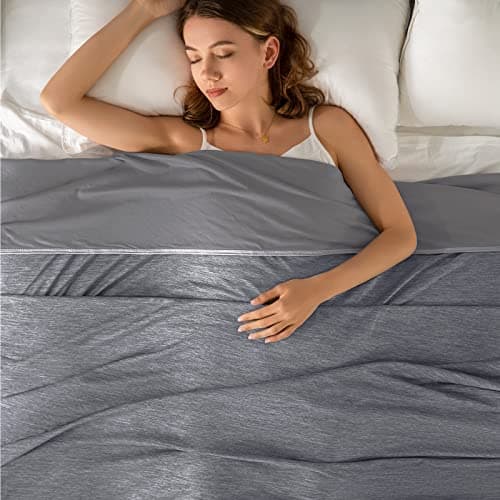 Topcee Cooling Blanket The cheapest thing on this page that solves a real problem: you cannot sleep without something over you, and in July everything else is too much. Thin, smooth, 90 by 90. Best for: Budget pick - the minimum viable cover for a hot night | Budget pick - the minimum viable cover for a hot night |
Buy the layers in this order
A hot bed is almost never one component. It is a stack, and the layers compound — which is why people buy a cooling sheet, feel no difference, and conclude the whole category is marketing. The fix is to spend in the order that removes the most heat per dollar:
- Sheets. Against your skin all night, cheapest to replace, and the one layer where a fabric change reliably changes the temperature. Start here even if you only buy one thing.
- The comforter — by weight, not by label. The reliable lever is less fill. A lightweight summer insert beats a heavier comforter with "cooling" in its title, every time.
- The pillow. Your head is the hottest contact point in the bed, and solid foam insulates it.
- The protector. Not an upgrade — a thing to get right, because a laminated waterproof pad quietly cancels the three layers above it.
- The mattress. Last, and a topper is usually the wrong answer (see below).
What actually cools, and what works for an hour
There are two completely different claims sold under the same word, and telling them apart is most of what you need to know:
- Airflow and absorbency — works all night. A percale weave leaves gaps for air. Cotton, linen and lyocell absorb moisture, so sweat leaves your skin and evaporates. Neither mechanism saturates, so neither stops working at 2am.
- Cool-to-the-touch — works for about an hour. Gel infusions, cooling covers and slick synthetic faces pull heat from your skin fast, and then they reach your body temperature and stop. That is physics, not a defect — and a flippable cooling pillow cover is a genuinely useful version of it, because you get a second cold surface.
This is why the top pick on this page is a plain cotton percale sheet rather than anything with a technology in its name. Our cooling sheets page ranks the whole field, including the lyocell and bamboo-viscose sets for people who want a slicker hand.
The stack, layer by layer
| Layer | Pick | Mechanism, as listed | Lasts the night? |
|---|---|---|---|
| 1. Sheets | CDD organic percale | Plain weave + cotton absorbency | Yes |
| 2. Comforter | Bedsure lightweight insert | Low fill weight | Yes |
| 3. Pillow | EGOHOME gel foam | Reversible cool-touch cover | No — flip it |
| 4. Topper | MLILY 5-zone egg crate | Gel + air channels through foam | Partly |
| 5. Protector | PlushDeluxe bamboo viscose | Viscose face over membrane | Yes (relative to a poly quilt) |
| Budget layer | Topcee cooling blanket | Thin synthetic, cool-touch face | No — but it is thin |
The topper is usually the wrong purchase
This is the one recommendation on the page we would argue you out of. A topper sits between you and the mattress, so a three-inch gel topper adds three inches of foam insulation on top of whatever heat the bed was already holding. Foam is an insulator; infusing gel into it does not change that direction, it just delays it by an hour.
Buy a topper to change firmness, or to get another year out of a sagging bed. If the problem is heat and the mattress is solid memory foam, the money does more in sheets and a lighter comforter — or eventually in a bed that is not solid foam. Our guide to cooling a memory foam mattress goes through the options in order of cost.
Bedding cannot beat the room
Sleep guidance generally puts the bedroom in the low-to-mid 60s Fahrenheit, because your core temperature has to fall slightly for sleep to begin. If your room sits at 75, nothing on this page will fix it — the fan, the window and the thermostat come first, and the temperature guide covers the cheap ways to get there. If you are waking up soaked rather than merely warm, that is a different problem and night sweats is the page for it.
What we will not tell you
We have no thermal camera and no test lab, so there are no degree readings on this page and no cooling scores. What we can do is read what each listing states, separate the mechanisms that run all night from the ones that run for an hour, and be honest that the best-value cooling purchase in this whole stack is a plain cotton percale sheet set. The method is on how we review, and the prices beside the buttons come from our own daily check with the date printed next to them.
The picks, in full
1. Best for Layer 1 - sheets, and the one thing to buy first
California Design Den Organic Cotton Percale Sheet Set
The layer against your skin all night, and the only one where changing the fabric reliably changes the temperature. Percale-weave cotton is the answer, and this is the version we would buy without deliberating.
Price as of November 17, 2026. #ad — we earn a commission.
Key specs
- 100% organic cotton (as listed)
- Percale weave
- Deep pockets (as listed)
- 4-piece queen set
What's good
- Percale is a plain one-over-one weave, which leaves microscopic gaps between the threads for air to move through - that is the entire mechanism behind a cool sheet, and it is structural rather than a finish that washes off
- Cotton absorbs moisture instead of repelling it, so sweat leaves your skin rather than pooling on the fabric surface - the difference between waking up cool and waking up damp
- Percale softens with washing rather than pilling, so the cooling does not degrade over the life of the set
What's not
- Percale feels crisp, not silky. If you want a slippery, cool-to-the-touch hand, you will not like this and washing will not change it
- It wrinkles, because that is what a plain weave in a natural fiber does
- "Organic" is a farming claim about the cotton, not a performance claim - it does not make this cooler
Skip this one if
You want the bed to feel slick and cold on contact rather than dry and airy. That is a lyocell or bamboo-viscose sheet - our cooling sheets page ranks those against this one.
2. Best for Layer 2 - the comforter, if you run a duvet cover
Bedsure Lightweight Quilted Cooling Duvet Insert
The right answer to the comforter layer is less fill, not cooling fill. This is a genuinely lightweight summer insert with eight corner tabs, cheap enough that the honest limits of polyester are a fair trade.
Key specs
- Down alternative fill (as listed)
- Quilted (as listed)
- Lightweight / summer comforter (as listed)
- 8 corner tabs (as listed)
- Machine washable (as listed)
- Queen, 88 x 88 in
What's good
- Eight corner tabs rather than four, which is what keeps an insert flat inside a cover instead of migrating into a lump by 3am - the most common complaint about cheap inserts
- Sold as a lightweight summer weight rather than an all-season compromise, and low fill weight is the only reliable way to make a comforter cooler
- Machine washable without ceremony, which matters most for the person who sweats into their bedding
What's not
- Down alternative is polyester: it does not absorb moisture, so it pushes sweat back at you, and the word cooling in the title is fighting the fill rather than helping it
- Polyester fiberfill clumps and flattens over repeated washes, so the washability that sells it is also what wears it out
- 88 x 88 inches is a snug queen with little overhang on a tall mattress
Skip this one if
You want the fill itself to breathe. Polyester will not - pair this with a breathable cotton or lyocell cover, or step up to a lyocell insert on our cooling comforters page.
3. Best for Layer 3 - the pillow, where heat is most noticeable
EGOHOME Cooling Gel Memory Foam Pillow
Your head is the hottest contact point in the bed, and a reversible cooling cover is the honest version of a fix: a second cold surface to flip to, for not much money.
Price as of November 17, 2026. #ad — we earn a commission.
Key specs
- Solid memory foam
- Cooling gel (as listed)
- Reversible cooling cover
What's good
- The reversible cover is the most useful cooling feature on any foam pillow, because it gives you a second cold face to turn to once the first has warmed through
- Cheap enough that a surface-level cooling claim is a fair trade rather than a disappointment
- Solid foam holds its height all night - it will not sag mid-night the way a fiber pillow does
What's not
- A cooling cover is a surface effect. It works until it reaches your body temperature, and after that it is simply a cover
- EGOHOME is an Amazon-native brand with little trading history to lean on
- Solid foam insulates, which is working against the cover it is wrapped in
Skip this one if
You lie still all night. The flip side is the whole value here - if you fall asleep and stay put, a shredded-fill pillow will serve you better.
4. Best for Layer 4 - only if the mattress itself is the problem
MLILY 3" Gel Memory Foam Egg Crate Topper, 5 Zones, Queen
The most sensible version of a cooling topper: gel at the surface plus zoned, convoluted foam so you are not pressing into one dense slab. It is still foam, so temper the expectation.
Price as of November 17, 2026. #ad — we earn a commission.
Key specs
- 3" gel memory foam, 60 x 80 in queen (as listed)
- 5 zones (as listed)
- Cooling gel infusion (as listed)
- Egg-crate convoluted surface (as listed)
- CertiPUR-US certified foam (as listed)
What's good
- The zoning is a real construction difference rather than a sticker - the foam is physically cut to different profiles, so you do not bottom out into one uniform heat-holding block
- The egg-crate profile leaves air channels through the foam instead of presenting a solid face, which is the only passive cooling a foam topper genuinely offers
- CertiPUR-US certification (as listed) is one of the few checkable facts on any foam listing, covering what the foam is made of and what it emits
What's not
- Gel infusion helps at the surface early and then saturates to your body temperature - after that it is three inches of insulating foam
- The zones are cut for an assumed body length, so a notably tall or short sleeper is not lying where they are
- No removable cover stated, so cleaning means spot-cleaning foam - put a washable protector over it
Skip this one if
Your bed already sleeps hot because it is solid foam. A topper adds insulation on top of that problem - change the sheets first, then look at the mattress.
5. Best for Layer 5 - the protector that is not undoing the rest
PlushDeluxe Bamboo Waterproof Protector
Most waterproof protectors quietly cancel everything else you bought, because a membrane that stops liquid also stops air. This is the coolest-feeling one we have found: a bamboo-viscose face over the membrane.
Price as of November 17, 2026. #ad — we earn a commission.
Key specs
- Bamboo viscose surface (as listed)
- Waterproof membrane backing
- Fitted, ultra soft (as listed)
- Machine washable
What's good
- A bamboo-viscose face feels cool and smooth and moves moisture better than a poly quilt, which attacks the exact reason hot sleepers abandon protectors
- A fitted style that stays quiet, so the cooler surface does not come with a crinkle penalty
- It keeps the protector in the bed. Going without one to stay cool costs you the mattress warranty the first time anything spills
What's not
- "Bamboo" is a raw material, not a fabric - what arrives is viscose, a regenerated fiber: smooth and cool, no more waterproof than the membrane behind it
- Viscose is weaker when wet and can pill at stress points sooner than cotton terry over years of hot washes
- Still a top-and-sides fitted pad, so it does nothing for bed bugs
Skip this one if
Durability beats surface temperature for you. Cotton terry outlasts viscose - our protectors page leads with one.
6. Best for Budget pick - the minimum viable cover for a hot night
Topcee Cooling Blanket
The cheapest thing on this page that solves a real problem: you cannot sleep without something over you, and in July everything else is too much. Thin, smooth, 90 by 90.
Key specs
- Cooling blanket (as listed)
- Queen, 90" x 90"
- Sold as a summer blanket (as listed)
What's good
- It is the minimum viable layer, and that is a genuine category - a lot of people need something covering them and nothing warm, which no comforter on this site does
- The smooth, dense face does feel cool when you first get in, because a flat fabric pulls heat off skin faster than a fuzzy one
- 90 by 90 gives real overhang on a queen, so it seals the sides instead of riding up and pumping warm air out
What's not
- The cool-to-touch feeling fades once the fabric reaches your body temperature. That is physics, not a defect
- A synthetic face is smooth rather than breathable - Sleep Foundation's cooling guidance puts natural fibers first for airflow
- Almost no warmth. In a cold room this is a sheet with extra steps
Skip this one if
What you actually have is a hot mattress or hot sheets. A blanket cannot fix heat arriving from below - change the sheets first.
The cheap stuff worth having
One cheap add-on that matters more on a cooling setup than anywhere else: a zippered pillow protector. The pillow is the hottest contact point in the bed, and it is the one you sweat into most.
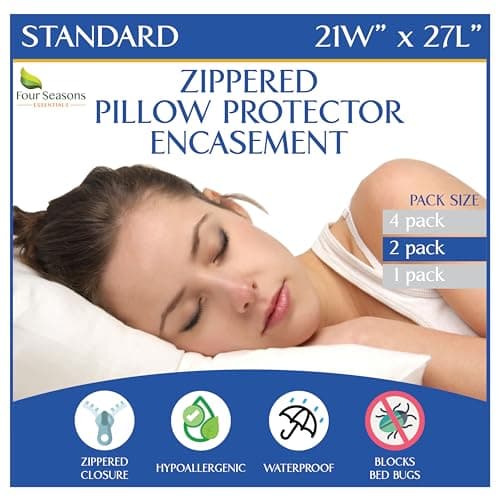
Four Seasons Essentials Zippered Pillow Protectors (Set of 2)
Zip one under each pillowcase and it catches the sweat and hair oil before any of it reaches the fill — so the weekly wash is a thin cover, not the whole pillow.
Skip it if You already wash your pillows on schedule and don't mind the job. A protector buys convenience and a longer-lived pillow, not a better night's sleep.
Common questions
What is the best cooling bedding material?
For moving heat and moisture, the natural and regenerated fibers win: cotton in a percale weave, linen, and lyocell or viscose made from bamboo or eucalyptus. All of them absorb moisture, which is the mechanism that actually cools you - sweat leaves your skin and evaporates instead of sitting against it. Polyester and microfiber do the opposite: they repel moisture, so it stays on you. That is why a "cooling" polyester sheet usually disappoints while a plain cotton percale does not. Weave matters as much as fiber: a percale cotton sheet sleeps noticeably cooler than a sateen cotton sheet made from the same thread.
Which layer should I change first if I sleep hot?
Sheets, every time. They are the only layer in continuous contact with your skin, they are the cheapest thing in the bed to replace, and a weave change from sateen to percale is a bigger temperature difference than most people expect. Second is the comforter - and the fix there is a lower fill weight, not a cooling label. Third is the pillow, because your head runs hot and a foam pillow insulates it. The mattress is last, both because it is the most expensive and because a topper on top of a hot mattress adds insulation rather than removing it.
Does cooling bedding actually work?
Partly, and the honest split is this: fabrics that move air and moisture work continuously, while anything described as cool-to-the-touch works for about the first hour. Percale cotton, linen and lyocell keep working all night because airflow and absorbency do not saturate. Gel infusions, cooling covers and phase-change finishes work until they reach your body temperature, which takes under an hour, and then they are ordinary materials. That does not make them useless - a reversible cooling pillow cover gives you a second cold surface to flip to - but it is a different claim, and it is worth knowing which one you are buying.
Is a cooling mattress topper worth it for a hot sleeper?
Usually it is the wrong purchase, and it is the one we would talk you out of. A topper sits between you and the mattress, so it adds three inches of foam insulation on top of whatever is already there - and foam is an insulator no matter what is infused into it. If your mattress sleeps hot because it is solid memory foam, a gel topper makes the problem slightly worse while feeling better for the first hour. Buy a topper to change firmness or to rescue a sagging bed. For heat, spend the same money on percale sheets and a lighter comforter and you will feel more difference.
What temperature should a bedroom be for sleep?
Most sleep guidance lands between roughly 60 and 68 degrees Fahrenheit, with the mid-60s as the usual recommendation, because your core temperature has to drop slightly for sleep to start and a warm room blocks that. This matters here because bedding cannot beat the room. If the bedroom sits at 75 degrees, no sheet, blanket or topper on this page will fix it - the useful order is room first, then bedding. Our guide to the best temperature for sleep covers the reasoning and the cheap ways to get there.
Can I mix a cooling sheet with a warm comforter?
You can, and it is a common mistake. The layers compound: a breathable percale sheet under a heavy all-season polyester comforter gives you a cool surface trapped under an insulating lid, and you will still wake up hot. If you are building a cool bed, keep the whole stack honest - breathable sheet, low fill weight over the top, and a protector with a breathable face rather than a laminated one. The one place mixing works is seasonally: the same percale sheets carry a light summer insert in July and a heavier one in January, which is the main argument for running a duvet cover at all.
Sources
Where the facts on this page come from. We cite other people's testing because we don't do our own — here's what that means.
Read next
- The Best Cooling Sheets for Hot SleepersSix sheet sets that actually breathe, chosen on fiber and weave rather than marketing — plus who should skip each one.
- The Best Cooling ComfortersSix comforters for hot sleepers and night sweats, sorted by how they actually keep you cool - cold-touch fabric at bedtime versus a light, breathable fill all night - with an honest note on who should skip each.
- The Best Cooling Mattress ToppersFive gel and ventilated mattress toppers that take the edge off a warm bed, chosen honestly - plus the crucial caveat that a topper is a surface tweak, not a cure, and when a cooling mattress or cooling sheets is the better buy.
- The Best Cooling PillowsSix cooling pillows that actually move air, an honest read on gel infusions, and a note on who each one is wrong for.
- The Best Temperature for Sleep (and How Your Bedding Gets You There)The bedroom temperature commonly recommended for sleep is around 65-68 F (about 18-20 C), because your body lowers its core temperature to fall and stay asleep and a warm room fights that. This guide covers why, plus the bedding levers that get you there — breathable sheets, a mattress that ventilates, a cooler pillow, seasonal comforter weight, and simple airflow.
- How to Stop Night Sweats (the Bedding-and-Temperature Side)The sleep-environment fixes for night sweats, from the sheets against your skin down to the mattress under you — breathable weaves, a bed that ventilates, a cooler pillow, a lighter comforter and a cooler room. Plus when soaked nights are a reason to see a doctor, not rearrange the bed.