The Best Duvet Inserts Under $100
Buy the APSMILE goose feather down baffle box. It is the cheapest insert we have found whose listing states baffle-box construction under an organic cotton shell, and those are the two specs that decide whether a duvet has cold spots and whether it keeps its loft. The budget pick is the Utopia Bedding box-stitched insert at around a third of the price - plain, polyester, and perfectly honest about it.
We earn a commission if you buy through our links. It doesn't affect our picks — and we never take free products. How this site is funded.
Quick picks
| # | Product | Best for | Price |
|---|---|---|---|
| 1 | 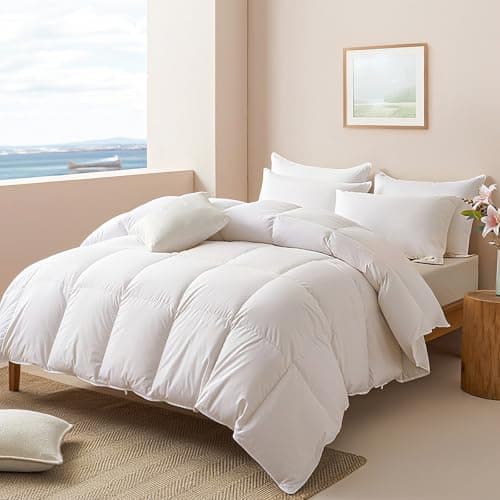 APSMILE Goose Feather Down Fibers Comforter, Baffle Box The cheapest insert we have found that states baffle-box construction AND an organic cotton shell. Baffle box is the single build detail that decides whether you get cold spots; the cotton shell is what lets the fill dry out overnight. Best for: Most people - the one build detail that matters, under $100 | Most people - the one build detail that matters, under $100 | $79.99 · View on Amazon Price as of November 17, 2026. #ad — we earn a commission. |
| 2 | 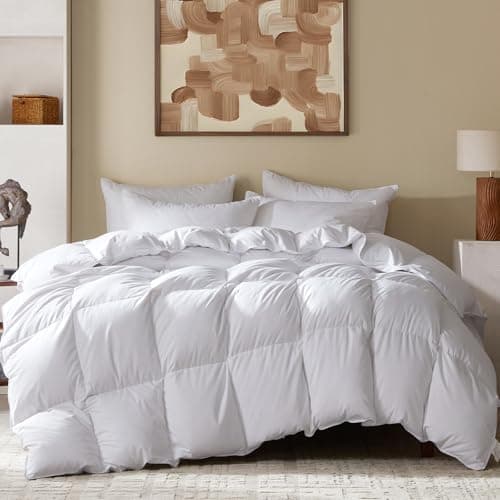 Three Geese Goose Feather Down Fiber Comforter The cheapest insert on this page that states baffle box rather than box stitch, and it comes with eight corner loops rather than four. If it is going inside a cover, this is the value buy. Best for: Baffle box plus eight loops, for less | Baffle box plus eight loops, for less | $72.99 · View on Amazon Price as of November 17, 2026. #ad — we earn a commission. |
| 3 | 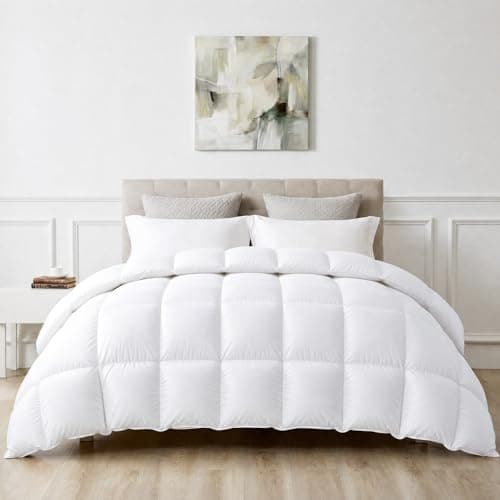 puredown Goose Feather Down Fiber Comforter, Oversized Queen The only insert here sold at 98 by 98 inches - eight inches more fabric per side than a standard queen. Buy it if your bed is tall and every comforter you own hangs short. Best for: A tall mattress that needs more drape | A tall mattress that needs more drape | |
| 4 | 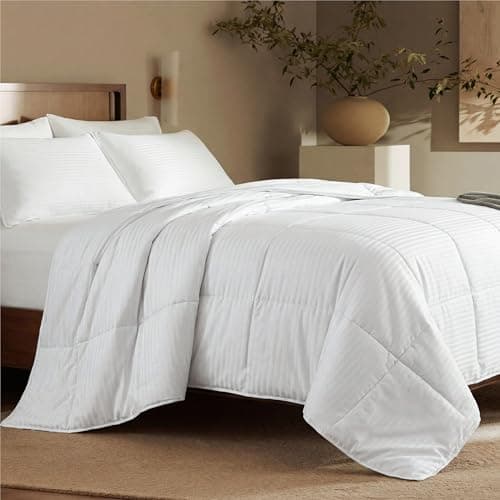 Bedsure Lightweight Quilted Cooling Duvet Insert The washable pick. A genuinely lightweight summer insert with eight corner tabs, cheap enough that the honest limits of polyester are a fair trade rather than a disappointment. Best for: Hot sleepers, and anyone who washes the duvet themselves | Hot sleepers, and anyone who washes the duvet themselves | |
| 5 | 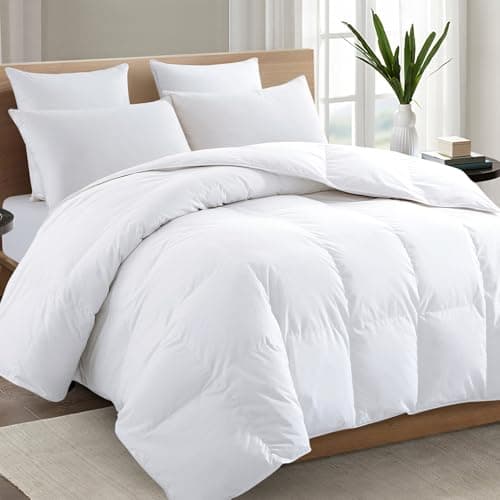 TEXARTIST All-Season Down Alternative Duvet Insert No feathers, no quills, no careful laundering. The cheapest honest way to get an all-season insert that survives the washing machine every month rather than once a year. Best for: A year-round insert you can wash at home | A year-round insert you can wash at home | |
| 6 | 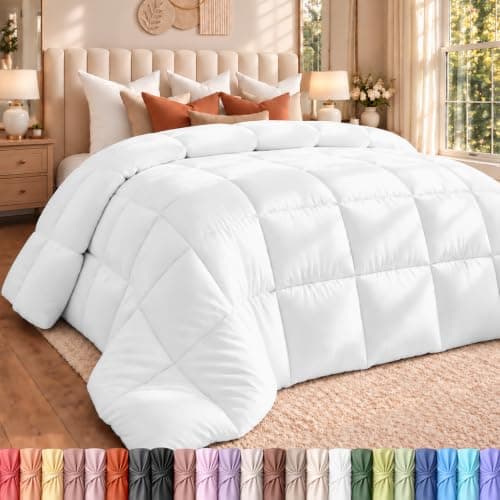 Utopia Bedding Quilted Box-Stitched Duvet Insert The cheapest honest insert on the page. Corner tabs, a machine-washable polyester fill and a plain utilitarian shell - buy it to be covered, not to be looked at. Best for: Budget pick - the cheapest insert that does the job | Budget pick - the cheapest insert that does the job | $33.48 · View on Amazon Price as of November 17, 2026. #ad — we earn a commission. |
$100 is where the construction changes
Price brackets in bedding are not arbitrary — each one has a spec that appears when you cross it, and $100 is where baffle-box construction and cotton shells start showing up. That is the whole reason this page exists separately from the sub-$50 page, where every fill is polyester and every seam is sewn straight through.
Two specs, and they are the only two that matter here:
- Baffle box vs box stitch. A baffle box has fabric walls standing between the top and bottom shell layers, so each chamber lofts to full thickness. Box stitching sews the two layers directly together, pinching the fill to zero along every seam — you can feel those cold lines with your hand in a cool room. The difference, in detail.
- Cotton shell vs polyester shell. You shed moisture all night. A cotton shell lets it out; a polyester shell holds it in the fill, where it flattens the loft and takes the warmth with it.
Three of the six picks state baffle box. Two state a cotton shell. One states both — and that is why it is the top pick, not because the brand is famous.
The fill word to read, and the one to ignore
Every feather insert on this page has the word down in its title and feather and down fiberin its fill bullet. The bullet is the accurate one. Down is the three-dimensional cluster from under a bird's outer plumage — the loftiest, lightest insulation available. Feather is the flat, quilled outer plumage: heavier, less lofty, far cheaper.
Nothing wrong with a feather-forward blend at this price — it drapes around you in a way polyester never manages, which is a real advantage. Just do not buy it believing it is a down duvet, and do not expect a fill power figure at this money: none of these publish one, which means you cannot compare their warmth numerically to anything.
How the six compare, from the listings
| Pick | Fill stated | Construction | Shell | Home washable? |
|---|---|---|---|---|
| APSMILE | Feather + down fibers | Baffle box | Organic cotton | No |
| Three Geese | Feather + down fiber | Baffle box, 8 loops | Not stated | No |
| puredown oversized | Feather + down fiber | Not stated | 100% cotton | No |
| Bedsure lightweight | Down alternative | Quilted, 8 tabs | Not stated | Yes |
| TEXARTIST | Down alternative | Not stated | Not stated | Yes |
| Utopia Bedding | Down alternative | Box stitch, tabs | Not stated | Yes |
The table splits almost perfectly in two, and the split is the decision: feather inserts are better built and cannot be washed at home; polyester inserts are washable and worse built. If there are kids or pets in the bed, take the washable one and do not feel bad about it.
Buy an insert, not a comforter
Five of these six are sold as inserts, and running one inside a duvet cover is simply the better way to own bedding. The cover takes the dirt and goes in the wash weekly; the insert is almost never washed, so it keeps its loft for years. Changing the season or the look of the bed means changing the cover, not the fill.
The one failure mode is migration. An insert with no loops inside a cover with no ties becomes a lump in one corner by 3am — four of the picks here state tabs or loops, and there is a retrofit if yours did not. The burrito method makes the weekly job tolerable.
About the prices on this page
Every pick here was under $100 when our price check last ran, and the date of that check is printed next to the buttons. We do not type prices into pages, because a typed price is wrong within a week and a wrong price is the fastest way to lose a reader's trust. If Amazon has moved one of these above the line since, the button will tell you before you click — and the ranking above is based on construction and shell material, which do not change with a coupon.
What we will not tell you
We have not slept under all six, we have no warmth lab, and we are not going to invent a tog rating or a loft score for a duvet in this price bracket. What we can do is read what each listing publishes, tell you which ones state a construction and which decline to name their own shell fabric, and point out that the cheapest pick here is the only one with no baffle walls and no stated weight. The method is on how we review.
The picks, in full
1. Best for Most people - the one build detail that matters, under $100
APSMILE Goose Feather Down Fibers Comforter, Baffle Box
The cheapest insert we have found that states baffle-box construction AND an organic cotton shell. Baffle box is the single build detail that decides whether you get cold spots; the cotton shell is what lets the fill dry out overnight.
Price as of November 17, 2026. #ad — we earn a commission.
Key specs
- Goose feather and down fibers (as listed)
- Baffle box construction (as listed)
- Organic cotton cover (as listed)
- "All season warmth" (as listed)
- "Quill-free" (as listed)
- Queen, 90 x 90 in
What's good
- Baffle box means fabric walls stand between the top and bottom shell layers, so every chamber lofts to full thickness - a sewn-through duvet pinches to zero at each seam, and those seams are exactly where your heat leaves
- A cotton shell breathes. Feather and down have to release the moisture you shed overnight, and a polyester shell traps it in the fill where it flattens the loft
- Feather-and-down fill drapes around you and follows your shape, which polyester fiberfill never manages - it tents
What's not
- "Goose feather down fibers" is a feather-forward blend, not a pure down duvet. Feather has quills and structure, so it is heavier and less lofty than down for the same warmth - which is why it is a fraction of the price
- No fill power and no fill weight published, so you cannot compare its warmth numerically to anything - you are buying the words "all season"
- Feather fill wants professional cleaning or a very large machine. This is not a weekly wash item
Skip this one if
You are allergic to feathers, or you want to wash the duvet yourself on a Sunday. Neither is solvable - take the Bedsure or the TEXARTIST, both built to be washed.
2. Best for Baffle box plus eight loops, for less
Three Geese Goose Feather Down Fiber Comforter
The cheapest insert on this page that states baffle box rather than box stitch, and it comes with eight corner loops rather than four. If it is going inside a cover, this is the value buy.
Price as of November 17, 2026. #ad — we earn a commission.
Key specs
- Goose feather and down fiber fill (as listed)
- Baffle box design (as listed)
- 8 corner loops (as listed)
- All-season duvet insert (as listed)
- Queen
What's good
- Baffle box at the cheap end of this page is an unusual combination - a fabric wall between the shell layers lets every chamber keep its loft right to the edge instead of being pinched flat along each seam
- Eight corner loops is double what most inserts give you, and loops are the only thing that stops an insert sliding to the foot of a cover by morning
- It is one of the cheapest picks here while being among the best constructed, which almost never happens in bedding
What's not
- The listing says "All-Season Down Duvet Insert" in one breath and "Goose Feather Down Fiber" in another; the fill statement is the accurate one and the word down in the title is doing marketing work
- No shell material is stated anywhere, which on a feather fill is a real gap - the shell is what keeps quills in and decides whether it breathes
- No fill weight, no fill power and no size in inches, so the only verifiable specs are the construction and the loop count
Skip this one if
You want to use the comforter bare on the bed. This is sold as an insert and built to live inside a cover - the puredown looks more finished on its own.
3. Best for A tall mattress that needs more drape
puredown Goose Feather Down Fiber Comforter, Oversized Queen
The only insert here sold at 98 by 98 inches - eight inches more fabric per side than a standard queen. Buy it if your bed is tall and every comforter you own hangs short.
Key specs
- Goose feather and down fiber fill (as listed)
- 100% cotton duvet insert shell (as listed)
- Medium warmth, all-season (as listed)
- Oversized Queen, 98 x 98 in (as listed)
What's good
- 98 x 98 inches is the whole reason to buy it: a standard queen comforter is 88 to 90 inches, and on a 14-inch mattress with a topper that disappears under the mattress edge instead of draping
- A 100% cotton shell, so the layer against you breathes rather than trapping moisture in the fill
- It states both a warmth level and the exact dimensions, which makes it one of only two picks here you can size-check before buying
What's not
- Oversized is wrong for a standard-height bed - too much fabric puddles on the floor, drags when you move, and makes the bed look sloppy rather than generous
- Same fill-labelling issue as the other feather picks: down fiber is not down cluster, and the word down in the title is not the fill statement
- An oversized insert needs an oversized duvet cover, and those are much harder to find - check cover sizing before you commit
Skip this one if
Your mattress is a standard height with no topper. You will be paying for fabric that ends up on the floor.
4. Best for Hot sleepers, and anyone who washes the duvet themselves
Bedsure Lightweight Quilted Cooling Duvet Insert
The washable pick. A genuinely lightweight summer insert with eight corner tabs, cheap enough that the honest limits of polyester are a fair trade rather than a disappointment.
Key specs
- Down alternative fill (as listed)
- Quilted (as listed)
- Lightweight / summer comforter (as listed)
- 8 corner tabs (as listed)
- Machine washable (as listed)
- Queen, 88 x 88 in
What's good
- Machine washable without ceremony, which is polyester's one real advantage over every feather pick above - and the deciding factor if there are kids or pets in the bed
- Eight corner tabs rather than four, so it stays flat inside a cover instead of migrating into a lump
- Sold as a lightweight summer weight rather than an all-season compromise, and lower fill weight is the only reliable way to make a duvet cooler
What's not
- Down alternative is polyester: it does not absorb moisture, so it pushes sweat back at you, and "cooling" in the title is fighting the fill rather than helping it
- Polyester fiberfill clumps and flattens over repeated washes, so the washability that sells it is also what wears it out
- 88 x 88 inches is a snug queen with little overhang on a tall mattress
Skip this one if
You want the fill itself to breathe. Polyester will not - the APSMILE or the puredown cotton-shelled feather picks are the honest answer.
5. Best for A year-round insert you can wash at home
TEXARTIST All-Season Down Alternative Duvet Insert
No feathers, no quills, no careful laundering. The cheapest honest way to get an all-season insert that survives the washing machine every month rather than once a year.
Key specs
- Down alternative fill (as listed)
- All-season (as listed)
- Duvet insert (as listed)
- Queen, white (as listed)
What's good
- Polyester fill takes a home wash in a way feather and down fills do not, and for something slept under every night that is the most practical feature at this price
- No feathers means no quills working through a thin shell and nothing to trigger a feather allergy
- A white insert disappears under any cover, so the colorway question never arises
What's not
- Down alternative holds less heat per ounce than down, so an all-season polyester insert is heavier and bulkier than an all-season down one at the same warmth
- Polyester does not breathe; fill and shell together trap moisture against you
- Polyester fiber compresses permanently as it is washed - a several-year insert, not a decade-long one
Skip this one if
You sleep hot. The cheapest all-season synthetic is the least breathable thing on this page - take the Bedsure summer weight instead.
6. Best for Budget pick - the cheapest insert that does the job
Utopia Bedding Quilted Box-Stitched Duvet Insert
The cheapest honest insert on the page. Corner tabs, a machine-washable polyester fill and a plain utilitarian shell - buy it to be covered, not to be looked at.
Price as of November 17, 2026. #ad — we earn a commission.
Key specs
- Down alternative fill (as listed)
- Box stitched (as listed)
- Corner tabs (as listed)
- Machine washable (as listed)
- Queen, 88 x 88 in
What's good
- The lowest price here for a true insert, which is the sensible choice when a duvet cover is doing all the decorative work anyway
- Corner tabs tie it into a cover so insert and cover move as one piece instead of separating in the night
- No down inside means a normal home wash cycle rather than a commercial launderer
What's not
- Box stitching sews straight through the duvet, leaving a grid of thin, fill-free lines you can feel with your hand in a cool room - this is exactly what the baffle-box picks above fix
- 88 x 88 inches is a true queen footprint with no extra drape, so on a tall mattress it will look short at the sides
- No stated warmth weight, so you are buying an unspecified middling loft
Skip this one if
You feel the cold. Box stitching means cold lines at every seam, and this is the only pick here with no baffle walls and no stated weight.
The cheap stuff worth having
Two cheap add-ons that make an insert behave like a better one: clips to stop it migrating inside a cover if yours came without loops, and dryer balls to break up the clumps a polyester fill develops in the wash.
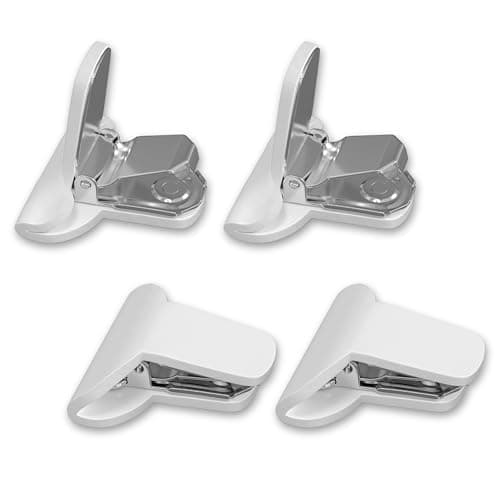
Fresh Ideas Comforter Clips for Duvet Covers (4-Pack)
Clips that grip the insert through the cover, so the duvet stops migrating into one corner overnight. The retrofit for an insert that came without corner loops.
Skip it if Your insert has loops and your cover has ties. Use those — a sewn-in tie holds better than anything clipped on from outside.
$9.14 · View on AmazonPrice as of November 17, 2026. #ad — we earn a commission.
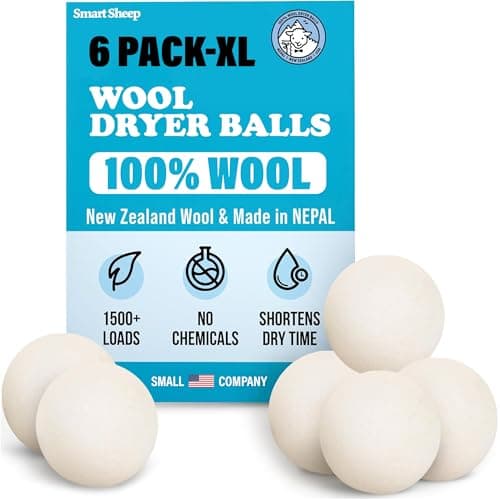
Smart Sheep Wool Dryer Balls (XL, 6-Pack)
Thrown in on low heat with a pillow or comforter, they knock the clumps of damp fill apart as it tumbles — which is the whole difference between dried and lumpy.
Skip it if What you're drying is memory foam or latex. Neither belongs in a dryer at all, and no amount of tumbling changes that.
$19.95 · View on AmazonPrice as of November 17, 2026. #ad — we earn a commission.
Common questions
What does the extra $50 over a sub-$50 insert actually buy?
Two specific things, and they are the two that matter. First, baffle-box construction: fabric walls sewn between the top and bottom shell layers so each chamber lofts to full thickness. Under $50 you get box stitching instead, which sews straight through the duvet and leaves a grid of thin, fill-free lines you can feel with your hand - and those lines are where your heat escapes. Second, a cotton shell, which lets the fill release the moisture you shed overnight instead of trapping it. Three of the six picks on this page state baffle box and two state cotton shells. None of the sub-$50 inserts on our cheaper page state either.
Is 'goose feather down fiber' the same as down?
No, and the distinction is worth knowing because it is the main reason these inserts cost under $100 rather than over $300. Down is the fine, three-dimensional cluster from under a bird's outer feathers; it traps air and is the loftiest, lightest insulation available. Feather is the flat, quilled outer plumage - heavier, less lofty, and much cheaper. A fill described as 'goose feather and down fiber' is feather-forward with some down content, and the word 'down' in a product title is not the fill statement. Read the bullet that names the fill, not the title. Our down vs down alternative guide covers the broader comparison.
Can you wash a duvet insert under $100?
It depends entirely on the fill, and this is the single biggest practical difference between the picks on this page. Polyester down-alternative inserts take a normal home wash - gentle cycle, big enough machine that the duvet can tumble, low heat for far longer than you expect, with dryer balls to break up the clumps. Feather and down fills are a different matter: they need a very large machine or a commercial launderer, and washing one in a domestic machine is how people end up with a lumpy, permanently flattened duvet. If you expect to wash the duvet yourself more than once a year, buy polyester and accept the trade.
Do I need a duvet cover with these?
With five of the six, yes - and it is the better way to run a bed anyway. An insert is designed to live inside a cover: the cover takes the dirt and goes in the wash weekly, so the insert is rarely washed and keeps its loft for years rather than seasons. It also lets you change how the bed looks, and how warm it is, without replacing the fill layer. The one thing to check is anchoring: the insert needs corner loops or tabs and the cover needs ties, or the insert ends up in one corner by about 3am. Four of these six state tabs or loops, two of them eight of them.
What size duvet insert should I buy for a queen bed?
Bigger than the mattress, and more than you think. A standard queen insert is 88 to 90 inches wide, which fits a 60-inch mattress with roughly 14 inches of drape per side - and that drape vanishes fast on a tall mattress with a topper and a thick protector under the sheet. If your bed is deep, buy at the top of the size range or go oversized, which is what the 98 by 98 pick here is for. The catch with oversized is that it needs an oversized cover, and those are a much smaller market. Our comforter sizes guide has the standard dimensions to measure against.
Do these prices stay under $100?
We cannot promise that and we will not pretend to. Every pick on this page was priced under $100 by our live price check on the date stamped beside the buttons, and the price you see on the button is the one we read most recently rather than a number typed into the page. Amazon bedding prices move with coupons and seasonal promotions, so if one has drifted above the line the button will say so before you click it. The ranking above is based on construction and shell material, neither of which changes with a coupon.
Sources
Where the facts on this page come from. We cite other people's testing because we don't do our own — here's what that means.
Read next
- The Best Duvet InsertsSix duvet inserts worth buying, plus the two numbers sellers conflate, why baffle-box construction beats box stitching, and how to pick warmth for your room.
- The Best Comforters Under $50Under $50 the fill is polyester and the shell is thin - the decision is construction, not luxury. Five cheap comforters ranked on stitching, loops, stated size and whether you can wash them at home.
- The Best All-Season ComfortersFive all-season comforters ranked on the three things a listing can actually prove - what the fill really is, how the shell and stitching are built, and whether the stated size fits your bed. Plus why "down" on a cheap all-season comforter usually is not down.
- The Best Duvet CoversSix duvet covers worth buying, plus the one word on the label that separates cotton from polyester, why corner ties matter more than thread count, and how to size a cover to your insert.
- Baffle Box vs Sewn ThroughThe two ways a comforter is stitched, what each does to warmth and lifespan, and why a cheap baffle-box comforter can be a worse buy than an honest sewn-through one.
- What Is Fill Power?Fill power measures the loft and quality of down — how many cubic inches one ounce fluffs up to fill — so higher fill power means fluffier, warmer-for-its-weight down. It is not the same as warmth: that depends on fill power and fill weight together. Here's how to read the number and the typical quality bands.