How to Set Up a Bed in a Box
A boxed mattress arrives as a heavy, harmless-looking parcel and turns into a full-size bed on your bedroom floor. Here's how to unbox one without nicking the foam, jamming a doorway, or rushing the part that only time can do.
We earn a commission if you buy through our links. It doesn't affect our picks — and we never take free products. How this site is funded.
A bed-in-a-box turns up looking like nothing much: a tall cardboard parcel, heavier than you expect, sitting by your front door. Inside it is a full-size mattress that has been compressed, rolled, and vacuum-sealed down to a fraction of its real volume — and setting it up is the short, slightly dramatic process of letting it become a bed again. Done in the right order it takes minutes of actual work and a few hours of patience. Done in the wrong order it means wrestling a half-expanded mattress up a staircase, or nicking the foam with a box cutter on the very first cut. This guide is about doing it in the right order. It's the setup — the unboxing itself. What happens over the following weeks, as the mattress softens and your body adjusts, is a separate story covered in our guide to breaking in a new mattress.
Before you open anything: move the box first
This is the single most important rule of setting up a boxed mattress, and it's the one people most often get wrong: get the box into the room it will live in beforeyou cut it open. A compressed mattress is dense and awkward but genuinely portable — that's the entire point of the format. The instant you release the vacuum seal, it starts expanding into a large, floppy, increasingly heavy object that is much harder to carry, and an expanded mattress may not fit back through a narrow doorway, around a tight landing, or up a spiral staircase that the box slid up easily.
So treat the box as the thing you move, not the mattress. Carry or slide it — ideally with a second person, because these parcels are heavier than they look — all the way to the bedroom. Set it down near the bed frame, roughly where the mattress will end up. Only when the box is in its final room do you reach for a blade. Bed-in-a-box mattresses are convenient precisely because a compressed bed ships as a normal parcel; that convenience only pays off if you take advantage of it before you break the seal.
What you'll need
Setup needs almost nothing, but a couple of things make it safer and cleaner:
- A box cutter or sharp scissors. A retractable utility knife is ideal because you can set a shallow blade depth, which matters more than it sounds when you reach the final layer of plastic.
- A second person, if you can.Not for the cutting, but for carrying the box in and for shifting the mattress into position as it starts to open up. It's a two-person object the moment the air goes back in.
- Your bed frame or foundation, already assembled. Have the base ready and in place before you start. You want to lay the rolled mattress straight onto its final surface, not expand it on the floor and heave it up later.
- A clear floor and an open window. Give yourself room to work around all four sides, and open a window before you cut so the room is already ventilating when the foam starts to breathe.
The steps
Here is the whole process, in order. None of it is difficult; the value is entirely in the sequence.
- Carry the sealed box to the bedroom.Get it into its final room while it's still a compact parcel, and position it near the assembled frame. This is the step you cannot easily undo, so do it first.
- Make sure the base is ready. The frame, slats, or foundation should be assembled and in place, with any old mattress already removed. Check that your base meets whatever the maker specifies — slat spacing, a solid platform, or a compatible foundation — because the wrong base can undermine an otherwise good bed.
- Get the rolled mattress out of the box and onto the base. Open the outer cardboard, slide the still-wrapped roll out, and lift it onto the frame while it's compact and easy to handle. Lay it down in the correct orientation — the way you want the head and foot to sit — so you're not spinning a full-size bed around later.
- Cut the outer plastic layer.There are usually two layers of plastic: a loose outer wrap and a tight inner vacuum bag. Score and remove the outer wrap first with a normal cut. This layer isn't under pressure, so it's the easy one.
- Cut the inner vacuum bag carefully — a slit, not a stab. The mattress is pressed hard against this final layer, so keep the blade shallow and make a small, controlled slit rather than plunging the knife in. A deep stab can slice the foam or the cover underneath. As soon as air reaches the foam it will begin to expand fast, and that escaping air helps open the seam for you — let it. Peel the bag away as the mattress swells.
- Remove every scrap of packaging. Pull out all the plastic, any foam corner protectors, straps, and inserts. Nothing should be left underneath or wrapped around the mattress, since leftover plastic traps the smell and can stop an area from expanding evenly.
- Let it expand — and leave it alone.Step back and give it room. Most of the dramatic unfurling happens within the first hour or two, and the mattress commonly reaches a normal, sleepable shape the same day. Don't press, fold, or sit on it to "help" — it expands on its own.
- Ventilate the room. Keep the window open and the air moving while it expands, to carry off the temporary smell described below.
Letting it expand: patience is the last step
Expansion is the part you can't rush, and the part people worry about most. The visible drama — the roll flattening out and filling the frame — is nearly all over within an hour or two. Full firmness and true final height take longer. Many makers quote a window somewhere in the range of 24 to 72 hours for a mattress to reach its final feel, but the exact figure varies by bed and by thickness, so treat your own listing or setup card as the authority rather than any general number. If the maker states a time, that's the one to trust.
A few honest notes on what "expanding" actually looks like. It's normal for corners and edges to lag behind the middle at first, and for the surface to look faintly uneven for a while — that usually evens out on its own as the foam finishes drawing air back into its cells. Cold slows everything down noticeably, so a mattress delivered off a winter van may need longer and a warmer room to open up fully. And a bed that looks fully expanded within an hour may still be firming up internally for a day or more, which is exactly why the mattress you judge on night one isn't quite the mattress you bought.
The smell, and why ventilation is part of setup
Open the vacuum bag and there's often a distinct chemical smell. It can be strong, and it's the most-complained-about part of the first day — but it's a normal consequence of the format, not a sign that anything is wrong. It's off-gassing: volatile compounds that have been sealed inside the plastic with the compressed foam since the factory, released all at once when you finally let the mattress breathe. That's why day one is the worst of it and why it fades from there.
The fix is simply air. Unbox in the morning rather than at bedtime if you can, keep a window open, and let the room ventilate while the mattress expands. The smell typically clears within hours to a few days. Our full guide to mattress off-gassing covers what the smell is, how long it really lasts, and when a lingering odor is worth flagging to the seller — worth a read if you're sensitive to it or setting up in a room that's hard to air out.
When it's okay to sleep on it
For most boxed mattresses, you can sleep on it the first night once it's taken a normal shape — often the same evening you unbox it. Always check the maker's instructions, though, because a few ask you to wait a set number of hours before first use, and that guidance takes priority over any rule of thumb.
Two caveats keep expectations honest. First, "safe to sleep on" and "fully expanded" aren't the same thing — the bed may still be reaching its final height and firmness for a day or more, so the first night's feel isn't the finished product. Second, if the off-gassing smell is still strong at bedtime, give it more air first; a well-ventilated first night is more pleasant than a sealed one. Beyond that initial night, the way a new mattress feels stiff or unfamiliar for a while is a genuine adjustment period, not a setup problem, and it's the subject of the break-in guide linked at the top of this page.
Two things to handle around setup: the old bed and the trial clock
Setting up the new mattress usually means dealing with the old one at the same time, and it's easier to plan that before you're standing over two mattresses in one room. If you've stripped the old bed off the frame to make way for this one, decide where it's going — donation, recycling, or a municipal bulky-waste pickup are all better than a landfill run, and some are free. Our guide to getting rid of an old mattress walks through the options so the old bed doesn't end up leaning in a hallway for a month.
The other thing to note on setup day is the trial clock. Most boxed mattresses come with a sleep trial, and the terms matter: some brands start the countdown on the delivery date, others when you register the bed, and many require you to keep it a minimum number of nights before a return is even allowed. Read your specific terms while the box is still fresh in your mind, and put a reminder somewhere before the halfway mark so a long trial doesn't quietly lapse. It's the one piece of paperwork worth handling on the same day you handle the mattress.
The honest summary
Setting up a bed-in-a-box is genuinely easy, and almost all of the ways it goes wrong come from rushing or from cutting too deep. Move the box before you open it, have the base ready, cut the vacuum bag with a shallow slit instead of a stab, strip off every bit of packaging, and then do the hardest part — nothing — while it expands and airs out. Let the maker's stated expansion window, not your impatience, tell you when it's finished. Once it's open and breathing on its frame, the setup is done; everything after that is the mattress settling in and you settling onto it. If you're still choosing which boxed bed to buy, our roundup of the best mattresses on Amazon is a sensible place to start before any of this applies.
The cheap stuff worth having
Three things worth having in the room before you cut the wrap open. A new mattress is at its most exposed on day one — unprotected, sitting on a platform it has nothing to grip, under a fitted sheet that has never been stretched over anything this thick.
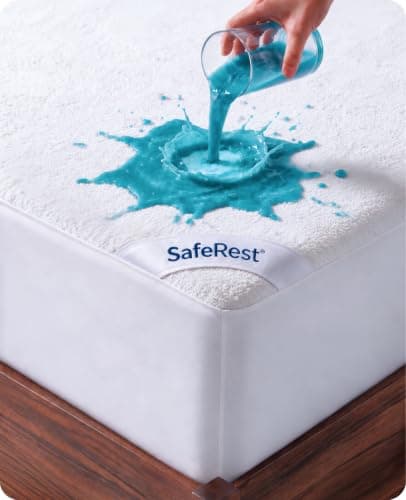
SafeRest Waterproof Mattress Protector
The cheapest insurance a bed can carry: it keeps sweat and spills out of foam you can never wash, and keeps off the single stain that voids a lot of mattress warranties.
Skip it if You already sleep on a protector you get on with. This is the top pick from our protector roundup, not a second layer to stack on the first.
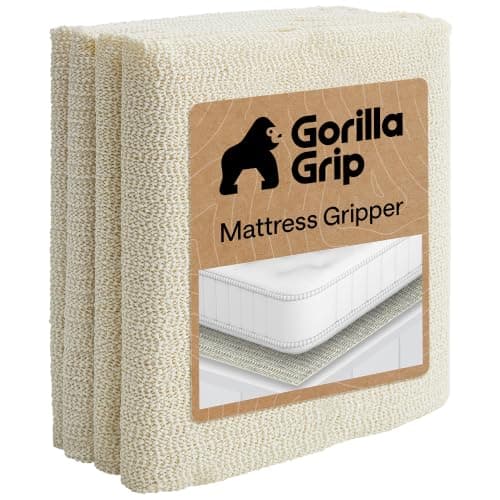
Gorilla Grip Non-Slip Mattress Gripper (54 x 72, Queen)
A rubberized pad laid between the mattress and a slick platform supplies the friction the two surfaces don't have on their own. The cheap fix for a bed that walks.
Skip it if Your mattress moves because the base is broken, or smaller than the bed sitting on it. Grip can't fix geometry — that's a frame problem.

Gorilla Grip Fitted Sheet Holders (4-Pack)
Corner clips that pull the fitted sheet taut from underneath. This is the mechanical fix for a sheet that fits and still snaps off a corner at 3 a.m.
Skip it if The pocket is simply too shallow for your mattress. Straps are fighting a fit problem they can't win — buy the right pocket depth instead.
Common questions
Should I open the box before or after I move it into the bedroom?
Before you open it, always. A compressed mattress is a dense, manageable parcel, but the moment you cut the vacuum seal it begins expanding into a full-size bed that can be too large and too floppy to carry up a staircase or through a narrow doorway. Get the still-boxed mattress into the room it will live in, position it near the bed frame, and only then cut it open. It is far easier to move a box than a half-expanded mattress.
How do I cut open a bed-in-a-box without damaging the mattress?
Use a box cutter to score the outer cardboard and plastic, then switch to the lightest possible touch for the inner vacuum bag. The mattress is pressed hard against that final layer of plastic, so a deep stab can slice into the foam or cover underneath it. Make a small, shallow slit rather than a plunging cut, and let the escaping air open the seam for you — the mattress will start to expand the instant air reaches it, which does most of the work of splitting the bag.
How long does a bed-in-a-box take to expand?
Most of the visible expansion happens within the first hour or two, and a boxed mattress commonly reaches a sleepable shape the same day. Full firmness and true final height can take longer — many makers quote a window in the range of 24 to 72 hours, so check your specific listing rather than assuming. Cold rooms slow the process down. Don't panic if a corner or edge lags behind at first; give it the time the maker states before judging the shape.
Can I sleep on a new bed-in-a-box the first night?
Usually, yes. Most boxed mattresses are safe to sleep on once they've expanded to a normal shape, which is often the same evening you unbox them, but always follow the maker's instructions on the listing since a few ask you to wait a set number of hours. Two things to keep in mind: the bed may still be firming up for a day or more, so it won't feel like its final self yet, and there may be a temporary chemical smell to ventilate first.
Why does my new mattress smell, and is it safe?
That chemical smell is off-gassing — volatile compounds released from the foam once it's freed from the vacuum-sealed plastic and allowed to breathe. It's strongest on the first day because that's when the mattress has been sealed longest, and it typically fades within hours to a few days with the windows open and the room ventilated. It's a normal part of setup rather than a defect, though a strong smell that lingers well past a week is worth raising with the seller.
Sources
Where the facts on this page come from. We cite other people's testing because we don't do our own — here's what that means.
Read next
- The Best Mattresses in a BoxHow the boxed-mattress format really works — compression, off-gassing, expansion — plus six picks and who each one is wrong for.
- How to Break In a New MattressWhy a new mattress feels too firm at first, how to actually break one in, and how to tell a normal adjustment period from a genuinely wrong mattress.
- Mattress Off-GassingWhat that new-mattress smell actually is, whether it's something to worry about, and the honest way to clear it out faster.
- The Best Mattresses on AmazonSix Amazon mattresses worth your money, with live prices and an honest note on who each one is wrong for.
- How to Get Rid of an Old MattressSix real ways to dispose of an old mattress — retailer haul-away, municipal bulky pickup, mattress recycling, donation, junk removal, and resale — with the honest catch on each.