The Best Hypoallergenic Bedding
Buy the SureGuard six-sided encasement first: of everything on this page, a zipped impermeable barrier around the whole mattress is the only intervention with controlled research behind it, and the research is about pore size rather than fiber. The budget pick is the Niagara four-pack of pillow protectors, which covers two beds for the price of one novelty pillow. The thing to understand before you spend anything: hypoallergenic is an unregulated word, and the fiber a sheet is spun from is close to irrelevant - what matters is what you seal, and how hot you wash.
We earn a commission if you buy through our links. It doesn't affect our picks — and we never take free products. How this site is funded.
Quick picks
| # | Product | Best for | Price |
|---|---|---|---|
| 1 | 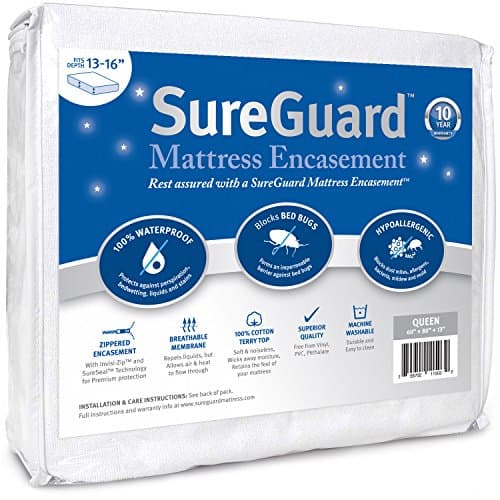 SureGuard Mattress Encasement, Queen 13-16 in Deep, Six-Sided A zipped, six-sided, impermeable barrier around the entire mattress - the specific intervention the allergy literature is actually about, rather than the one the marketing is about. Best for: The one thing to buy first | The one thing to buy first | $64.97 · View on Amazon Price as of November 22, 2026. #ad — we earn a commission. |
| 2 | 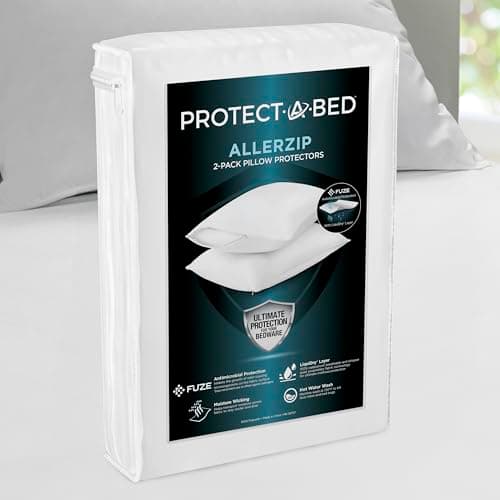 Protect-A-Bed AllerZip Pillow Protectors The pillow version of the same idea, from the brand that built its business on it: zip it closed and the pillow is sealed rather than merely covered. Best for: The pillows | The pillows | |
| 3 | 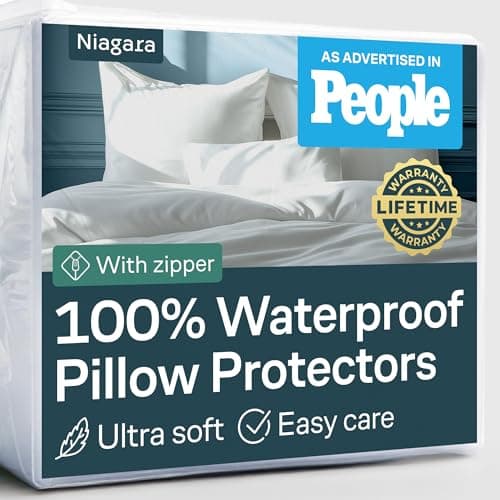 Niagara Waterproof Pillow Protectors (4-Pack) Four waterproof protectors for less than the price of one premium pillow - which is the cheapest route to having every pillow in the house covered rather than just two. Best for: Budget pick | Budget pick | |
| 4 | 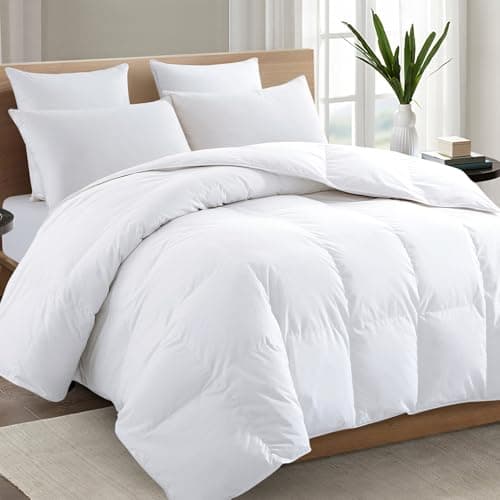 TEXARTIST All-Season Down Alternative Duvet Insert A washable polyester insert, which is the honest answer for a comforter: not because polyester is hypoallergenic, but because you can wash it hot and feathers you cannot. Best for: The comforter | The comforter | |
| 5 | 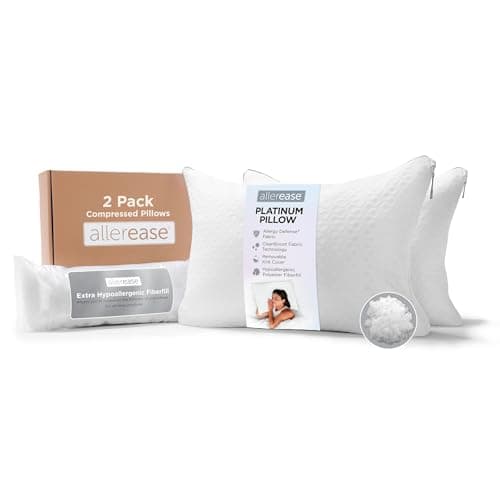 AllerEase Platinum Adjustable Allergy Pillows (2-Pack) A pair of adjustable down-alternative pillows from a brand whose whole line is built for this use - and adjustability matters because the pillow you actually keep is the one that fits your neck. Best for: The pillow itself | The pillow itself | $99.99 · View on Amazon Price as of November 22, 2026. #ad — we earn a commission. |
| 6 |  Comfort Spaces 100% Cotton Percale Sheets Plain cotton percale, chosen for one reason: it survives weekly hot washing, which is the only thing a sheet contributes to an allergy routine. Best for: The sheets | The sheets | $28.05 · View on Amazon Price as of November 22, 2026. #ad — we earn a commission. |
The word on the package means nothing
Hypoallergenic is not a regulated claim. No body certifies it, no test precedes it, and a seller can print it on anything. You can see how little it constrains from this page alone: it appears on a $17 pillow protector and on a $65 encasement, on polyester fill and on cotton, attached to products that do completely different jobs. Where a listing says it, we quote it as the seller words rather than as a fact.
What replaces it is a short list of checkable specifications: impermeable or not, zip closure or envelope flap, how hot it can be washed, and whether the mattress is enclosed on six sides or five. Every ranking decision on this page comes from those four, because they are the things the published work on dust mite control is actually about.
Mites do not live in the fiber
The thing the category gets backwards: dust mites eat shed human skin and need humidity. They live in whatever collects those - the mattress, the pillow, the carpet under the bed - and the fiber your sheet is spun from barely enters into it. There is no allergen-proof thread. A bamboo sheet is not an allergy intervention and neither is a cotton one.
Which is why the two things that do have support behind them are mechanical. First, seal the reservoirs you cannot wash: the published practice parameter on dust mite exposure control centers on impermeable encasements, and a separate paper on encasement materials found that what determines whether a fabric blocks mite allergen is its pore size - not its fiber, not its thread count, and not the word on its label. Second, wash everything washable, hot, on a schedule. That is the entire strategy. Everything below is chosen to serve one of those two jobs, and the picks are ranked by how directly they do it.
Both papers are linked in Sources. We did not run them, we have no lab, and nothing here is medical advice - the method is on how we review.
Six sides, not five
This is the single detail most likely to waste your money. A protector is usually a fitted sheet with a membrane in it: it covers the top and the sides and leaves the bottom of the mattress open. An encasement zips around all six faces and encloses the mattress completely. The research is about the second thing. If you buy a fitted protector expecting the benefit of an encasement, you have bought a spill guard - which is useful, and is not this.
The same distinction applies to pillows, where it is cheap to get right: a zippered pillow encasement seals, an envelope-closure cover overlaps. The budget pick on this page is deliberately the cover rather than the encasement, and it is marked as a step down for exactly that reason - it is there because four covered pillows beat two covered pillows and two bare ones, which is how this intervention usually fails in real houses.
How the six compare, from the listings
| Pick | Layer | Barrier stated | Closure stated | Washable |
|---|---|---|---|---|
| SureGuard | Mattress | Impermeable, six-sided | Zip | Yes |
| Protect-A-Bed | Pillows | Waterproof | Zip (AllerZip) | Yes |
| Niagara | Pillows | Waterproof | Not stated | Yes |
| TEXARTIST | Comforter | None | n/a | Yes (down alt) |
| AllerEase | Pillow | None | n/a | Yes (down alt) |
| Comfort Spaces | Sheets | None | n/a | Yes, hot (cotton) |
Not one of the six publishes a pore size, which is the figure the encasement paper says decides whether a fabric actually blocks mite allergen. That is the information gap in this whole category, and it is worth knowing that you are buying on closure type and impermeability claims because the number that matters is not printed anywhere.
The order to buy in, and what each layer is for
- Mattress encasement. Biggest reservoir, impossible to wash, strongest evidence. Buy this before anything else, and match the depth band to your mattress.
- Pillow encasements. Closest to your airway, cheapest to seal. Cover every pillow on the bed, not two of four.
- A washable insert. The allergy feature of a comforter is that it fits in a machine. That is the whole reason the down-alternative insert is here.
- Sheets you will actually wash weekly. Cotton percale, because it takes hot water and a hot dryer indefinitely, and because it is cheap enough to own two sets - which is what makes a weekly routine survive a bad week.
- A new pillow, last. Sealing the pillow you own beats buying an unsealed one marketed as an allergy pillow.
Who should skip most of this
If nobody in the bed has an allergy or asthma diagnosis, this page is the wrong shopping list - you want a comfortable breathable mattress pad and sheets you like, not membranes. Hot sleepers should know the real cost before committing: every impermeable layer slows moisture leaving the bed, and the honest version of this trade is that an allergy-sealed bed sleeps warmer than an unsealed one. And if feathers rather than mites are the trigger, the fix is far simpler and cheaper than a full encasement program - swap to a down-alternative comforter and a synthetic pillow and stop there.
The picks, in full
1. Best for The one thing to buy first
SureGuard Mattress Encasement, Queen 13-16 in Deep, Six-Sided
A zipped, six-sided, impermeable barrier around the entire mattress - the specific intervention the allergy literature is actually about, rather than the one the marketing is about.
Price as of November 22, 2026. #ad — we earn a commission.
Key specs
- Six-sided zippered encasement (as listed)
- Queen, 13-16 in depth band (as listed)
- 100% waterproof (as listed)
- Bed bug proof (as listed)
- Hypoallergenic (as listed)
What's good
- Six-sided and zippered is the whole point: a fitted protector covers the top and sides and leaves the underside open, and the published work on encasements is about fully enclosing the mattress rather than covering part of it
- The mattress is the largest allergen reservoir in the room and the only one you cannot put in a washing machine, which is why sealing it does more than replacing anything
- A stated 13 to 16 inch depth band means you can check the fit before ordering instead of discovering it on the bed
What's not
- A membrane slows moisture leaving the bed, so a hot sleeper will notice it - this is a real trade, not a myth
- It does nothing about allergen already inside the mattress; it stops the exchange, which is the point, but there is no cleaning effect
- Hypoallergenic appears on the listing and is an unregulated word; the useful claims here are impermeable and zippered
Skip this one if
Your mattress sits outside the stated depth band. A straining zipper splits, and a split encasement is just an expensive sheet - measure first and buy the matching depth.
2. Best for The pillows
Protect-A-Bed AllerZip Pillow Protectors
The pillow version of the same idea, from the brand that built its business on it: zip it closed and the pillow is sealed rather than merely covered.
Key specs
- Waterproof (as listed)
- AllerZip zip closure (as listed)
- Queen, 2-pack (as listed)
What's good
- Your face is on the pillow for the whole night, which makes it the allergen reservoir closest to your airway - and unlike the mattress it is cheap to seal properly
- A zip closure is the distinction that matters here; an envelope-closure cover leaves a gap that the pore-size research assumes is not there
- A sealed pillow also lasts longer, because what shortens a pillow life is the moisture and skin it absorbs
What's not
- A waterproof pillow layer is the one most people find noisy or sweaty - it is the trade you accept for the barrier
- Two protectors, so a two-person bed with four pillows needs two packs
- No pore size is published, which is true of essentially every consumer listing in this category
Skip this one if
Nobody in the bed has an allergy or asthma diagnosis and you simply want the pillow to stay clean. A breathable cotton protector is more comfortable and does that job.
3. Best for Budget pick
Niagara Waterproof Pillow Protectors (4-Pack)
Four waterproof protectors for less than the price of one premium pillow - which is the cheapest route to having every pillow in the house covered rather than just two.
Key specs
- Waterproof (as listed)
- 4-pack (as listed)
- Queen size, white (as listed)
What's good
- Four covers a full queen bed, two pillows a side, in one purchase - and partial coverage is the usual reason this intervention fails in practice
- At this price you can wash them weekly and replace them annually without thinking about it, which is how the barrier actually stays a barrier
- Waterproof means the pillow underneath stays dry, and dry is the condition dust mites do worst in
What's not
- No zip closure is stated, so this is a cover rather than a sealed encasement - a meaningful step down from the pick above on the specific thing that matters
- Value construction; expect the waterproof layer to stiffen after a year of hot washing
- Queen only on this listing, so a king bed needs a different size
Skip this one if
There is a diagnosed dust mite allergy in the bed. Pay for the zippered encasement version - the closure is the feature, and this listing does not state one.
4. Best for The comforter
TEXARTIST All-Season Down Alternative Duvet Insert
A washable polyester insert, which is the honest answer for a comforter: not because polyester is hypoallergenic, but because you can wash it hot and feathers you cannot.
Key specs
- Down alternative fill (as listed)
- All-season (as listed)
- Duvet insert (as listed)
- Queen, white (as listed)
What's good
- Washability is the actual allergy feature on a comforter - the thing that reduces allergen is a hot wash on a schedule, and a down insert mostly cannot take one
- Down alternative removes the feather question entirely for anyone who reacts to feathers rather than to mites
- All-season weight means one insert year round, so there is no second comforter sitting in a cupboard collecting dust
What's not
- Polyester fill is not inherently less allergenic - mites feed on skin flakes, and they will colonise any fill that collects them if it is never washed
- No fill weight or GSM is stated, so warmth is a word rather than a number
- Synthetic fill flattens over a few years and no baffle-box construction is stated to stop it migrating
Skip this one if
Your reaction is to feathers specifically and you want the loft of real down. A down insert inside a tightly woven, washable cover is a legitimate alternative - but it is a cover-and-wash strategy, not a fill one.
5. Best for The pillow itself
AllerEase Platinum Adjustable Allergy Pillows (2-Pack)
A pair of adjustable down-alternative pillows from a brand whose whole line is built for this use - and adjustability matters because the pillow you actually keep is the one that fits your neck.
Price as of November 22, 2026. #ad — we earn a commission.
Key specs
- Down-alternative fill
- Adjustable (as listed)
- Allergy pillow, Platinum line (as listed)
- Standard/Queen
- 2-pack (as listed)
What's good
- Removable fill lets you set the loft for your sleeping position, which is the difference between a pillow you use and a pillow you replace in a month
- Down alternative is washable, and a washable pillow is the only pillow an allergy routine can actually maintain
- Sold as a pair, so both sides of the bed match
What's not
- Allergy in the product name is marketing, not a certification - the barrier work is done by the protector you put over it
- No fabric pore size, no thread count and no fill weight are stated
- Adjustable fill clumps and needs periodic redistributing to sleep evenly
Skip this one if
You already own a pillow you like. Put a zippered protector on it instead - sealing the pillow you have beats replacing it with an unsealed one.
6. Best for The sheets
Comfort Spaces 100% Cotton Percale Sheets
Plain cotton percale, chosen for one reason: it survives weekly hot washing, which is the only thing a sheet contributes to an allergy routine.
Price as of November 22, 2026. #ad — we earn a commission.
Key specs
- 100% cotton (as listed)
- Percale weave (as listed)
- Queen, 4-piece
- Diamond Blue colorway
What's good
- Cotton takes a hot wash and a hot dryer repeatedly, which is precisely what the published guidance asks you to do with sheets and pillowcases
- Percale is a tight plain weave with a smooth face and no brushed nap, so there is less surface for skin flakes and dander to hold onto than on a fleece or brushed microfiber sheet
- It is inexpensive enough to own two sets, which is how a weekly wash routine actually survives a busy week
What's not
- No thread count and no pocket depth are stated, which is the usual gap at this price
- Percale is crisp rather than silky, and it wrinkles - some people simply do not like the hand
- Cotton is not an allergy feature in itself; the washability is doing the work, not the fiber
Skip this one if
You want a cool, slippery hand. A viscose-from-bamboo or lyocell set feels completely different - just make sure it tolerates the wash temperature you need.
Common questions
Does hypoallergenic mean anything on bedding?
Not in any enforceable way. There is no standard, no certifying body and no test a product has to pass before a seller prints the word on a package, which is why it appears on everything from a $17 pillow protector to a $150 mattress pad. Three of the picks on this page carry it on their listings and we quote it as the seller words rather than as a fact. What does carry information is specific and checkable: whether the cover is impermeable, whether it closes with a zip rather than an envelope flap, whether the piece can be washed hot, and whether the seller states a fabric pore size (almost none do). Buy the specification, not the adjective.
Do dust mites live in the sheet fiber?
No, and this is the misconception the category is built on. Dust mites eat shed human skin, and they live in whatever collects it and holds humidity - the mattress, the pillow, the carpet under the bed. The fiber a sheet is spun from is close to irrelevant to whether they thrive; what matters is how much skin and moisture accumulates and how often it is removed. That is why the two interventions with the strongest support are mechanical rather than material: seal the reservoirs you cannot wash (the mattress and pillows) inside impermeable zippered covers, and wash everything you can at a high temperature on a schedule.
What temperature should allergy bedding be washed at?
Hot, and this is where most routines quietly fail. The published guidance on dust mite control pairs encasements with washing bedding weekly at a high temperature; warm water removes some allergen but does not kill mites reliably, and a cold wash mostly moves them around. A hot tumble dry helps as well, because low humidity is lethal to them. The practical consequence for shopping is that wash tolerance is a buying criterion: a cotton percale sheet and a polyester insert both take hot water repeatedly, which is exactly why they are on this page, while a silk pillowcase or a down comforter does not. Check the care label before you check the allergy claim.
If I can only buy one thing, what should it be?
A six-sided zippered mattress encasement. The mattress is the biggest allergen reservoir in the bedroom, it is the only one you cannot put in a machine, and enclosing it fully is the intervention the controlled research is actually about. A fitted protector that covers the top and sides is not the same thing - it leaves the underside open and the published work assumes a full enclosure. After that, pillow encasements, because the pillow is closest to your airway and costs the least to seal. Sheets, comforters and pillows come third, and they matter mainly for whether they can be washed hot.
Will hypoallergenic bedding fix my allergies?
It can reduce what you are exposed to in the one room you spend a third of your life in, and that is a reasonable thing to want. It is not a treatment, the evidence on symptom improvement from bedding changes alone is mixed, and nothing on this page is medical advice - we are not a clinic and there is no doctor behind this site. If your symptoms are significant, the useful order is to get the trigger identified properly, because the answer changes the shopping list completely: a dust mite allergy is a sealing-and-washing problem, a feather allergy is a fill problem solved by a down-alternative insert, and pet dander is mostly a keep-the-animal-off-the-bed problem that no cover fixes.
Sources
Where the facts on this page come from. We cite other people's testing because we don't do our own — here's what that means.
- Environmental assessment and exposure control of dust mites: a practice parameter (Annals of Allergy, Asthma & Immunology, 2013)
- Evaluation of materials used for bedding encasement: effect of pore size in blocking cat and dust mite allergen (PubMed)
- Impermeable dust mite covers in the primary and tertiary prevention of allergic disease: a meta-analysis (NCBI Bookshelf)
- FTC - Endorsement guides (why this disclosure exists)
Read next
- The Best Mattress EncasementsAn encasement is not a protector with a zipper - it is a sealed box around the whole mattress, and it is bought for containment rather than for spills. Five ranked on stated depth range, zipper design and what each one can honestly claim to stop.
- The Best Pillow ProtectorsA pillow protector is the cheapest thing in the bedroom and the most mislabeled. Five picks sorted by the only question that matters - barrier or breathable - plus what the allergy research actually says a cover can do.
- The Best Down Alternative ComfortersFive down alternative comforters chosen on the three specs that actually matter for polyester fill - shell, stitch pattern and stated warmth weight - plus why fill power means nothing here.
- How to Get Rid of Dust Mites in Your BedYou cannot get rid of dust mites completely - but you can cut their numbers and allergen load. The habits that genuinely work, ranked, minus the hype.