The Best Comforters Under $100
Buy the puredown oversized goose feather and down comforter if you want the most comforter for the money: real feather and down fill, a 100% cotton shell, and a 98 by 98 inch cut that actually hangs over the sides of a queen bed - a combination that is genuinely hard to find at this price. The budget pick is the TEXARTIST down-alternative insert at roughly a third of the page ceiling. The finding that organizes everything below: $100 is the threshold where real down fill appears, and not one listing in the band will tell you its fill power or fill weight.
We earn a commission if you buy through our links. It doesn't affect our picks — and we never take free products. How this site is funded.
Quick picks
| # | Product | Best for | Price |
|---|---|---|---|
| 1 | 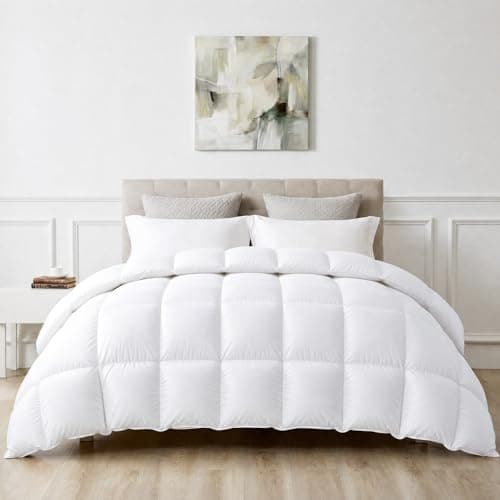 puredown Goose Feather Down Fiber Comforter, Oversized Queen Real feather and down inside a 100% cotton shell, in an oversized 98 by 98 inch cut - the most comforter per dollar in this band, and the only one here that properly drapes a queen bed. Best for: Most people | Most people | Check price on Amazon → #ad — we earn a commission. |
| 2 | 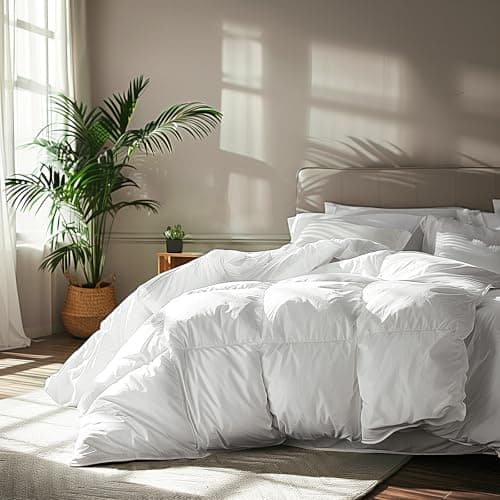 Serta Goose Feather Down Fiber Comforter The same fill and shell story in a standard 90 by 90 queen, from a name most people recognize - the safer buy if an oversized comforter will not fit your washing machine or your bed. Best for: A standard-size feather comforter | A standard-size feather comforter | $62.99 · View on Amazon Price as of November 22, 2026. #ad — we earn a commission. |
| 3 | 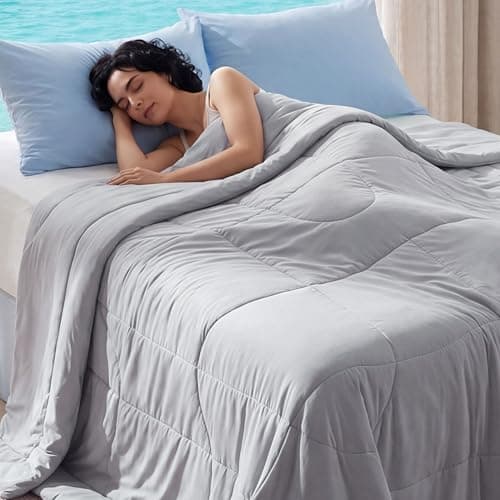 Bedsure Cooling Comforter, Dual-Sided Cool Tech The one built for the opposite problem: a lightweight synthetic with a cool-touch face on one side, for people whose complaint about comforters is heat rather than warmth. Best for: Hot sleepers | Hot sleepers | |
| 4 | 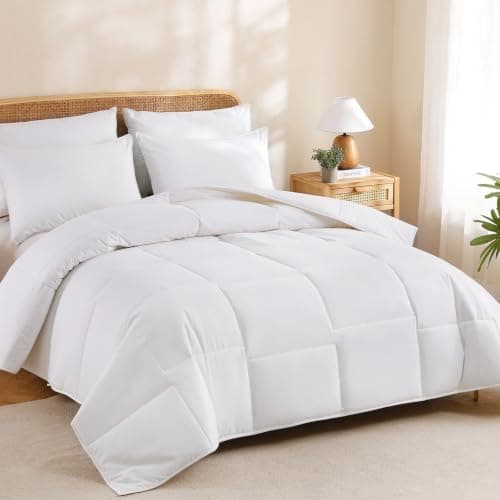 YOUR MOON Washable All-Season Wool Comforter The only comforter in this band whose listing tells you what proportion of the fill it actually is - 51% wool blend - and wool is the one fill that keeps working when it is damp. Best for: The one that states its fill | The one that states its fill | |
| 5 | 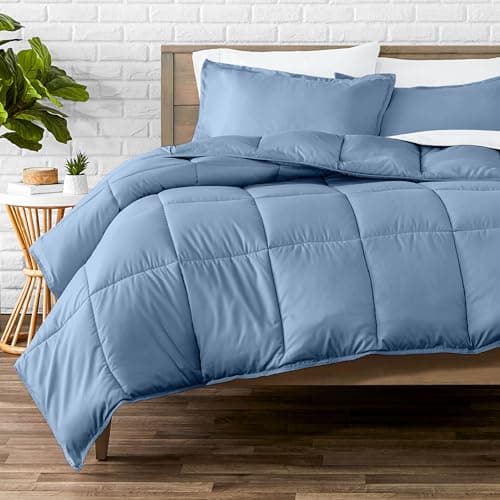 Bare Home Goose Down Alternative Comforter Set A comforter that arrives as a coordinated set, which is the right buy if the bed currently has nothing on it and you want it to look finished rather than assembled. Best for: A complete look in one order | A complete look in one order | |
| 6 | 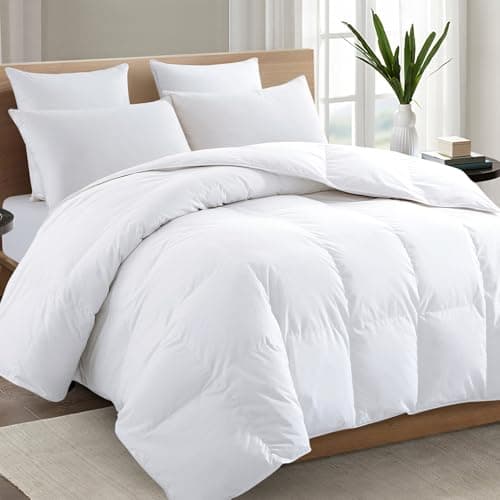 TEXARTIST All-Season Down Alternative Duvet Insert The cheapest thing on the page that does the whole job: an all-season synthetic insert at roughly a third of the band ceiling, washable at home and honest about what it is. Best for: Budget pick | Budget pick |
$100 is the threshold where real down appears
Band pages usually exist because something gets worse as the ceiling drops. This one exists because something gets better at exactly this number: $100 is roughly where goose feather and down fill, inside a 100% cotton shell, becomes available instead of being a theoretical upgrade. Below $50 the shelf is coverlets, light quilts and thin polyester - which is why the band below this one reads completely differently. Here, three of six picks have something other than polyester inside them.
If you are buying an insert to live inside a duvet cover rather than a comforter to sleep under directly, the duvet insert page at the same ceiling is the better list - it judges the same money purely on fill and construction, because nothing about the shell is going to be seen.
The number nobody in this band will give you
Not one listing here publishes a fill power.Fill power measures how many cubic inches an ounce of down occupies, and it is the standard way to compare warmth-for-weight; fill weight tells you how much is in there. Both start appearing above roughly $150 and neither exists down here. Nor does a down-to-feather ratio, which matters because "feather and down fiber" can describe a lot of feather and very little down.
Exactly one pick on this page quantifies its fill at all: the wool comforter states 51% wool blend. That single percentage is the most informative specification in the band, and it earned that pick its place even though it sits closest to the ceiling. Everywhere else you are buying a fill category, not a fill specification - so the sensible thing to judge instead is the shell, the size and the construction.
What we ranked on
- What the fill actually is. Feather and down, wool, or polyester - in that order of what it buys you per ounce, with the honest caveat that only polyester goes in a home washing machine.
- The shell fiber. Cotton breathes and lets a lofty comforter work; microfiber traps moisture against you. Two picks here state cotton, and both rank in the top half for that reason.
- The stated size, in inches. A 98-inch comforter drapes a queen bed and a 90-inch one does not. Every pick here states a size, which is better than this shelf usually manages.
- Whether the listing quantifies anything. One does. It moved up for it.
No warmth was measured and no comforter was slept under for this page - there is no lab behind this site, and the method is on how we review. Prices come from the site price layer, with the date of the last check printed beside each button.
How the six compare, from the listings
| Pick | Fill stated | Shell stated | Size stated | Fill figure |
|---|---|---|---|---|
| puredown | Goose feather + down | 100% cotton | 98 x 98 in | None |
| Serta | Goose feather + down | 100% cotton | 90 x 90 in | None |
| Bedsure Cooling | Not stated | "Cool tech" | 88 x 88 in | None |
| YOUR MOON | 51% wool blend | Not stated | Queen | 51% wool |
| Bare Home | Down alternative | Microfiber | Queen set | None |
| TEXARTIST | Down alternative | Not stated | Queen | None |
Read the last two columns together and the band's logic appears: the only pick that quantifies its fill says nothing about its shell, the two that name a cotton shell quantify nothing, and the cheapest pick commits to neither. Choose the row whose blank column you can live with.
The cover is the rest of the budget
If you buy feather and down at this price, buy a cover for it. A duvet cover is what takes the laundry duty off a comforter that cannot go in your washing machine, and it is the reason a $60 insert can last years rather than one spill. Covers at this tier cost less than the comforter does - the under-$50 cover page exists for exactly this pairing - and the combined spend still lands under $150 for a bed that behaves like a much more expensive one.
Who should spend more, and who should not
Spend more if you want a comforter that is warm rather than lofty: real winter weight, baffle-box construction and a published fill power all live above this band, and the winter comforter page is where to start. Spend more if you are a serious hot sleeper, because the cooling pick here is a lightweight synthetic rather than an engineered solution - the cooling comforters page ranks that problem properly.
Do not spend more for a guest bed, a child, a rental or a dorm. The budget pick on this page washes at home, costs a third of the ceiling and will do that job for years - and the oversized feather and down pick is the one to put on your own bed and keep.
The picks, in full
1. Best for Most people
puredown Goose Feather Down Fiber Comforter, Oversized Queen
Real feather and down inside a 100% cotton shell, in an oversized 98 by 98 inch cut - the most comforter per dollar in this band, and the only one here that properly drapes a queen bed.
#ad — we earn a commission.
Key specs
- Goose feather and down fiber fill (as listed)
- 100% cotton duvet insert shell (as listed)
- Medium warmth, all-season (as listed)
- Oversized Queen, 98 x 98 in (as listed)
What's good
- Feather and down is the fill that is light and lofty at the same time, and under $100 it is rare - most of this shelf is polyester clusters that are one or the other
- A 100% cotton shell is what stops a lofty comforter turning into a sweat box, and it is the detail the cheaper picks skip in favour of microfiber
- The 98 by 98 inch cut matters more than people expect: a queen mattress is 60 inches wide, so this gives about 19 inches of drop a side instead of the 14 a standard 90-inch comforter manages
What's not
- No fill power and no fill weight are stated, so there is no paper comparison with a premium down comforter - this is true of every pick in the band
- Feather fill means quills, and quills eventually work through a shell; nothing here claims quill-free construction
- Oversized means heavier and bulkier to wash, and most of these should go to a commercial machine rather than a domestic one
Skip this one if
Feathers are a problem for anyone in the bed, or you want to wash the comforter at home every month. Buy the down-alternative budget pick instead.
2. Best for A standard-size feather comforter
Serta Goose Feather Down Fiber Comforter
The same fill and shell story in a standard 90 by 90 queen, from a name most people recognize - the safer buy if an oversized comforter will not fit your washing machine or your bed.
Price as of November 22, 2026. #ad — we earn a commission.
Key specs
- Goose feather and down fiber fill (as listed)
- 100% cotton cover (as listed)
- All-season, medium warmth (as listed)
- 90 x 90 in, Queen (as listed)
- Hypoallergenic (as listed)
What's good
- Feather and down inside a cotton shell at this price, with a brand behind it that has a returns path when something goes wrong
- A stated 90 by 90 size means standard duvet covers fit it exactly, which an oversized comforter does not
- All-season medium warmth is the right weight if the comforter is going inside a cover, because the cover adds warmth of its own
What's not
- Less drop over the sides of a queen bed than the oversized pick - 90 inches is the size that leaves a tall mattress looking underdressed
- No fill power, no fill weight, no down-to-feather ratio: the fill description is as detailed as it gets
- Hypoallergenic appears on the listing and is an unregulated word on bedding; if feathers are the trigger, this is the wrong fill
Skip this one if
Your mattress is deep or you want the comforter to hang well down the sides. Go oversized - the extra inches cost almost nothing here.
3. Best for Hot sleepers
Bedsure Cooling Comforter, Dual-Sided Cool Tech
The one built for the opposite problem: a lightweight synthetic with a cool-touch face on one side, for people whose complaint about comforters is heat rather than warmth.
Key specs
- Dual-sided cool tech fabric (as listed)
- Lightweight, for summer (as listed)
- Queen, 88 x 88 in
What's good
- A cool-touch face does genuinely change the first moment you get into bed, which is the part of the night people complain about most
- Lightweight is honest here rather than a euphemism for thin: a summer comforter is supposed to be low loft, and this one does not pretend to be all-season
- Two sides means a seasonal flip rather than a second comforter in the cupboard
What's not
- Cool tech is the seller term and there is no figure behind it - no GSM, no fill weight, no measured anything
- Lightweight synthetic fill means it will not keep a cold sleeper warm in winter; this is a one-season comforter being sold as a two-sided one
- No fiber content is stated for the fill at all
Skip this one if
You run cold or your bedroom does. A lightweight cooling comforter is the wrong tool - the winter comforter page below is where to start.
4. Best for The one that states its fill
YOUR MOON Washable All-Season Wool Comforter
The only comforter in this band whose listing tells you what proportion of the fill it actually is - 51% wool blend - and wool is the one fill that keeps working when it is damp.
Key specs
- 51% wool blend fill (as listed)
- Washable (as listed)
- All-season (as listed)
- Queen, white (as listed)
What's good
- A stated fill percentage is the single most useful number on this page, and it is the only one of its kind here - every other listing describes its fill without quantifying it
- Wool absorbs moisture and keeps insulating while damp, which no polyester does and which is why it suits anyone who runs warm but gets cold later in the night
- Washable is unusual for wool and removes the main practical objection to it
What's not
- 51% is a blend, so roughly half the fill is something the listing does not name - read the number as a floor on the wool content, not a full specification
- It is the most expensive pick in the band and sits close to the ceiling, which is exactly where a price drifts over it
- Wool is heavier in the hand than down of the same warmth, and some people dislike that weight
Skip this one if
You want the cloud-like loft of a down comforter. Wool is denser and drapes closer to the body - a different feel, not a cheaper one.
5. Best for A complete look in one order
Bare Home Goose Down Alternative Comforter Set
A comforter that arrives as a coordinated set, which is the right buy if the bed currently has nothing on it and you want it to look finished rather than assembled.
Key specs
- Goose down alternative fill (as listed)
- "Premium 1800 series" microfiber shell (as listed)
- All-season warmth (as listed)
- Queen set
What's good
- Everything matches, which you cannot achieve by buying a comforter and shams from different brands - mismatched whites and grays are the most visible way a cheap bed looks cheap
- Down alternative washes at home, which matters on a comforter you sleep against directly rather than inside a cover
- Bare Home runs one fabric platform across its catalog, so if you add pieces later they will actually match
What's not
- The 1800 series number has no unit and measures nothing - it is not a thread count, not a GSM, and is best read as shorthand for brushed microfiber
- A microfiber shell repels moisture rather than moving it, so this is a warmer, less breathable build than the cotton-shelled picks above
- Synthetic fill flattens over a few years and no baffle-box construction is stated to stop it migrating
Skip this one if
You already own shams and sheets you like. Buy the fill you want on its own and spend the difference on a cotton shell.
6. Best for Budget pick
TEXARTIST All-Season Down Alternative Duvet Insert
The cheapest thing on the page that does the whole job: an all-season synthetic insert at roughly a third of the band ceiling, washable at home and honest about what it is.
Key specs
- Down alternative fill (as listed)
- All-season (as listed)
- Duvet insert (as listed)
- Queen, white (as listed)
What's good
- At this price you can put a comforter on a guest bed, a kid bed or a rental without thinking about it, and replace it rather than nurse it
- Machine washable, which is the practical advantage synthetic fill has over every feather and down pick above
- No feathers, so it sidesteps the allergy question entirely
What's not
- Polyester fill is either lofty or light, not both for long - expect it to flatten noticeably within a few years
- No fill weight, no GSM, no shell fiber stated; the specification is four short phrases
- It is sold as an insert, so on a bed without a cover it will show every mark
Skip this one if
This is the comforter on your own bed for the next five years. Spend up to the feather and down picks - the loft difference is the thing you notice every night.
Common questions
What do you give up on a comforter under $100?
Information, mostly, and then construction. Not one listing in this band publishes a fill power or a fill weight, which are the two numbers that let you compare warmth and quality on paper - they start appearing on comforters above roughly $150. Exactly one pick here states a fill percentage at all. After disclosure, what gets cut is baffle-box construction (the internal fabric walls that stop fill migrating into one corner), the down-to-feather ratio, and the shell: a cotton shell is the mark of the better picks in this band and microfiber is the default. What you are not giving up is function. A $60 feather and down comforter under a decent duvet cover is a genuinely good bed.
Is a comforter the same thing as a duvet insert?
Nearly, and the difference is how it is meant to be used. A comforter is finished to be seen - often quilted in a pattern, sometimes sold with matching shams - and you sleep under it directly. A duvet insert is plain and designed to live inside a washable cover, which is why insert listings talk about corner loops and comforter listings talk about colors and sets. In practice the shelves overlap heavily under $100 and several products are sold as both. The practical rule: if you own or plan to buy a cover, buy the insert and judge it on fill alone. If the comforter is going on the bed bare, the shell fiber and the finish matter as much as the fill, because you will be lying on them.
Do these comforters stay under $100?
We cannot promise that and we will not pretend to. Every pick was under $100 in our live price check on the date stamped beside the buttons, and the button shows the number we read most recently rather than one typed into the page. Comforter prices move with seasonal promotions and coupons, and the pick nearest the ceiling is the one most likely to drift over it - the wool comforter here sits in the mid-nineties, so treat it as a borderline case rather than a guarantee. The ranking above is based on what each comforter is made of and what its listing states, and none of that changes with a discount code.
What size comforter should I buy for a queen bed?
Bigger than the mattress, which is the mistake almost everyone makes once. A queen mattress is 60 inches wide, so a standard 90-inch comforter leaves about 15 inches of drop a side before you account for mattress height - and on a modern 14-inch mattress with a topper, that is barely enough to tuck. An oversized comforter at 98 inches gives roughly 19 inches a side and looks like it belongs on the bed. The trade-offs are real: oversized is heavier to wash, may not fit a domestic machine, and will not fit a standard 90 by 90 duvet cover. If you are using a cover, match the comforter to the cover. If you are not, go oversized.
Feather and down, wool, or synthetic under $100?
All three are available in this band, which is unusual, and the choice is about how you sleep rather than about quality. Feather and down gives you the most loft for the weight, drapes beautifully, and cannot be washed at home - buy it if you want a comforter that feels expensive and you are willing to put it inside a cover. Wool is denser, heavier for the same warmth, keeps insulating when damp and is the best choice if you run warm early and get cold later. Synthetic is lighter in the wallet, washable, allergy-neutral and will flatten first - it is the right answer for a guest bed, a child, or anyone who needs to wash their bedding hot and often.
Sources
Where the facts on this page come from. We cite other people's testing because we don't do our own — here's what that means.
Read next
- The Best ComfortersSix comforters worth buying, the comforter-versus-duvet decision most buyers get backwards, and why all-season weight is usually the wrong compromise.
- The Best Comforters Under $50Under $50 the fill is polyester and the shell is thin - the decision is construction, not luxury. Five cheap comforters ranked on stitching, loops, stated size and whether you can wash them at home.
- The Best Duvet Covers Under $50Five duvet covers with a live price under $50, ranked on the things that actually differ in this band: the closure, the corner ties, the stated fabric weight, and which listings admit they are polyester.
- The Best All-Season ComfortersFive all-season comforters ranked on the three things a listing can actually prove - what the fill really is, how the shell and stitching are built, and whether the stated size fits your bed. Plus why "down" on a cheap all-season comforter usually is not down.